
In times of crisis, the capacity to prioritize effectively can mean the difference between chaos and calm. Imagine being in an emergency situation where split-second decisions are not just common but necessary. How do we ensure that we’re tackling the right tasks while the clock is ticking? It turns out that mastering emergency prioritization skills is not only crucial, but it can also make stressful situations feel more manageable. By setting clear goals and distinguishing between what’s urgent versus what’s truly important, we can navigate high-pressure moments with greater confidence. This article dives into essential techniques that will help you develop those vital skills, ensuring you’re prepared to respond decisively when it matters most.
The key emergency prioritization skills include establishing clear SMART goals, distinguishing between urgent and important tasks, and assessing the expected impact of each task. By focusing on these elements, individuals can make informed decisions that enhance productivity and resource allocation during high-pressure circumstances.

Developing Emergency Prioritization Skills
Understanding how to prioritize effectively in emergencies can profoundly impact outcomes. When under pressure, clarity is essential. One effective way to gain that clarity is by starting with specific goals. Establish SMART (Specific, Measurable, Achievable, Relevant, Time-bound) objectives that allow you to filter through the noise and focus on what truly matters.
For example, if you’re faced with multiple tasks during an emergency, rather than tackling them based solely on their apparent urgency, ask yourself: “Which of these tasks aligns best with my ultimate goal?” This simple shift in focus lays a strong foundation for sound decision-making.
Next comes the crucial step of distinguishing between what is urgent and what is genuinely important. It’s all too easy to get swept up in activities that feel pressing but are not key to achieving your overarching objectives. The Eisenhower Matrix can help here by dividing tasks into four quadrants:
- Urgent and Important (Do First)
- Important but Not Urgent (Schedule)
- Urgent but Not Important (Delegate)
- Neither Urgent nor Important (Eliminate)
By adopting this framework, you’ll be better equipped to identify the high-impact tasks that warrant your immediate attention.
Once you have your priorities sorted, it’s vital to assess their expected impact over size or difficulty.
Not all tasks are created equal; some will yield significant benefits while others may consume resources without delivering noticeable outcomes. This principle echoes the Pareto Principle or the 80/20 rule where focusing on the 20% of tasks that will deliver 80% of results is emphasized.
Prioritizing for maximum impact means evaluating each task critically—ask yourself: “What will happen if I don’t complete this?” or “How much difference does this make?” By doing so, you’ll steer clear of “busy work” and channel your energies towards genuine solutions.
As you hone these prioritization skills, remember the importance of flexibility. Emergencies don’t adhere to strict schedules; thus, allow room for unexpected challenges or tasks that may arise at a moment’s notice. Having a few strategies in place—like time blocking or maintaining a flexible priority list—can reduce stress when new demands appear.
Keeping these techniques in mind, confronting procrastination also plays a crucial role in effective emergency prioritization.
High-stakes situations often demand that we tackle our most challenging tasks with courage rather than delay. Training yourself to confront difficult decisions head-on can save valuable time and reduce anxiety as you approach critical decisions. Start by breaking down intimidating tasks into manageable steps to facilitate action. You’ll find that once you’ve begun, momentum builds—a factor crucial in emergency scenarios where every second counts.
Lastly, it’s wise to eliminate time-consuming low-impact tasks from your plate altogether. Any task that doesn’t align with your immediate goals can drain your energy without offering meaningful returns. Be vigilant and proactive about recognizing such distractions; remove them from your agenda to keep your focus sharp.
As we explore further, these foundational strategies will guide us toward identifying precisely those tasks that require our urgent attention.
Identifying Critical Tasks
The process of identifying critical tasks is vital in emergency situations where decisions must be made quickly and effectively. Imagine standing in a chaotic environment, with voices calling from different directions and your mind racing. In such moments, it is your ability to discern what must be tackled first that can truly make a difference. Assessing each task’s immediate impact is the first step. It’s not always about severity; sometimes, it’s simply understanding which action will alleviate stress or prevent further complications.
Assess Immediate Threats
Begin by examining the environment for any immediate threats. Picture an emergency room: doctors don’t just treat every patient as they arrive but rather assess who needs help immediately, such as someone with a gunshot wound versus a person with a minor bruise. In doing so, they prevent further deterioration of the most serious cases while ensuring that resources are allocated efficiently.
To determine immediate threats, ask yourself:
- What actions will save lives?
- Which issues are time-sensitive?
- Are there environmental hazards that need quick intervention?
Determine Resources
Once you’ve established which tasks to tackle first, the next step is figuring out what resources you have available to act on these tasks. This may involve both personnel and equipment. For example, if there’s a fire, do you have access to firefighting tools, or should you prioritize evacuations instead?
Engaging your team in this assessment also helps clarify capabilities. It’s crucial to know who in your team has specific skills that can manage certain situations better than others—like having a medical professional handle injuries or having experienced firefighters address dangerous fires.
Sequence Tasks
With immediate threats assessed and resources identified, you can now sequence your tasks by urgency. Think of this as creating a roadmap that guides your actions. As many seasoned professionals know, the allocation of resources must align with the urgency of the tasks at hand.
“Take care of those most in need first,” is a mantra echoed throughout emergency response training.
Always keep in mind that fluidity is key; priorities may change as new information comes to light or as conditions evolve. Establish a clear process for continuously reassessing priorities. This could take the form of regular communication check-ins among team members as they update each other on task completion and emerging challenges.
Having systematically identified and sequenced critical tasks lays the groundwork for structured action. With your roadmap defined and priorities established, you’re now poised to explore effective strategies for arranging your actions into a cohesive plan.
Creating a Hierarchy of Actions
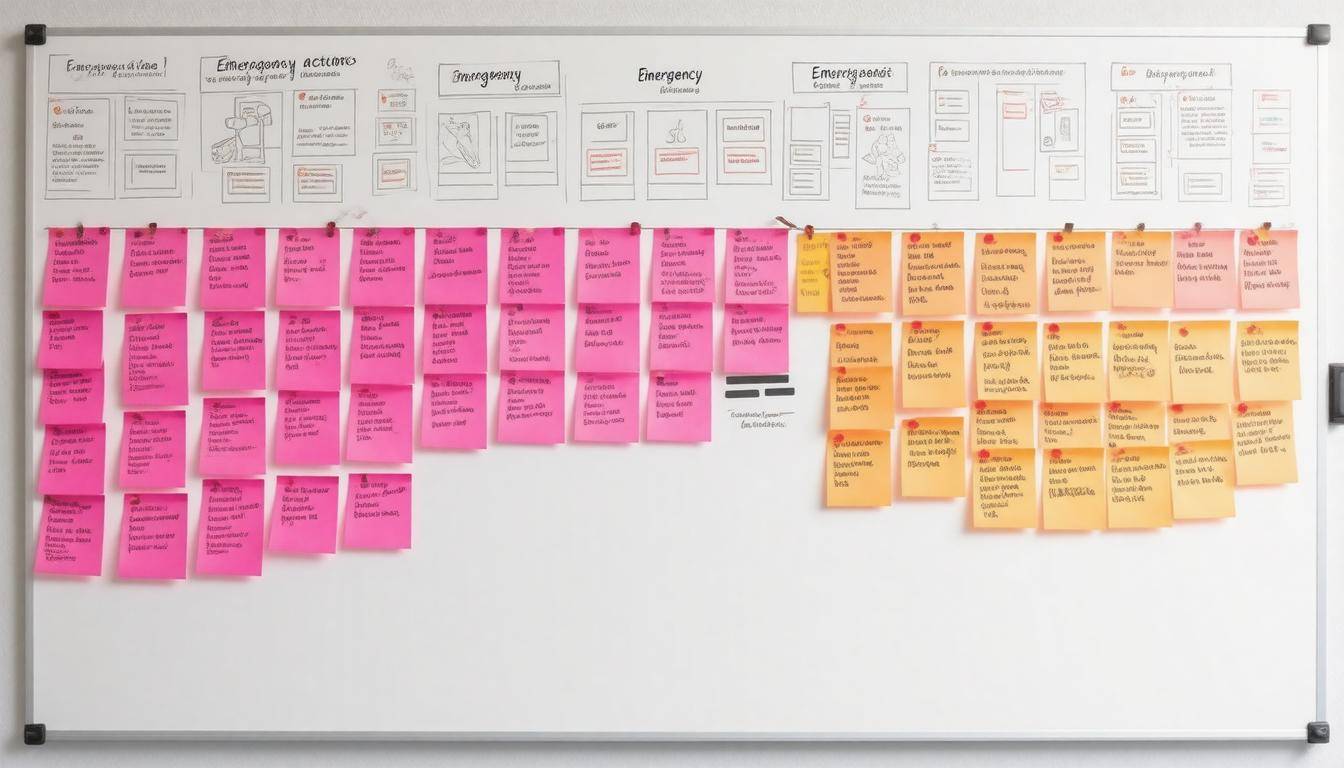
Imagine a scenario where chaos reigns—you’re faced with multiple urgent demands, but you need to implement a methodical approach to prevent being overwhelmed. A hierarchy of actions functions as your roadmap, guiding you through the storm by providing clarity and structure. This ranked list of tasks aligns your priorities based on their importance and urgency, making it easier to take decisive action. The more pressing an issue is, the higher its place on your list should be.
Simply put, a hierarchy of actions is a framework that categorizes tasks by their need for immediate attention versus those that can wait. It’s about distinguishing what must be done now from what can hold off until later. For instance, in military contexts, crews sort duties methodically; securing perimeters takes precedence over attending to wounded personnel. Adopting similar practices in emergency situations can elevate response effectiveness.
The first step in creating such a hierarchy involves compiling a comprehensive list of all tasks that demand your attention during an emergency. By writing these actions down—rather than leaving them swirling around in your head—you gain insight into what genuinely requires focus. This initial practice brings clarity.
Following that, each task should be assigned an urgency level—critical, necessary, or optional—based on its potential impact. The distinction between these categories is crucial: Critical tasks are life-saving actions that must be addressed first; necessary tasks support stabilization but may not require immediate implementation; optional tasks can be postponed without severe consequence.
Once you’ve ranked the tasks, it’s essential to assign delegation strategically. Consider the expertise and skills of available team members when allocating tasks so they can tackle their responsibilities effectively. This not only optimizes results but also fosters cooperation and trust within the team.
Establishing a clear hierarchy could be likened to building a sturdy foundation for a house; without it, everything else risks crumbling under pressure.
Having this structured approach significantly aids in navigating high-pressure scenarios smoothly while reducing feelings of overwhelm. As we explore new methods of reinforcing these principles, stepping into realistic exercises will prepare us for the unexpected challenges ahead.
Simulating Crisis Situations
When we think about simulations, it’s important to realize that they are more than just practice; they serve as the backbone of effective emergency preparedness. Just like pilots who train on flight simulators to tackle engine failures or turbulence, organizations can employ similar methods to prepare for cyber incidents or various crises.
The beauty of these simulations lies in their capacity to create a controlled environment where decision-makers can engage with scenarios that mirror potential real-world incidents. This immersive experience not only helps refine skills but also fosters a deeper understanding of crisis management.
For instance, when conducting fire drills, schools not only teach students how to exit the building safely but also train them to think clearly under pressure. These experiences instill muscle memory, allowing individuals to react almost instinctively during actual emergencies.
Similarly, businesses should consider incorporating crisis simulations specific to their operational risks – whether that’s data theft, network outages, or even public relations disasters. Each scenario presents unique challenges and requires tailored strategies that reinforce prioritization skills.
According to a study by the National Emergency Training Institute, organizations that regularly practiced emergency simulations reported a 30% faster response time during actual crises compared to those who did not engage in regular drills. This statistic emphasizes the critical role that systematic training plays in enhancing performance and effectiveness during high-pressure situations.
Yet, while conducting these simulations is beneficial, it’s crucial that they are realistic and actionable. The experiences must reflect the complexities of potential real-world emergencies rather than generic or overly simplified scenarios.
This is where artificial intelligence and expert knowledge come into play, allowing organizations to craft dynamic environments tailored to their specific needs.
Organizations are advised to invest in crisis simulation exercises that integrate advanced technologies and fine-tuned parameters, ensuring realism throughout the training process.
As we continue to adapt in an ever-evolving landscape of threats, embracing sophisticated crisis simulations becomes non-negotiable for CISOs and other organizational leaders.
The skills honed through this training pave the way for better resource management in times of crisis, establishing a foundation for organizational resilience.
Managing Resources Effectively
Managing resources effectively is the backbone of any successful emergency response strategy. When disasters strike, it’s crucial to ensure that your team can execute prioritized tasks without running short on essential supplies or manpower. Think of resource management as your emergency toolkit; without it, you’re left fumbling in the dark when quick action is necessary.
In every scenario, inventory plays a significant role. Keeping a detailed, real-time inventory of available resources allows you to identify what you have at your disposal and where any gaps lie. Establishing this system ahead of time means you won’t waste precious minutes trying to remember which supplies are stored where. It’s like being a chef who knows their pantry perfectly; they can whip up an incredible meal without needing to check every cabinet.
Transitioning from just knowing what’s available to actively using those supplies is where effective reallocation comes into play.
Being prepared to reallocate resources quickly is vital during emergencies. When a crisis arises, the landscape can change almost instantaneously. Perhaps a particular area needs more medical supplies while another requires water; flexibility and rapid decision-making are necessary. Imagine you’re orchestrating a symphony during chaos; reallocating resources like instruments ensures that the music doesn’t stop, optimizing your team’s performance when it matters most.
Moreover, conservation is equally important; this principle extends beyond mere rationing. It encourages a mindset of judicious use where every item, be it medical gear or volunteer hours, must be utilized wisely. For instance, if grappling with limited medical supplies, it’s not just about conservation but also about prioritizing tasks—think of it as ensuring that patients who need immediate care receive those precious resources first.
During events like the COVID-19 pandemic, hospitals became masterclass examples of this type of resource management. They managed ventilator supplies by reallocating them between patients based on urgency, reflecting how effective planning can maximize limited resources in crisis scenarios.
Effective resource management can guide your actions in emergencies, but success hinges on combining these insights with strong leadership skills.
Ready to transition from mastering resource management techniques to exploring effective leadership attributes that are essential in guiding teams through emergencies?
Leadership Strategies in Emergencies

The role of leadership in emergencies cannot be overstated. When the stakes are high and seconds count, effective leaders can make the difference between chaos and efficient response. A key framework that many successful leaders in emergency management follow is the SERVE model. This model encourages leaders to See the future, Engage and develop others, Reinvent continuously, Value results and relationships, and Embody values. Being proactive—anticipating challenges before they arise—is paramount.
Imagine a scenario where wildfires ravage an area. A leader who embodies the SERVE principles will not only establish clear evacuation routes but also prepare their team through regular training exercises, fostering a resilient response unit ready to act when necessary. Seeing the future allows them to foresee potential hotspots long before fires ignite, while engaging and developing others ensures that their team understands their roles and feels empowered to take action.
An illustrative example of effective leadership can be seen in the 2005 London bombings, where emergency services exhibited decisive actions coupled with careful communication strategies. In those tense moments, composure was critical; sensibly directing resources and personnel meant lives were saved.
Following such events, it’s imperative for leaders to cultivate a culture of continuous evaluation. Assessing what worked well and identifying areas for improvement should be standard practice. Regular debriefs provide opportunities for team members to voice their experiences, effectively closing the feedback loop that reinforces both trust and communication.
Leaders must foster a culture of trust and communication within their teams. Regular briefings, clear commands, and encouraging feedback during drills enhance coordination significantly. Creating scenarios during training that mimic real-life crises can also boost readiness levels. For instance, conducting exercises where teams have to manage resources under simulated pressure helps acclimatize them to making swift decisions based on incomplete information—a skill invaluable in real emergencies.
With these leadership strategies firmly in place, it becomes essential to focus on how response efforts can be evaluated after the dust settles, ensuring ongoing improvement and preparedness for future challenges.
Assessing Performance Post-Emergency
The post-emergency assessment is pivotal in evolving and enhancing your response strategies for future situations. It starts with conducting debriefings, where every individual involved can express their insights about what worked and what did not. These discussions should be candid and inclusive, fostering an atmosphere where all participants feel comfortable sharing their thoughts.
A recent study revealed that 70% of emergency responders find that these post-incident debriefings help improve performance in subsequent emergencies.
Once those conversations are concluded, it’s time to gather data. This involves collecting both quantitative data, such as response times and resource allocation, and qualitative data from team feedback. Effective organizations understand that data helps paint a clear picture of the operation’s strengths and weaknesses.
Next is the critical phase of analyzing performance metrics against established benchmarks. For instance, if your target response time was under five minutes, but the actual response was six minutes, it’s imperative to look deeper into what caused this delay. Use tools like this performance comparison table to streamline understanding:
| Metric | Target | Actual | Improvement Needed |
|---|---|---|---|
| Response Time | < 5 mins | 6 mins | Yes |
| Resource Allocation | Optimal | Suboptimal | Yes |
| Team Coordination | High | Moderate | Yes |
Moreover, don’t overlook the potential insights gained from studying high-performing entities such as FEMA, which regularly conducts after-action reviews. Their methodologies highlight how continuous improvements in disaster readiness stem from systematic evaluations and constructive feedback loops.
By developing a routine practice around post-emergency assessments, individuals and organizations don’t just gear up for future crises—they cultivate a culture of preparedness that can have lasting impacts on operational success.
Through consistent evaluation and commitment to improvement, teams can transform every emergency response experience into a lesson for tomorrow.
In practicing effective emergency prioritization skills, you not only enhance your immediate responses but also establish a framework for future success. Every incident provides invaluable lessons that contribute to overall resilience and preparedness.