
When it comes to survival situations, knowing how to tie the right knots can be your lifeline. Imagine being caught in a storm, struggling to secure a tarp or needing to create a rescue line for someone in distress. Every second counts, and understanding essential knots can help you act quickly and effectively. Not only do these knots have practical uses, but they also provide you with a sense of security in chaotic moments. Having learned and practiced these techniques myself, I can assure you that mastering just a few key knots—like the Bowline or Taut-line Hitch—can make all the difference when faced with unexpected challenges. Let’s dive into the must-know knots that could prove crucial in emergencies.
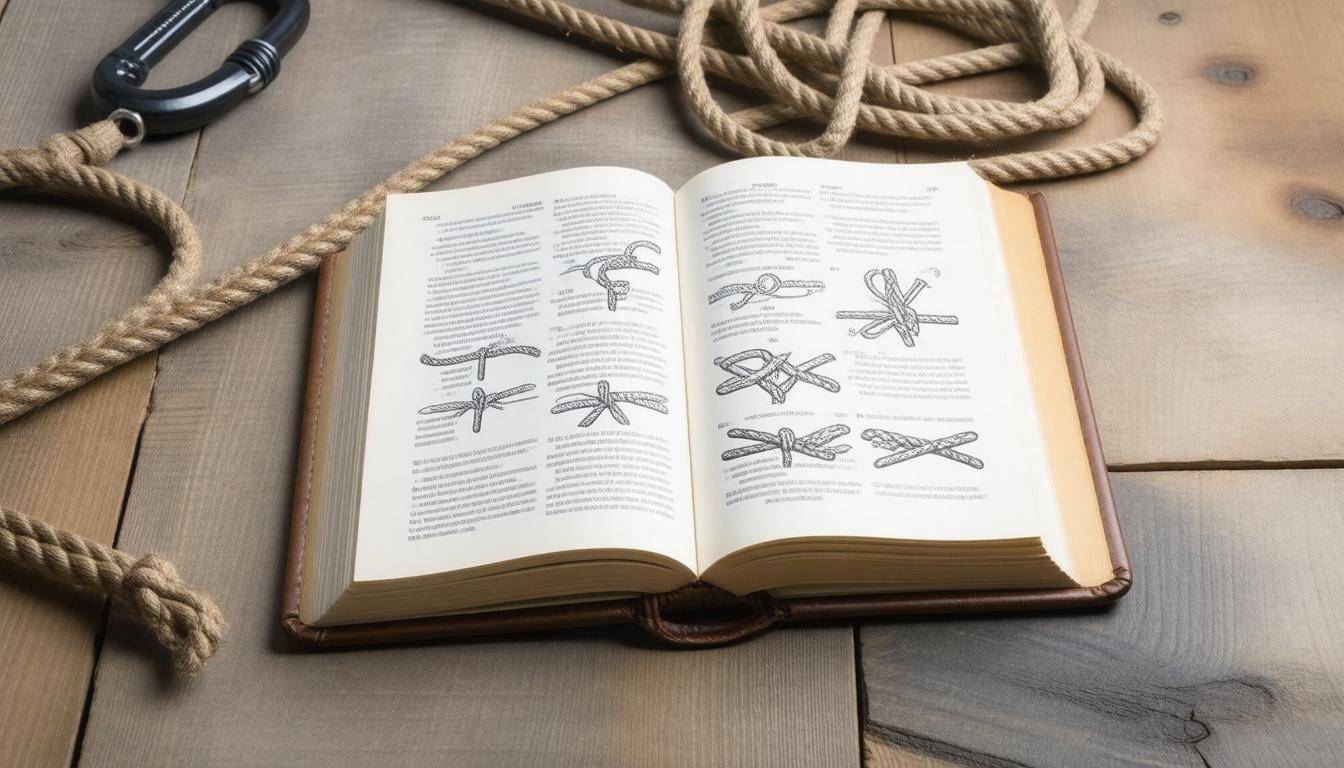
The “Essential Knots for Emergencies: Illustrated Guide” covers crucial knots such as the Bowline for secure loops, the Double Sheet Bend for tying two ropes together, and the Taut-line Hitch for adjustable tension on lines. Each knot is accompanied by clear illustrations and practical applications to ensure you can effectively utilize them during survival situations.
Mastering Essential Knots
To truly master essential knots, it’s important to understand the structure and purpose behind each knot. This knowledge enhances your knot-tying skills and boosts your confidence during emergencies. Each knot has nuances dictating when and how it should be used effectively, and grasping these details can make all the difference in critical moments.
Start by familiarizing yourself with the anatomy of these knots. For example, in a Bowline knot, you have the working end, which is the part you manipulate, and the standing end, which remains anchored. This distinction matters because it ensures you’re using the right parts of the rope at the right time. Regular practice will solidify this knowledge until tying a bowline or double sheet bend feels like second nature. When adrenaline kicks in during an emergency, muscle memory will serve you well.
You might ask, how often should you practice these knots? The answer lies in repetition and context. Whether it’s once a week or as part of your camping preparation routine, make sure to tie them under different conditions—rainy days or at night—in scenarios that mimic real-life challenges. As Jessie Krebs suggests: “It’s not about knowing every knot in existence but understanding a few vital ones deeply.”
Consider her words seriously; they echo profound truth. Have you ever fumbled with a knot under pressure? It’s frustrating and can waste precious seconds when every moment counts. Imagine needing to secure a temporary shelter quickly during a storm—knowing how to tie a taut-line hitch could keep your gear protected while you find shelter yourself.
Common Uses of Essential Knots
-
Bowline: Widely favored for rescue operations due to its reliability; creates a strong loop without slipping.
-
Double Sheet Bend: Ideal for extending rope lengths in emergencies such as making clotheslines or tethering gear during hikes.
-
Halter Hitch: Secures livestock or items around trees safely during camping trips or unloading heavy deliveries.
-
Taut-line hitch: An undeniable asset when securing tents or tarps while keeping adjustments easy amidst changing weather conditions.
Knowing how to execute these knots correctly prepares you for various emergency challenges. Each twine of rope becomes more than just cordage; it transforms into a lifesaving tool in your hands. As we consider their significance further, let’s turn our focus towards the critical role these skills play in survival situations.
The Importance of Knots in Emergencies
In critical situations, the ability to tie effective knots can quite literally mean the difference between safety and danger. Think about it: whether you’re securing gear during a thunderstorm or creating a rescue line to save someone in distress, knots provide the essential connection that holds everything together. The significance of these tight grips lies not just in their utility, but also in the peace of mind they offer during high-stress scenarios.
Basic knots are not merely academic exercises; they fulfill essential practical functions. For example, a knot like the double sheet bend excels at securely tying two ropes together, which becomes incredibly useful when handling different diameters of cordage. This is crucial in emergency settings where improvisation often comes into play, making makeshift solutions hold strong under pressure.
Statistics bear out the critical nature of knots: approximately 70% of outdoor enthusiasts regard knot proficiency as essential for safety in emergencies. In fact, 85% of survival experts recommend mastering at least five basic knots to optimize emergency preparedness. With such compelling numbers, it’s clear that having this skill set is imperative.
With that in mind, many knock on wood for good luck when they venture into the wilderness; yet how much safer would we feel knowing we have dependable knots at our fingertips?
One prime example of an effective knot is the halter hitch—widely acknowledged in agricultural contexts for securing livestock. It serves not only as a tool for animal control but also exemplifies how traditional skills transcend their original applications to become lifesavers in unforeseen circumstances.
Each time we consider how much cordage can be utilized—with its 1,000 different uses—we must recognize that not all those uses will require a complicated knot. Instead, simple and effective knots can yield tremendous rewards during critical moments.
As you hone your skills in knot-tying, remember this: properly dressed knots are paramount to ensure their effectiveness. An improperly dressed knot may slip when most needed or become impossible to untie later—both outcomes could be disastrous.
Understanding these fundamental aspects lays the groundwork for enhancing your knot-tying abilities, opening up exciting possibilities ahead as we explore more intricate techniques and their applications.
Bowline Knot Techniques
The Bowline Knot is admired for its remarkable ability to create a secure loop at the end of a rope while remaining easy to untie. This combination of reliability and versatility makes it a staple in various applications, from sailing to climbing. By learning this knot correctly, you gain a practical skill while equipping yourself with confidence in survival scenarios.
Step-by-Step Bowline Knot
Learning the Bowline requires a clear understanding of each step. It begins simply, yet the precision of this process can be a game-changer in critical situations.
-
Create a Small Loop: To lay the groundwork, form a small loop by placing the working end of the rope over the standing part. This loop serves as the foundation for your knot.
-
The Rabbit Comes Out of the Hole: Think of this step as introducing a rabbit into its burrow. Bring the working end (the ‘rabbit’) up through the loop (the ‘hole’). This action begins to bring your knot to life.
-
Goes Around the Tree: Next, guide the working end behind the standing part of the rope; think of it as the rabbit exploring around a tree trunk. This maneuver adds security to your knot.
-
Back into the Hole: With purpose and focus, bring the working end back down through the loop once more. Imagine your rabbit returning home after its adventure—this final movement solidifies your knot’s structure.
-
Tighten: The finish line requires pulling tight on both ends—the standing part and the loop—to snugly secure your newly formed Bowline Knot.
This knot retains approximately 70-75% of the rope’s strength, which speaks volumes about its reliability.
It’s worth noting that one unique quality of the Bowline is its ease of untying even after heavy loads have been applied. Many people overlook this feature; consider how beneficial it would be during rescue operations when time is crucial—you don’t want to struggle with getting knots apart when lives are at stake!
Historical Context and Modern Uses
Historically, sailors favored using Bowline knots to secure sails because they trusted these loops not to slip under load—essential conditions on turbulent waters. Today, it continues to serve an essential role not just for mariners but also among climbers and first responders. Its simplicity means that those not accustomed to knot-tying can quickly learn how to use it effectively.
With a deep understanding of this essential knot, you’re well-equipped to tackle even more advanced techniques that enhance your survival toolkit. Let’s explore another knot that can further empower your skills in emergency situations.
How to Tie a Slipknot
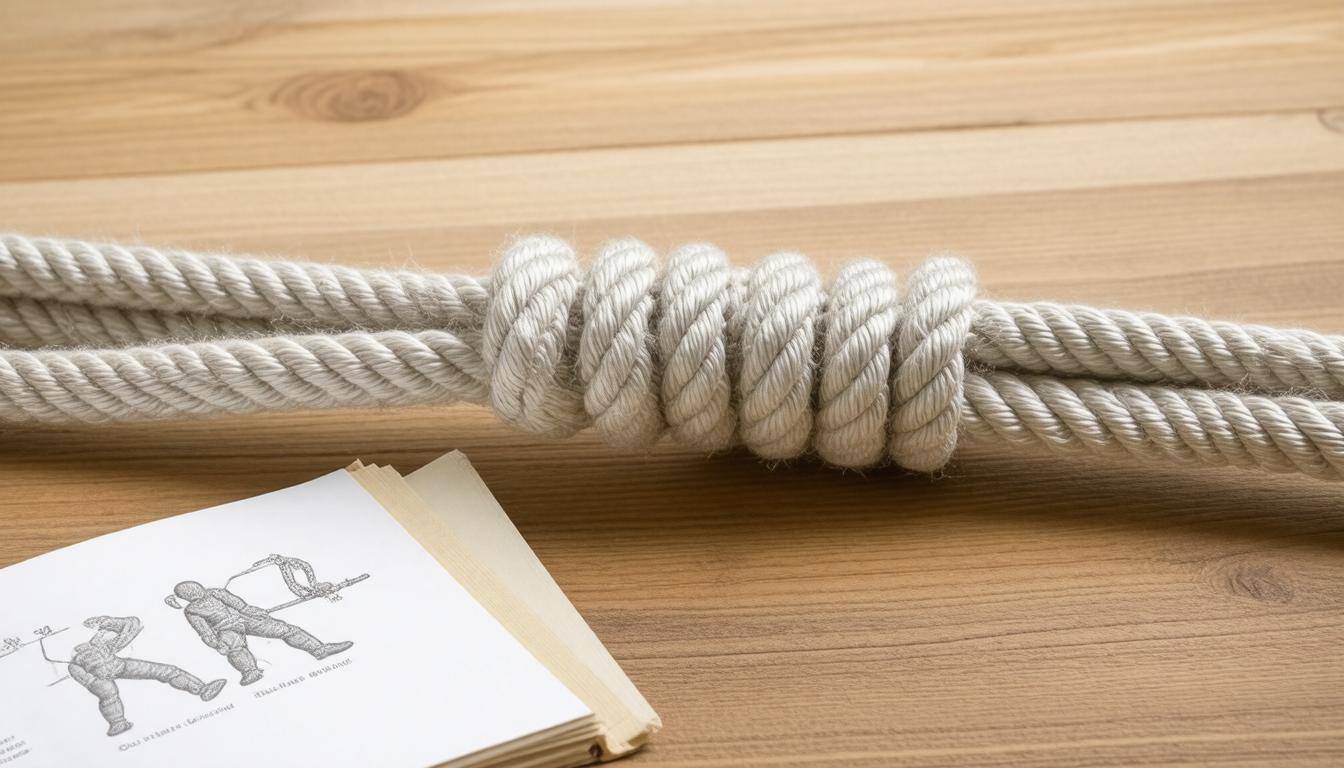
Slipknots are not just handy; they’re versatile, allowing you to create adjustable loops that can be secured tightly or released quickly. Whether you’re securing a load during a camping trip, creating a temporary anchor, or constructing other knots, knowing how to tie a slipknot is invaluable.
Steps to Tie a Slipknot
First, start by forming a loop. Grab the working end of your rope and lay it over the standing line—this is the part of the rope anchored and not being manipulated. The key here is to make sure this first loop is loose enough to work with later.
Next, twist that loop—it sounds simple, but this twist creates the foundation for your knot’s mechanics. Pull the working end through this twisted portion, which will give birth to another smaller loop. This action connects different parts of your cordage together in ways that facilitate easy adjustments down the line.
With your second loop formed, you can now adjust its size by sliding the knot up or down along the standing line. This dynamic capability means that whether you need a larger circle for securing voluminous items like tarps or a snug fit for holding something small, this knot can flexibly change and adapt.
The beauty of a slipknot lies not just in its construction but in its operability—the ability to tighten when needed yet release effortlessly by simply pulling on the tail end.
One of the critical advantages of a slipknot is its adaptability. Unlike knots that become nearly impossible to untie after bearing weight, all you need to do is tug on the end of the rope when you want to loosen your slipknot. This feature makes it exceptionally useful in emergencies where speed counts.
Some might argue that slipknots can slip under heavier loads if not properly dressed. While it’s true there’s potential for slipping, proper tensioning and dressing (ensuring all parts of the knot are snug and arranged neatly) drastically reduce this risk and maximize effectiveness.
Mastering this knot opens up a realm of possibilities for practical applications—from fishing and outdoor adventures to everyday uses around the house—showcasing their crucial role in effective survival techniques.
Making a Square Knot
The Square Knot, often referred to as the Reef Knot, is an essential skill in any survival toolbox. This knot is particularly useful for joining two lengths of rope securely or binding objects together, making it indispensable in various situations—from securing a load on your vehicle to first aid applications. Despite its straightforward mechanics and widespread usage, it’s important to be mindful of its limitations—especially when conditions become critical.
When you tie a Square Knot, you’ll notice how simple it is. Start with the right end over the left, creating an X shape. Then, wrap the right end under the left and pull tight to secure the first half of your knot. The key here is pulling firmly so that the knot doesn’t slip back on itself.
Next, you repeat the process: take the left end and cross it over the right now, pulling it under and through just like before—this forms the second half of the knot. The result is a beautiful symmetry that holds well under tension when tied correctly.
“This knot is not just about being tidy; it’s about ensuring safety too.”
One of the reasons this knot has stood the test of time is its versatility across different applications. In everyday life, you might use it to secure bandages during first aid; however, you should be cautious. While it functions well in low-stress situations, it can slip when placed under heavy weight or tension—and that’s where one must exercise discretion.
A properly dressed Square Knot can hold around fifty percent of its original rope strength but can easily jam if too much load is applied.
My personal experience has shown me that while I rely on this knot for many simple tasks like tying packages, I draw the line at using it for climbing or other life-critical applications. There’s nothing worse than realizing that your knot isn’t up to par when you truly need it to be.
That’s why learning more reliable knots, such as the Figure 8 for climbing, can be crucial alongside mastering simpler knots like the Square Knot.
Understanding how and when to use a Square Knot effectively adds another layer to your survival skills. It may not be perfect for every scenario, but knowing how to tie and apply it correctly broadens your toolkit significantly. Emphasizing good technique will help ensure you always have reliable methods at your disposal for whatever challenge lies ahead.
Transitioning from mastering essential knots like the Square Knot leads us naturally into exploring specific techniques that enhance both efficiency and safety in various scenarios.
Using a Clove Hitch
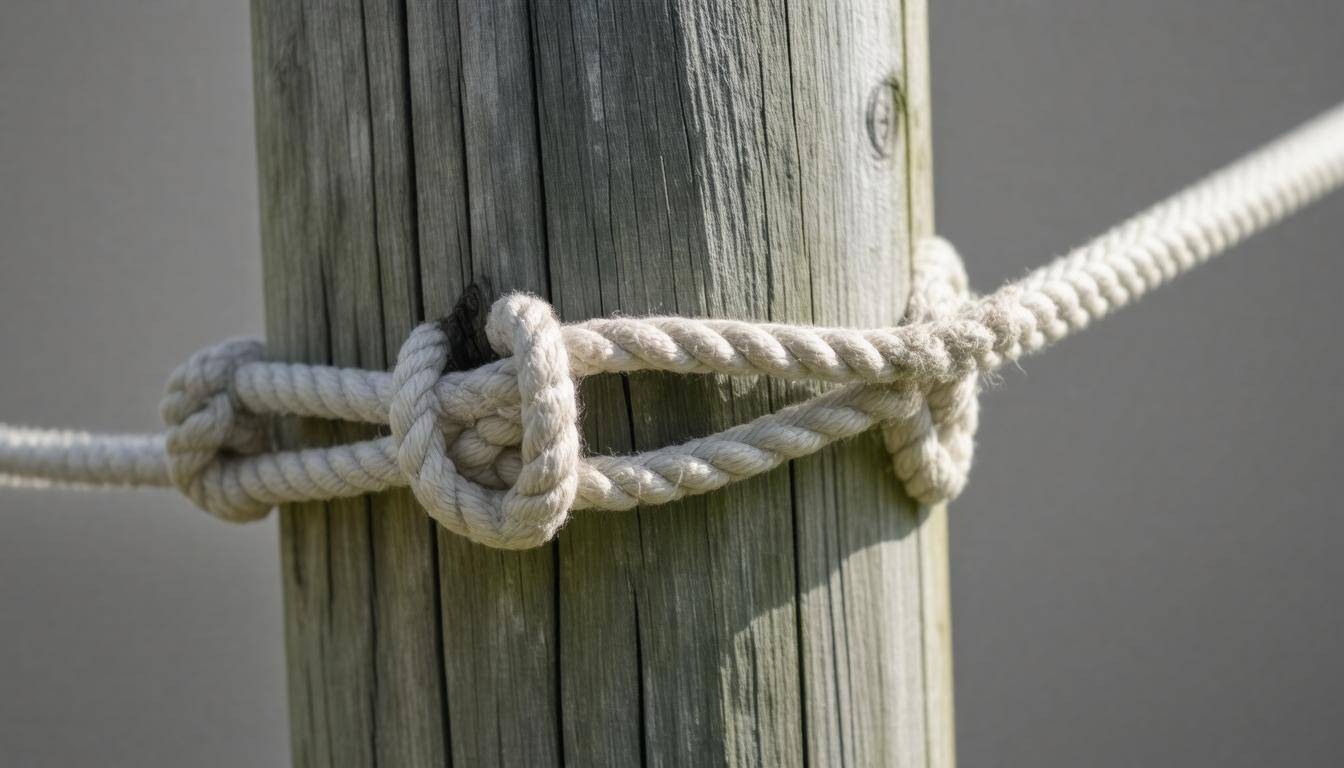
The Clove Hitch is not just another knot; it’s a lifeline in survival situations. This versatile knot shines when you need to secure a rope to an anchor point, like a tree or post, quickly and effectively. Its adjustable nature makes it incredibly useful for a range of tasks, from tying down gear to creating makeshift shelters during emergencies.
To truly appreciate its elegance, consider this: the Clove Hitch can be tied in mere seconds, which is crucial when time is of the essence. As Jessie Krebs, a U.S. Air Force SERE Specialist, often emphasizes, knowing how to tie essential knots like the Clove Hitch can make all the difference in survival scenarios.
Steps for a Clove Hitch
-
First Turn: Start by taking a length of rope and wrapping it around your anchor point—be it a sturdy pole or tree trunk—creating your first loop.
-
Second Turn: Bring the working end of the rope back around your anchor point again, ensuring that this second loop crosses over the first one; this is key for locking the knot in place.
-
Under the Cross: Next, tuck the working end under the second loop you just created, forming a secure connection.
-
Tighten: Finally, pull on both ends of the rope to tighten the knot firmly around your anchor point.
When executed correctly, the Clove Hitch fastens securely while allowing for adjustments. However, always remember that this knot can loosen if subjected to heavy loads or if tied improperly. It excels in situations where you might require temporary securing solutions, such as lashings when constructing emergency shelters or equipment setups in outdoor scenarios.
An interesting aspect of the Clove Hitch is its historical context; it has been favored by sailors and campers alike for generations due to its reliability and ease of use. Just picture yourself in an emergency situation: whether you’re setting up an improvised tarp shelter during an unexpected downpour or anchoring down gear in a rescue operation; knowing how to execute this knot gives you added confidence and security.
The Clove Hitch retains approximately 70% of the rope’s breaking strength when tied correctly—a statistic that underscores its reliability in critical situations.
Mastering the Clove Hitch adds a vital tool to your survival repertoire. With practice, it becomes second nature and opens up a world of possibilities when facing unpredictable challenges outdoors or in emergencies.
Armed with this knowledge about essential knots, we now shift our focus towards how these techniques can be practical and lifesaving during rescue operations.
Practical Knot Applications in Rescues
Knots are not just strings tied together; they embody reliability and adaptability, characteristics that become vital when lives are at stake. In rescue operations, the application of specific knots can mean the difference between success and failure. For instance, consider how a Rope Rescue System operates. Rescuers often rely on knots such as the Figure 8 and Prusik knot to safely haul victims from precarious positions. The Figure 8 knot is particularly reliable because it locks firmly without slipping, providing a sturdy means to lift someone to safety.
Furthermore, the securing of stretchers or any patient transport relies heavily on strong connections between ropes. Here, the Double Fisherman’s knot comes into play, serving as a robust method for connecting different lengths of rope. This connection creates a seamless line that keeps the patient securely fastened to the stretcher during transportation, preventing any risk of slippage or mishaps while navigating uneven terrain.
As we explore practical uses, the importance of creating anchors becomes evident.
Anchor points are solid bases that allow rescue workers to secure their ropes effectively. Notably, knots like the Bowline and Clove Hitch excel in this area. The Bowline is celebrated for its strength and reliability; it forms a fixed loop that won’t come undone under load. On the other hand, the Clove Hitch is excellent for quickly securing a rope to an anchor point. Its ease of tying and releasing makes it ideal for emergencies where time is crucial.
Imagine a rescue team scaling down a ravine to reach an injured hiker. By using a series of bowlines and Figure 8 knots, they create a secure line both for their descent and for hoisting the hiker back up. This scenario showcases not only the technical aspects of knot-tying but also illustrates how critical these skills become when seconds count. Each knot employed by the rescue team is chosen deliberately, ensuring maximum effectiveness in unpredictable conditions.
Clearly, understanding these fundamental knots and their specific applications can empower anyone involved in emergency response.
Whether it’s hauling victims or securing equipment, mastering essential knots arms you with skills that could potentially save lives during rescues. Learning these techniques fosters confidence and prepares individuals to act decisively when confronted with unexpected challenges. They reflect not merely an element of rope work but rather a vital component of effective survival strategies that resonate through countless situations where safety hangs by a thread—literally.
With this foundation in practical knot applications laid out, let’s now turn our attention to how strength and safety intertwine in knotting techniques.
Strength and Safety in Knotting
Not all knots are created equal when it comes to strength and safety; their effectiveness can hinge on both the types of rope used and the method of tying. Each knot has unique properties that dictate how much load it can handle without failing. In a survival scenario, knowing which knot to tie is as important as knowing how to tie it.
For instance, if you’re relying on a bowline for climbing, it retains only about 60-75% of the rope’s original strength. The same rule applies across various types of knots: improper technique or poor dressing can drastically reduce their efficacy.
According to the International Guild of Knot Tyers, an improperly tied knot can lose up to 50% of its strength, making accurate technique paramount.
To help illustrate this point further, consider this breakdown of commonly used knots and their performance:
| Knot Name | Breaking Strength Retained (%) | Best Use Cases |
|---|---|---|
| Bowline | 60-75% | Anchor lines, Rescue loops |
| Figure 8 | 75-80% | Climbing, Rescue systems |
| Clove Hitch | 40-60% | Quick temporary ties |
| Double Fisherman | 65-80% | Joining ropes, Securing loads |
As shown in the table, the Figure 8 knot is among the most reliable, retaining approximately 75-80% strength—making it ideal for climbing and rescue applications where failure is not an option. On the other hand, the Clove Hitch serves well for quick temporary bindings but should be approached with caution; its strength retention can be significantly lower at just 40-60%.
Beyond merely knowing these statistics, it’s also vital to emphasize proper dressing of each knot.
Properly dressing ensures consistency and maximum strength. This process involves eliminating any twists or overlaps in the rope as you tie your knots. Always inspect your knots under light stress before fully loading them in critical situations; ensuring they are securely dressed will prevent failures that could lead to dire consequences during an emergency.
In simple terms, think of your knots as the last line of defense between success and failure—they must be tied correctly to handle what lies ahead.
In summary, mastering essential knots is crucial for anyone venturing into potentially hazardous scenarios. By understanding their strengths and proper techniques, you enhance your chances of success in emergencies.