
Tsunamis are some of nature’s most powerful forces, and for those living in coastal areas like Gisborne, North Island, being prepared can mean the difference between life and death. Imagine waking up one day to the sound of sirens, knowing you have just minutes to grab what you need and evacuate. That’s why having a well-stocked tsunami kit is essential. It’s not just about packing supplies; it’s about ensuring that you and your loved ones are ready for anything. This guide will show you what every tsunami kit should include so you can face any emergency situation with confidence and peace of mind. Let’s dive into the essentials you need to stay safe and secure.
A tsunami kit for Gisborne, North Island should include essentials such as non-perishable food and water supplies for at least 72 hours, first-aid supplies, a flashlight with extra batteries, a whistle for signaling, important documents in a waterproof container, personal medications, and sturdy shoes. Additionally, including a battery-operated or hand-crank radio can provide vital updates during an emergency situation.
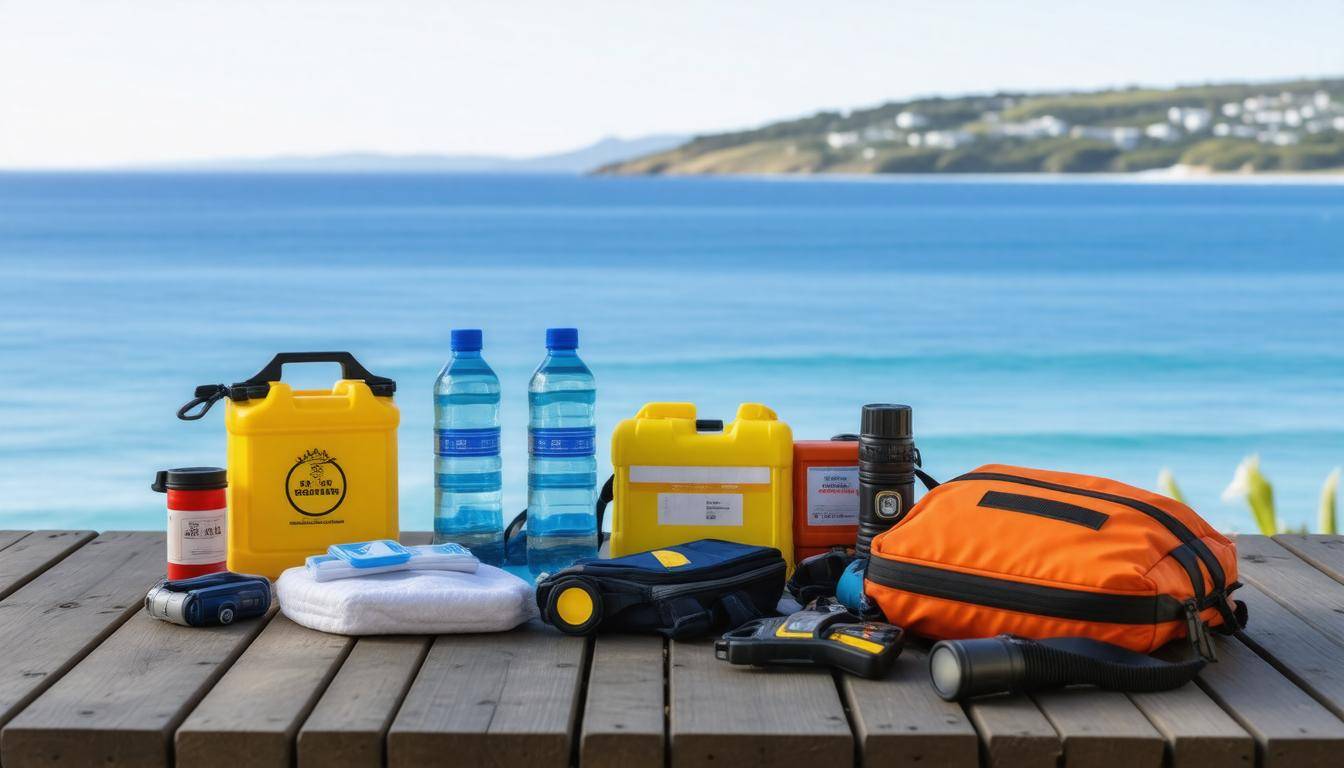
Gisborne North Island Tsunami Kit Essentials
One of the key elements in ensuring your survival during a tsunami is having an adequately stocked emergency kit. In Gisborne, where the coastal geography leaves many vulnerable, knowing what to include can make all the difference. Each item in your emergency supply kit should be curated thoughtfully to meet not only your immediate needs but also any potential challenges you may encounter in the aftermath of a disaster.
Water is the cornerstone of any emergency kit, and for good reason. You should aim for at least 4 liters per person per day, which means stocking up for a full week if you are preparing for potential evacuation. Keep in mind that dehydration can set in quickly when stress levels are high and access to resources may be limited. Consider investing in water purification tablets or filters as a precautionary measure; they can be lifesavers if your water supply becomes compromised.
Non-perishable food items are just as crucial as water; they provide the energy you will need to stay alert and healthy. I recommend packing at least 21 meals that focus on high-calorie sources, such as energy bars and canned goods that require little preparation. Think protein-packed items like tuna cans or beans, which are both nourishing and can significantly boost your physical well-being during stressful times.
A well-stocked first-aid kit sometimes gets overlooked but it is essential for managing injuries or illnesses.
Your first-aid kit should not only include the basics such as adhesive bandages and antiseptic wipes, but also any specific prescription medications you or family members might need. It’s always a good idea to ensure that your first-aid supplies are fresh, so check expiration dates regularly. Consider adding items like burn cream and pain relievers; injuries may occur from debris during chaotic evacuations.
Once your medical needs are accounted for, think about how you’ll navigate through the darkness that may follow a tsunami event.
Flashlights will be invaluable after an emergency strikes—two are ideal so that you won’t find yourself caught without light if one fails. Pair them with extra batteries, as power outages are highly likely. Also, don’t overlook shelter supplies; having a portable tent can offer protection from harsh weather conditions or provide a sense of privacy during such a tumultuous time.
Assembling tools might seem less critical amid urgent emergencies, but they have versatile uses during disaster recovery efforts. A compact multi-tool can help with everything from opening cans to conducting minor repairs on temporary shelters. Likewise, gather personal hygiene items to maintain some standard of cleanliness—soap, hand sanitizer, and sanitary products become priorities when access to routine facilities is lost.
Important documents also warrant careful consideration. Prepare copies of essential identification papers like driver’s licenses and insurance information, ideally stored in a waterproof container.
Finally, securing lines of communication is paramount; consider including a battery-operated radio or hand-crank device that allows you to stay informed about evacuation orders or emergency announcements. Having access to these updates can be indispensable when navigating through uncertain circumstances.
Understanding these essentials allows you to build a solid foundation for your preparedness efforts, providing clarity as we transition into evaluating necessary provisions for hydration and sustenance.
Water and Food Supplies
Ensuring an adequate supply of water and food is the first priority in any emergency situation. Water, being the most essential, is crucial not just for quenching thirst but also for sanitation purposes. It’s recommended that each person have a minimum of 4 liters of water per day—2 liters for drinking and 2 liters for hygiene. For a family of four preparing for a week, this adds up to 112 liters. Having access to water purification tablets or a portable water filter can be invaluable if your stored water becomes compromised or runs out.
Water Storage
Proper storage of your emergency water supply is often overlooked. One effective method is using food-grade plastic containers designed to hold liquids without leaching harmful chemicals. Alternatively, purchasing bottled water from a reputable source may also work. Regardless of your storage method, it’s crucial to rotate your water supply every six months to ensure freshness. Marking expiration dates on your containers can help with this rotation.
Additionally, don’t forget to keep extra bottles or containers handy in case you need to collect rainwater or find other sources during a disaster.
Food Types
For food supplies, include non-perishable items that pack flavor and nutrition. Canned beans, vegetables, and fruits form the backbone of many emergency kits because they can be easily opened and provide essential nutrients. High-calorie foods like peanut butter and granola bars are great additions too—they’re compact and sure to provide energy when needed.
When packing these food supplies, think about ease of use as well. Foods should require little or no preparation so you can focus on the primary objective: staying safe.
A well-rounded list might look like this:
- Canned beans, vegetables, fruits
- Peanut butter
- Granola bars
- Dried fruits
- Instant noodles (if boiling water is accessible)
- Jerky or other preserved meats
All of these options offer sustained energy without the need for extensive cooking capabilities—an especially important consideration during emergencies when resources may be limited.
With a solid foundation in sustenance secured, it’s time to explore the essential health-related items that will help maintain safety and well-being during an emergency situation.
Medical and First-Aid Necessities
A well-stocked first-aid kit can indeed be the difference between life and death in the critical moments following a tsunami, but knowing what to include is essential. Essential items go beyond a few bandages; they form the backbone of your emergency medical response. When chaos strikes, having an organized kit means you won’t waste precious time scrambling for what you need.
Basic Medical Supplies
Your kit should contain a variety of basic medical supplies. Start with band-aids in an assortment of sizes, as wounds vary, and a small cut can turn serious without proper attention. Antiseptic wipes are non-negotiable; they prevent infection and promote healing for scrapes and cuts. Include larger bandages for bigger injuries, along with medical tape to secure them firmly.
Moreover, scissors and tweezers can be lifesavers for cutting tape or removing debris from wounds, while a digital thermometer will help monitor fevers in the aftermath of stress or injury. An often-overlooked item, butterfly bandages, are particularly useful for closing larger wounds without stitches—especially effective if professional medical help is delayed.
Now that the basics are covered, let’s not forget about specific needs that individuals might require.
Prescription Medications
If anyone in your household requires daily medication—such as those for chronic conditions like hypertension or diabetes—it’s vital to have an extra supply stored within your first-aid kit. These medications could be life-saving in times of distress when access to pharmacies may be interrupted. Additionally, consider any necessary medical devices: inhalers for asthma sufferers, insulin syringes for diabetic individuals, or EpiPens for those with severe allergies.
What might come as a surprise is how often people forget to consult their physician about obtaining an emergency prescription refill. Speaking with your healthcare provider can help clarify what’s needed for your unique health situations and ensure that you’re prepared even before disaster strikes.
With health covered and essential supplies at the ready, it’s critical to also think about additional provisions that will contribute to safety and comfort during emergencies.
Safety Shelter Equipment
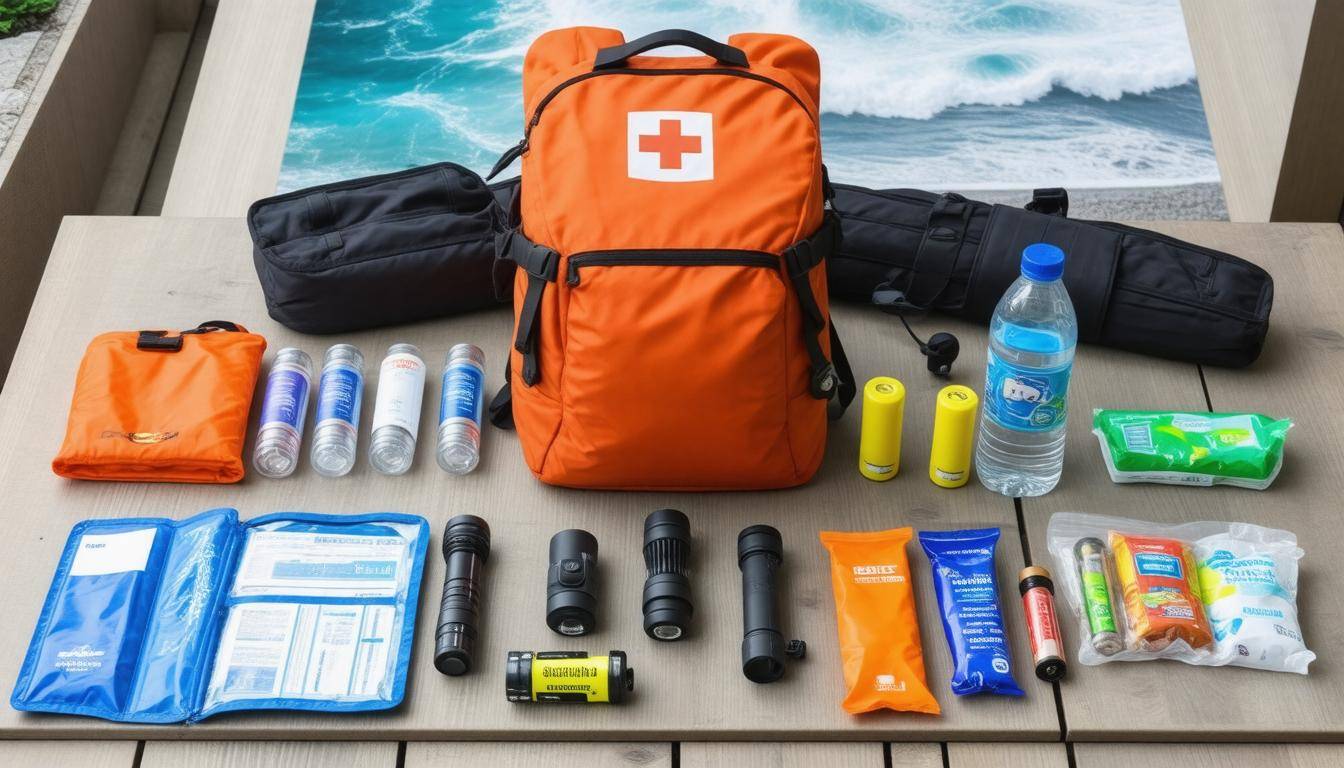
When a tsunami strikes, having reliable shelter equipment is essential for keeping safe from harsh weather and further dangers. Your primary objective should be to stay dry, insulated, and secure. The first step in preparing for this type of emergency is investing in portable shelter solutions. A lightweight, weather-resistant tent is your best bet. Not only does it provide critical protection from rain and wind, but it can also offer a sense of privacy and security during an otherwise chaotic time.
The importance of versatility cannot be overstated. In preparing your tsunami kit, include several tarps. These can serve multiple purposes: they can extend your tent’s coverage area, create additional shelters for sitting or cooking, or even be used as ground cover if needed.
Next on the list of essentials are thermal blankets. You might have seen these shiny Mylar sheets in camping gear shops or disaster preparedness kits before. Their compact size makes them easy to store, but what truly sets them apart is their ability to trap body heat effectively. When packed with care for each family member, these blankets can be a lifesaver when temperatures drop unexpectedly or when you’re forced to wait out the aftermath outside of familiar surroundings.
Additional Considerations
Don’t forget about practicality. Always consider how you will carry and set up your shelters quickly when the moment arises. Many tents come with straightforward instructions or color-coded poles that make pitching them easier than ever—even in high-stress situations. I recommend opting for pop-up tents since they require minimal effort to set up and take down.
Remember, it’s not just about having the equipment; regular practice using it will pay off when it truly counts. Familiarize yourself with setting up your tent and using your thermal blankets ahead of time so that you’re not fumbling around when every second matters. Having a well-planned approach can greatly enhance your readiness for a tsunami scenario.
“In moments of crisis, knowledge becomes your most valuable asset.”
Armed with these invaluable safety shelter essentials, your emergency strategy will become even more robust as you prepare to explore essential tools that further enhance your preparedness for unforeseen events.
Tools and Gear Checklist
Having the right tools can truly make a difference in both survival scenarios and recovery efforts after a tsunami. It’s not merely about owning these items; it’s also about ensuring they are at your fingertips when you need them most. A well-thought-out checklist will help guarantee that no critical tool is left behind.
Multi-Tool
A robust multi-tool is an absolute necessity in your kit. You might be surprised at the variety of tasks it can facilitate—from cutting through ropes that may entangle you to opening canned goods when supplies run low. Look for one that includes various features like screwdrivers, pliers, and a knife blade all in one compact design. For those unforeseen challenges, this single device can serve multiple purposes, saving both time and space.
Safety Gear
Equally important are safety gear items that protect you while assessing damage or navigating debris-filled areas. Work gloves made from durable materials will shield your hands from sharp edges and potential contaminants. Safety goggles are critical for protecting your eyes from flying debris or dust, while masks can help filter out harmful particles in the air. Don’t overlook simple yet effective tools like a crowbar; its ability to pry open doors or shift rubble can be crucial during recovery.
Once you’ve gathered these essential tools, we’ll turn our attention to the best strategies for packing them efficiently, ensuring they’re readily accessible whenever an emergency strikes.
How to Pack Your Tsunami Kit
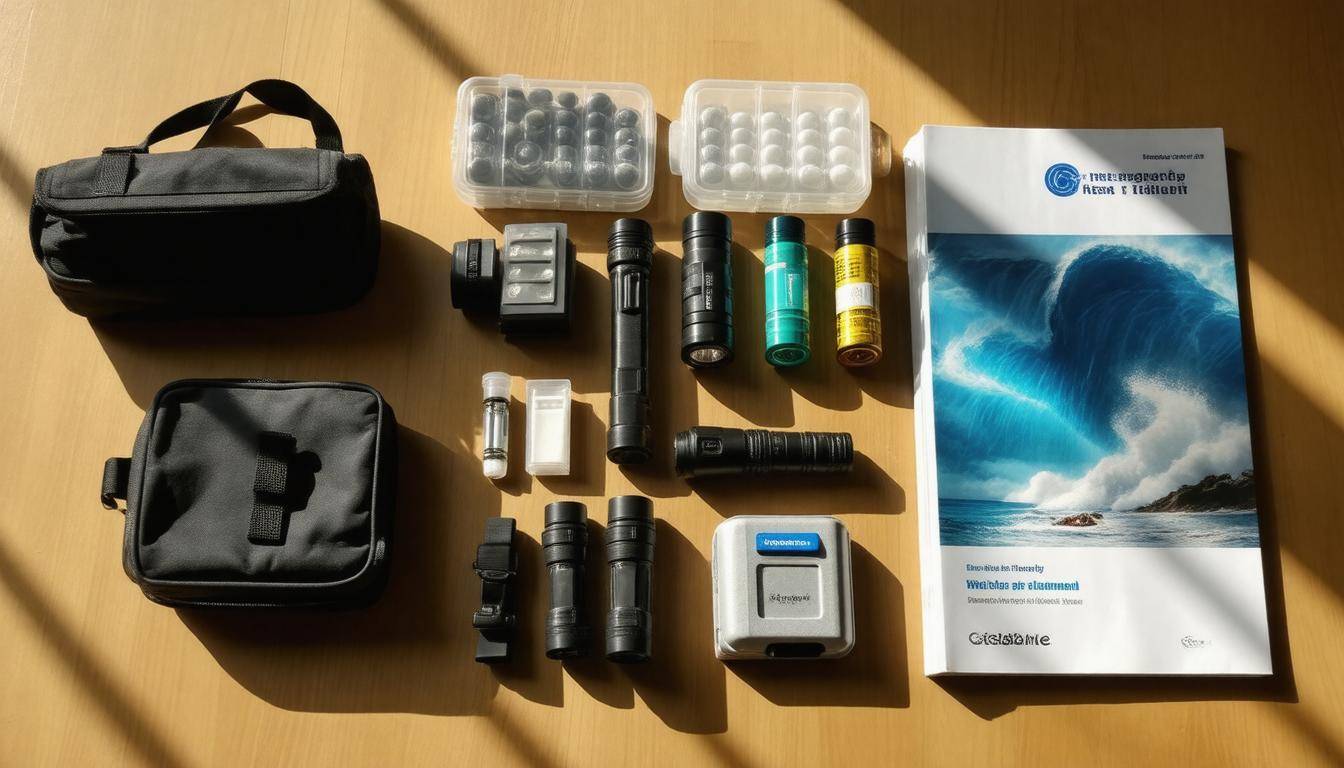
Efficient packing is crucial; it will make grabbing your tsunami kit a breeze during those critical moments. Start by choosing a durable, comfortable backpack for each family member, taking into account their individual needs and preferences. Remember, this bag should house everything each person might need to survive for at least 72 hours. Be it water bottles, non-perishable snacks, or personal medications—everything must fit snugly yet be easily accessible.
Step-by-Step Guide
Begin with the essentials: heavy-duty, waterproof bags for items that could sustain water damage such as flashlights, batteries, and important documents. The goal here is to protect these critical tools from moisture if the worst-case scenario unfolds. Layer these protective bags inside the main backpack.
Next, focus on weight distribution; always pack the heaviest items at the bottom. This strategy maintains stability and comfort when carrying your kit. Imagine trying to run to safety holding a lopsided bag—it’s not only cumbersome but can also throw your balance off.
As you move on to smaller items like matches or first-aid supplies, utilize smaller compartments and zip-lock bags for organization. Having these little items separated makes it easier to find what you need quickly rather than rummaging through a jumbled sack in a hurry. You won’t want to waste precious time searching for matches when you really need them.
Keeping each family member’s bag equipped with at least a one-day supply of basic necessities is essential. Make sure they include food, water, clothes, and any necessary medications tailored to meet special health requirements.
Consider adding personal items too—perhaps your child wants to include a favorite toy or blanket; these small comforts can be incredibly reassuring in stressful moments. Lastly, routinely check and update the contents of each kit to ensure that food hasn’t expired and that everything remains functional.
With your tsunami kit packed effectively, you are ready to move on to building a comprehensive plan that encompasses every aspect of preparedness needed for unexpected events.
Creating a Preparedness Plan for Gisborne
A comprehensive plan is essential for effective response during a tsunami, especially in regions like Gisborne that are vulnerable to coastal threats. Your preparedness plan should embrace several key components, including how to communicate with family during an emergency and identifying evacuation routes.
Family Communication Plan
Begin by establishing a meeting point where your family can gather if disaster strikes. Whether it’s the front yard or a local park, choosing a spot that everyone knows makes it easier to regroup when tension may be high. Ensure all family members are aware of this location and encourage regular discussions about the importance of reaching it quickly.
Moreover, create a list of emergency contacts, which should include relevant local authorities like the Civil Defence and out-of-town relatives. In an emergency, communication channels may be disrupted locally; having contact details for someone outside the area can be invaluable. Make sure everyone in your household knows how to access this list—consider keeping copies in your kits or even shared digital folders.
Tsunami Evacuation Routes
Understanding tsunami evacuation routes is vital to ensuring everyone knows where to go when seconds count. Familiarize yourself with these routes by studying maps available from local emergency services and practicing them together as a family. By doing so regularly, you can reduce panic and enhance confidence among household members.
Consider setting aside time annually to walk along these routes under normal circumstances so they become second nature when urgency arises. Practicing your evacuation plan not only instills calmness but also reveals any gaps that might need addressing—perhaps certain paths are too long or risky. Create scenarios where you simulate an evacuation, which can help consolidate this knowledge further.
These preparations not only equip you for potential emergencies but also enhance community resilience, fostering unity and awareness among families during times of adversity. Let’s now explore how to keep your emergency supplies current and effective for any situation.
Regularly Updating Your Emergency Kit
An outdated kit can indeed be as dangerous as no kit at all. When the time comes to rely on your supplies, you should have peace of mind knowing that every item is fresh and functional. The first step in ensuring this is through regular review dates and supply rotation.
Review Dates and Rotate Supplies
Every six months, sit down, perhaps with a cup of tea or coffee, and check the expiration dates on food items and medications within your kit. This small commitment can have a big impact; after all, having expired goods during an emergency offers no benefit. This routine not only ensures that your supplies are safe but also gives you an opportunity to familiarize yourself with what you have available.
While inspecting your supplies, take the time to rotate out any old items and restock as needed. Wouldn’t it be frustrating to find that the energy bars you bought years ago are ineffective when you really need them? If you use something from your kit in preparation for an event or an exercise drill, replace it right away to maintain readiness.
But don’t stop there; aside from food and medications, other tools in your kit require attention too.
Regularly testing flashlights and radios is crucial. Imagine reaching for a flashlight during a power outage only to find it’s dead! For optimal performance, change batteries proactively—preferably every six months—or charge them if they’re rechargeable. The same goes for your radio; ensure it’s functioning correctly and has access to AM/FM channels for updates during emergencies.
Keep a checklist of all these tasks next to your emergency kit so you won’t overlook anything on your next review. Consistency and organization make updating easier and reinforce your preparedness mindset. Remember, an emergency can arise at any moment—having peace of mind knowing that you’re ready alleviates much of the stress associated with potential disasters.
Taking the time now to ensure that your emergency kit is current and equipped will spare you from future worries when it matters most.
In sum, regularly updating your tsunami preparedness kit is essential for ensuring safety and reliability in times of crisis. Staying proactive today means you’re better equipped for tomorrow’s challenges.
Are there specific local resources available for assistance in preparing a tsunami kit?
Yes, Gisborne has several local resources to assist residents in preparing a tsunami kit. The Civil Defence website provides guidelines tailored for the region, including recommended items like water, non-perishable food, and first-aid supplies. Additionally, local community centers often hold workshops on emergency preparedness, ensuring that residents are well-informed. According to data from recent years, being adequately prepared can significantly reduce response time during an emergency, potentially saving lives.
What specific items should be included in a tsunami preparedness kit for residents of Gisborne?
A tsunami preparedness kit for residents of Gisborne should include essentials such as water (at least 3 liters per person per day), non-perishable food, a first aid kit, a flashlight with extra batteries, and a portable phone charger. Residents should also pack important documents in a waterproof container, a multi-tool, and personal hygiene items. Coastal areas like Gisborne are vulnerable due to their geography; thus, having an emergency kit ready can significantly enhance survival chances during such natural disasters, as timely access to resources can be crucial when evacuation becomes necessary.
How do community warnings or alerts work in Gisborne when a tsunami may occur?
In Gisborne, community warnings or alerts for potential tsunamis are primarily disseminated through a combination of sirens, text alerts, and emergency broadcasting channels. The local civil defense operates a well-established communication system that ensures prompt dissemination of information to residents, often utilizing social media and local radio stations for updates. Studies show that effective warning systems can reduce the risk of casualties; for instance, communities with timely alerts have reported up to a 90% compliance rate in evacuating during tsunami threats, highlighting the importance of awareness and preparedness in mitigating disaster impact.
What additional precautions can residents take to enhance their safety during a tsunami threat?
Residents can enhance their safety during a tsunami threat by regularly participating in community drills, establishing a clear evacuation plan that includes multiple routes to higher ground, and securing heavy furniture or items that could pose risks during shaking. According to the National Oceanic and Atmospheric Administration (NOAA), communities that conduct regular preparedness exercises see a 70% improvement in response times during actual emergencies. Additionally, staying informed via local emergency services and weather alerts can empower residents to act swiftly and confidently.
How often should I update or check my tsunami kit to ensure its effectiveness?
You should check and update your tsunami kit at least once every six months to ensure its effectiveness. Regular checks help replace expired food, batteries, and first aid supplies, as well as confirm that all items are in working condition. Statistics show that emergency preparedness can reduce injuries and fatalities; hence, keeping your kit fresh and ready is crucial for surviving a tsunami. Don’t forget to rehearse evacuation plans with your family during these checks!