
When it comes to living in Bangkok, the reality of flooding is something many residents have to consider. Frequent storms and seasonal rains can quickly transform streets into rivers, which makes being prepared not just smart but essential. As a writer who has observed and learned from the experiences of others facing these challenges, I understand the importance of having a well-thought-out emergency plan. Whether you’re new to the city or have lived here for years, preparing an emergency kit can give you peace of mind and potentially save lives when disaster strikes. In this guide, we’ll explore the crucial items every Bangkok resident should include in their flooding emergency kit and how to maintain it effectively so you’re always ready.
Your Bangkok Flooding Emergency Kit should include essential items such as bottled water, non-perishable food, a first aid kit, flashlights with extra batteries, a waterproof backpack, important documents in a sealed bag, and any necessary medications. Additionally, consider including a multi-tool, blankets, and communication devices to ensure you are well-prepared during a flooding emergency.
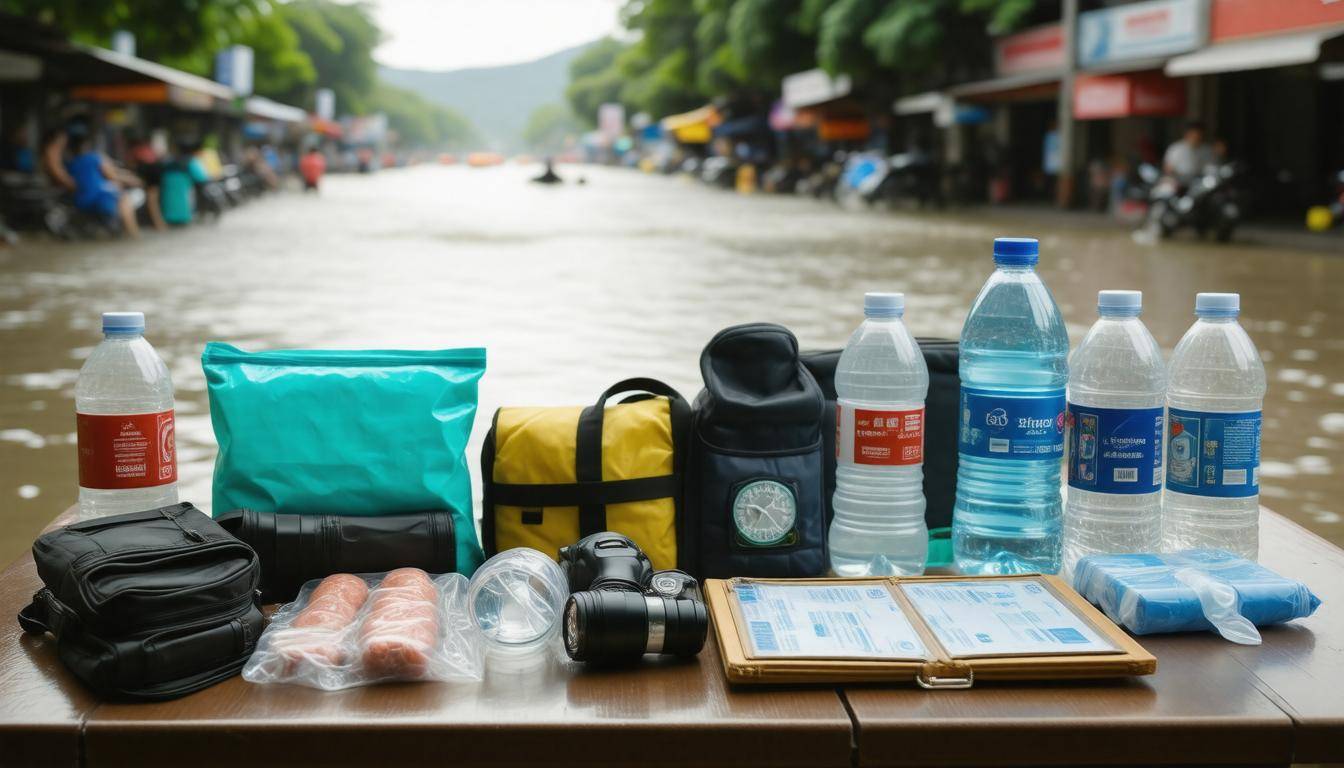
Essential Items for Your Emergency Kit
Start with the basic necessities. These should be your go-to items when facing a flood scenario. A flashlight is your lifeline in darkness; it not only illuminates your path but can also serve to signal help if needed. Pair that with extra batteries, because when the power goes out, having a backup plan is essential. A multi-tool acts as a compact toolbox, versatile enough for various tasks, while waterproof matches or lighters are indispensable for warmth and cooking. Don’t forget a whistle—this small tool could make a huge difference, allowing you to call for assistance without exhausting yourself.
Now, we shift our focus to documentation. In the chaos of an emergency, losing your identification or important papers can add to the stress of your situation. Protect your vital documents by storing them in a waterproof pouch. Your ID, insurance information, and medical records are crucial not just for your safety during evacuation but also for securing help when you need it most. To further safeguard this information, consider creating digital backups on a USB drive. This twist in preparedness means that if the physical copies are lost or damaged, you still have access to critical information.
Having cash on hand is also essential for navigating emergencies effectively.
Carrying cash and coins may seem quaint in today’s digital world, but during a flood crisis, ATMs might become non-functional or inaccessible. When faced with limited options, cash in small denominations allows you to make necessary purchases quickly—from food and water to other essentials that might be available from local vendors. It’s like having an insurance policy against being stranded without resources. Not to mention, small bills will be more manageable for transactions when supplies are limited.
With these basics outlined, it’s time to consider nourishment and hydration—critical components during a flood scenario where regular access to resources may dwindle significantly.
Food and Water Storage Solutions
When it comes to preparing for floods, the way you store your food and water can make all the difference. I can’t stress enough that maintaining a careful approach to storage will not only keep your supplies safe but also accessible when you need them most.
For instance, having at least one gallon of water per person per day is vital, but it’s essential to think about how this water is stored. Using heavy-duty plastic containers with secure lids keeps contaminants at bay and ensures that your drinking water doesn’t get mixed with other supplies.
In fact, research conducted by the Red Cross illustrates that proper food storage techniques can diminish the risk of illness during emergencies by 65%. To achieve this level of safety, consider looking beyond traditional options. Instead, opt for waterproof storage containers or even specialized food-grade buckets; these are great for long-term storage as they seal out moisture and pests.
Moreover, investing in portable filtration systems or water purification tablets—like those from LifeStraw—can enhance your preparedness even further.
When storing food, choose non-perishable items that require minimal preparation. Consider items like canned vegetables, protein bars, dried fruits, and nuts. These foods not only provide essential nutrients but also offer sustained energy without needing cooking or refrigeration. However, ensure that any canned goods are stored in a cool, dry place to avoid spoilage; metal cans can rust if exposed to moisture over extended periods.
If you have babies or young children in your family, planning becomes even more critical. Stock up on baby formula alongside additional purified water for mixing purposes. The importance of having enough supplies specific to their needs cannot be emphasized enough amid emergency situations where access might be limited.
Taking the necessary steps in organizing a solid food and water storage system lays down a strong foundation for overall safety. This groundwork allows for smoother preparation when it comes time to gather essential lifesaving materials focused on health and protection.
First Aid Supplies and Safety Gear
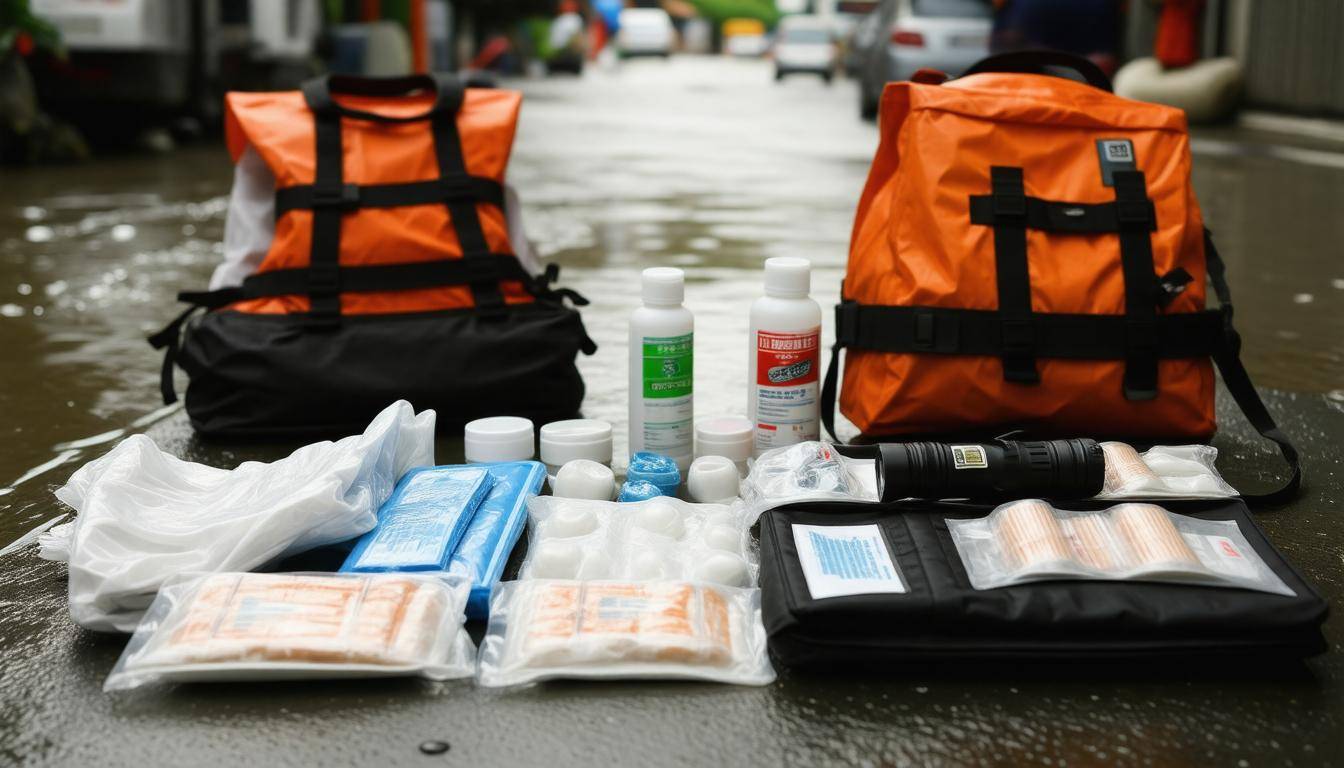
When preparing for flooding emergencies, having a well-stocked first aid kit is essential for ensuring safety amid chaos. Injuries can arise quickly, as rushing water, debris, or even minor accidents while evacuating can lead to significant health risks. A comprehensive first aid kit not only addresses immediate injuries but also plays a crucial role in preventing worsening conditions until professional help arrives.
What to Include
To ensure your first aid kit is effective and functional, let’s break down the essentials you’ll want to include.
Medications should be prioritized—having at least a seven-day supply of any prescription medications for everyone in your household is critical. This can’t be overstated; without access to necessary medications, underlying health issues may escalate under stressful conditions.
Next, basic first aid items are your bread and butter. You’ll need bandages, antiseptic wipes, gauze pads, medical tape, and scissors. These are vital for treating cuts and scrapes that could easily become infected in unsanitary conditions. Remember to check your kit periodically to ensure these supplies haven’t expired. Regular rotation will keep your supplies fresh and ready for use.
Beyond the basics, adding some additional supplies elevates your preparedness significantly. Consider including a thermometer to monitor potential fevers when illness strikes, tweezers to remove splinters or ticks, safety pins for securing dressings or slings, and an emergency blanket for warmth or shock prevention. Each item serves a purpose in maintaining comfort as well as physical health during a crisis.
Safety Gear
Preparation doesn’t stop with first aid supplies; you must also consider safety gear. Investing in life jackets and gloves provides essential protection against injury while navigating flood waters. Life jackets keep you buoyant if you find yourself in deep water unexpectedly, whereas gloves protect your hands from sharp debris that might lurk beneath the surface.
Masks are another crucial addition—you want to guard against inhaling dust particles or contaminants when handling debris after the immediate danger has passed. Floodwaters can harbor waterborne illnesses, which can lead to serious infections; wearing safety masks helps protect against those risks while you work to clear your property.
According to a report by the World Health Organization, injuries are one of the leading causes of death during floods—making first-aid readiness and safety gear essential components of your emergency kit.
By ensuring that both first aid essentials and safety equipment are part of your emergency preparations, you’re taking definitive steps toward enhancing personal safety during flooding events. Next, we will explore the protective garments and tools necessary for dealing with such emergencies effectively.
Protective Clothing and Tools
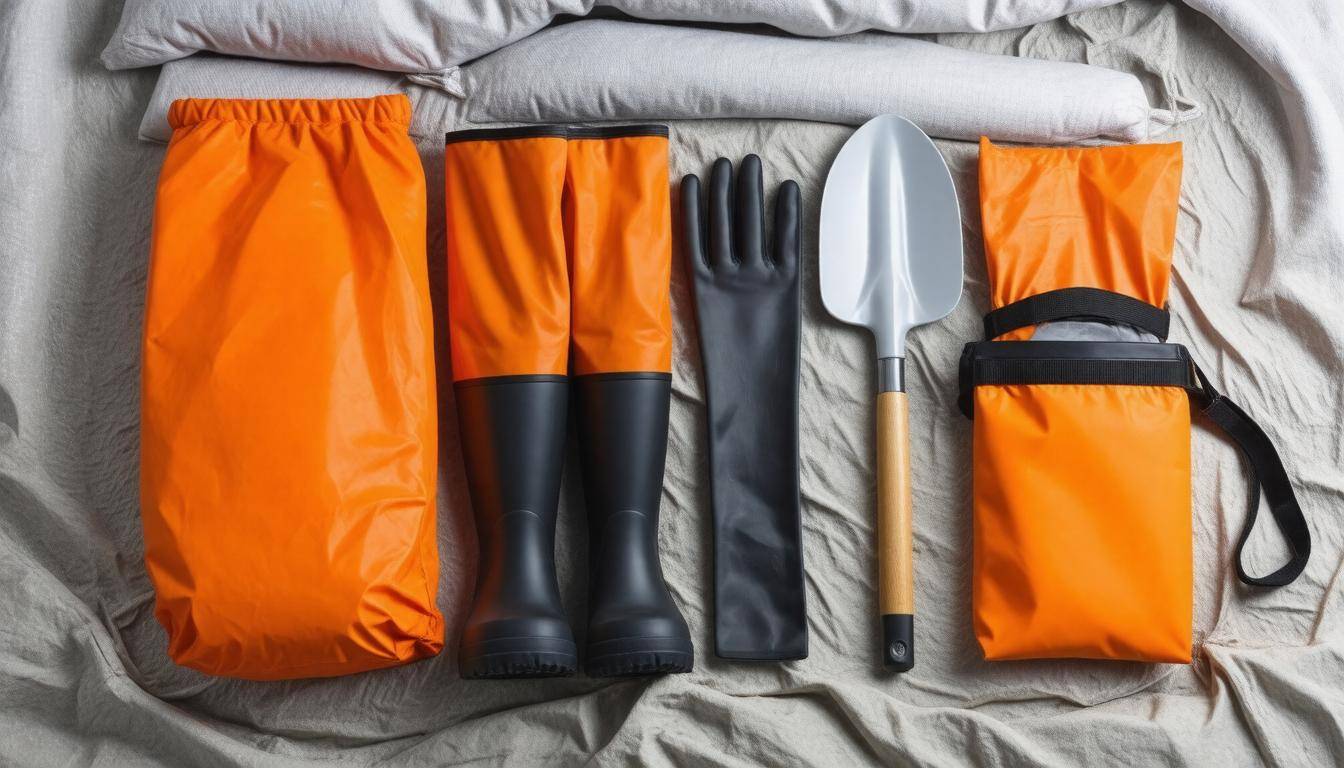
In flood emergencies, proper clothing and tools can truly be lifesavers. Imagine facing rushing waters in shoes that aren’t waterproof; it’s not just uncomfortable, it can be dangerous. This is why investing in high-quality protective clothing is vital for any emergency kit. A sturdy, waterproof jacket keeps you dry and serves as a windbreaker when the weather turns unexpectedly harsh. Coupled with waterproof pants, it creates a barrier against both water and cold—an essential combination for maintaining body heat during a flood.
Equally important are solid boots; think of them as your first line of defense against muddy, slippery conditions. A friend once shared their harrowing experience of navigating through flooded streets while wearing regular sneakers, leaving them unable to move safely. On the other hand, those equipped with waterproof boots were able to traverse confidently without fear of slipping or soaking their feet in contaminated water.
Gear to Gather
Let’s explore the tools that complement your clothing in ensuring safety. Among these, a durable shovel cannot be overlooked. This tool serves multiple purposes—from clearing debris blocking your exit routes to digging trenches that can redirect water away from your home. Its versatility makes it an invaluable asset when every second counts.
Have you ever thought about which tools could save you in an unexpected situation?
Another essential item is rope. It may seem simple but its uses are numerous—from securing items that might float away to creating makeshift barriers or rescuing someone in distress. Portable chargers, particularly solar-powered ones, are also crucial for keeping communication lines open. During flooding emergencies, power outages often occur, leaving you without access to news or means to contact help.
Staying prepared requires foresight and knowledge of these essential supplies. Remember, being equipped isn’t just about having these items but knowing how to use them effectively under pressure. In floods, every decision can have lasting effects; understanding your gear’s functionality will enhance your ability to act calmly amidst chaos.
With your protective clothing and tools ready, it’s time to shift focus toward developing safe procedures for ensuring timely evacuation during an emergency.
Planning Your Evacuation Route
Planning an evacuation route is crucial when facing the threat of flooding. It’s not just about knowing how to get out, but also having a well-thought-out plan that ensures the safety of you and your loved ones. When I lived in areas prone to flooding, understanding the safest paths provided peace of mind—after all, quick decision-making can make all the difference.
The first step is identifying safe locations. This means knowing where the nearest elevated areas are, such as hills or designated shelters that are less susceptible to flooding. These locations should be within a reasonable distance so you can reach them quickly—even on foot if necessary. Taking time to familiarize yourself with these points before an emergency occurs can significantly reduce panic during an event.
After pinpointing these safe havens, consider the importance of mapping out multiple routes. Flooding can be unpredictable; roads can become impassable within minutes due to rising waters or debris buildup. Therefore, it’s wise to arm yourself with several alternative paths leading to those safe locations. To help with this, you might want to use a physical map or a digital tool like a mapping app on your phone to view real-time information about road conditions and detours. The last thing you want is to find yourself stuck with no way out because your only route became flooded.
Next, ensure you share the plan with all household members. Everyone should know what to do and where to go in case of an emergency evacuation. This includes discussing meeting points if family members happen to be separated during the initial moments of the flood’s onset. Additionally, create a communication plan outlining who’s responsible for what—whether it’s grabbing important documents or caring for pets. A prepared group operates much more efficiently than one that is unsure or panicking.
Regularly review this plan as your surroundings or household may change over time. Keeping everyone updated with periodic drills not only reinforces the evacuation plan but also makes for better preparedness when disaster strikes. Having clear knowledge and practiced routes ensures that every moment counts when it matters most.
With your evacuation plan solidified, it’s essential to establish connections and readiness among your support network for any emergency situation.
Creating Emergency Contacts List
Communication is vital during a flood emergency, and having an organized emergency contacts list can make all the difference in ensuring that you and your loved ones remain informed and safe. To start, gather contact information for family and friends. This means going beyond just listing names—include reliable cell phone numbers, email addresses, and even social media handles.
It’s not uncommon for traditional communication lines to be disrupted, so having various means of reaching out can give you peace of mind.
In addition to personal contacts, don’t overlook the importance of including local authorities. This should encompass emergency services numbers, such as the police, fire department, and ambulance service, along with details for hospitals and local disaster response units. Knowing whom to call in case of an emergency can alleviate panic and streamline your response during high-stress situations.
Make sure these numbers are accessible; consider storing them as digital contacts on your phone and writing them down for quick access.
You should also compile a list of utility providers—numbers for water, gas, and electricity companies. Floods can cause outages or hazardous situations like gas leaks or electrical malfunctions. Being able to quickly report issues can help mitigate dangers to your home and family.
Some families take an additional step by creating a laminated contact card that each member keeps in their wallet.
This simple tool can serve as a reliable guide when stress levels escalate or when technology fails us during emergencies. It’s also worth including important health information on this card, such as allergies or medical conditions that might need attention or could affect rescue efforts.
While maintaining contact is critical for safety, proactive steps towards safeguarding your residence can significantly enhance your preparedness against potential flood threats.
Home Flood-Proofing Measures
Taking proactive steps to flood-proof your home can significantly mitigate damage and help you breathe easier during storm season. One essential measure is elevating electrical systems. By raising electrical outlets, switches, and major appliances above predicted flood levels, you drastically reduce the risk of electrical failures and potential fire hazards that often follow floods.
Beyond electrical aspects, it’s crucial to consider the materials in your home. Using water-resistant materials during construction or renovations can save you headaches down the line. For example, opting for ceramic tile rather than wood for flooring can make a significant difference. When soaked, wood can warp, rot, or harbor mold; tiles are much better equipped to withstand wet conditions.
Another effective strategy involves sealing cracks in walls and foundations with waterproof sealants. Even the smallest fissures may be enough to let in water during heavy rains or floods. By actively filling these gaps, you’re protecting your home while preserving its structural integrity.
Statistics show that FEMA reports flood-proofing can reduce flood damage costs by up to 80%, revealing just how impactful these measures can be.
Implementing these practical approaches not only shields your property but also fosters peace of mind amid nature’s unpredictability. With preparations set, the next logical step is ensuring that your kit remains ready for action at all times.
Regular Kit Maintenance Tips
Regular maintenance is often overlooked, but it transforms your emergency kit from just a collection of items into a reliable lifeline during a crisis. Think of it as tending to a garden; without care and attention, even the most robust plants will wither. By committing time to maintain your emergency kit, you ensure that every component is ready and functional when you need it the most.
Steps for Maintenance
First and foremost, regular checks should be non-negotiable. Every three months, set aside some time to thoroughly inspect your kit. This means taking out food items to check their expiration dates, testing batteries in devices, and potentially replacing any supplies that have seen better days. Spoiled food or failing batteries can lead to dire situations when they are needed most. A good rule of thumb is to list all items in your kit and create a schedule for checking them off one by one.
Once you’ve assessed the contents of your kit, the next step involves updating vital information.
Keeping your documents current is just as crucial as ensuring the physical elements of your kit are effective. Do you have copies of important identification, insurance details, and local emergency contacts? It’s easy to forget these when life gets busy, but making sure they’re updated could make all the difference during an emergency. Consider adding a small file or zipper bag within your kit specifically for these papers so they stay dry and intact.
After securing the essentials on paper, it’s vital to turn our attention towards your equipment.
Testing equipment such as flashlights, generators, and radios regularly cannot be overstated. These tools hold immense power; they provide light during darkness and communication in times of isolation. Imagine reaching for your flashlight only to find dead batteries—you’d feel helpless in that moment! To circumvent this frustration, I recommend a quick monthly test where you power everything up and replace batteries if necessary. This simple act might save you hours of discomfort when disaster strikes.
One Bangkok resident shared their experience: “After regular checks and updates saved my family during the flood of 2024, I can’t stress enough the importance of keeping everything ready.”
With regular maintenance integrated into your routine, you’re not leaving anything to chance; you’re taking control of your preparedness journey.
By prioritizing regular checks and updates for both supplies and equipment, you enhance your readiness for emergencies. Staying prepared is not just about having the right items; it’s also about ensuring those items work effectively when it counts.
Are there any local resources or organizations that provide assistance with flood preparedness?
Yes, in Bangkok, several local organizations and resources can assist with flood preparedness. The Bangkok Metropolitan Administration (BMA) often provides updates and guidance on emergency preparedness. Additionally, the Thai Red Cross Society offers training and emergency kits to help residents prepare for flooding. According to a 2022 survey, around 60% of Bangkok residents were unaware of available flood preparedness programs, highlighting the need for increased awareness and engagement with these local resources.
How often should I check or update my emergency kit for flooding?
You should check and update your emergency kit for flooding at least twice a year or whenever there are significant changes in your household, such as moving or the addition of family members. This ensures that you replace expired items, replenish supplies, and keep your kit relevant to current needs. According to FEMA, nearly 60% of Americans do not have an emergency plan or kit prepared, emphasizing the importance of regular updates to ensure readiness in case of flooding emergencies.
What essential items should be included in a flooding emergency kit specific to Bangkok’s climate?
A flooding emergency kit for Bangkok should include essential items such as non-perishable food, bottled water (at least one gallon per person per day for three days), a flashlight with extra batteries, a first aid kit, sturdy shoes or boots, waterproof bags for important documents, and a multi-tool. Given that Bangkok is prone to seasonal flooding—averaging up to 1,000 mm of rainfall during monsoon months—having these supplies on hand can help ensure safety and survival during an emergency. Additionally, it’s wise to include local maps and any necessary medications tailored to individual needs.
How can I ensure my home is prepared not just with an emergency kit but also structurally against potential flooding?
To ensure your home is structurally prepared against potential flooding, elevate your property by raising the foundation or installing flood barriers and levees. Additionally, utilize waterproofing techniques for the basement and seal all cracks in your walls and floors. According to FEMA, homes located in a flood zone face a 26% chance of flooding during a 30-year mortgage period, so integrating these strategies can significantly reduce damage risk and enhance safety during severe weather events.
What specific first aid supplies should I have on hand for flood-related emergencies?
For flood-related emergencies, it’s crucial to have a well-stocked first aid kit that includes adhesive bandages, sterile gauze pads, antiseptic wipes, antibiotic ointment, tweezers, scissors, and a digital thermometer. Additionally, consider including items like a splint, pain relievers, and any necessary prescription medications. According to the Centers for Disease Control and Prevention (CDC), injuries during flooding can arise from debris and contaminated water, making these supplies essential for treating wounds and preventing infections. Being prepared can significantly reduce health risks in such situations.