
When it comes to our most important documents, it’s easy to overlook the significance of something as simple as a birth certificate. However, this small piece of paper holds immense value—it’s like a key that unlocks many doors in life, from applying for jobs to enrolling in school or even traveling overseas. Unfortunately, many people don’t think about where they store it until it’s too late. The truth is, losing your birth certificate or having it damaged can lead to frustrating delays and costly replacements. In this guide, we’ll explore practical tips and effective strategies to keep your birth certificate safe and secure, ensuring you’re always prepared when life throws unexpected challenges your way.
The best practices for emergency storage of birth certificates include using a combination of physical and electronic storage methods, such as keeping physical copies in a fire-resistant and waterproof bag or lockbox, while also creating digital backups stored securely. Additionally, it is essential to organize these documents efficiently alongside other vital records to ensure quick retrieval during an emergency situation.

Why Birth Certificate Protection Is Essential
Your birth certificate serves as a cornerstone of your identity, acting as a primary form of identification. This document isn’t merely a piece of paper; it is often required when you’re obtaining other critical documents like a driver’s license, passport, or social security card.
For example, when John Doe moved overseas, he needed his birth certificate to secure his visa and work permit. Without it, he could have faced significant delays in starting his new life abroad. This illustrates how a single document can have tremendous implications on your mobility and opportunities.
1. Identity Proof
In today’s world, where identity theft is alarmingly prevalent, ensuring the safekeeping of your birth certificate is paramount. It not only establishes who you are but also acts as the first line of defense against identity fraud. If an unauthorized person gains access to your birth certificate, they could potentially impersonate you, leading to financial loss and legal complications that may take years to resolve.
Thus, by keeping this vital record secure, you are taking proactive steps to protect yourself from such risks.
2. Legal Requirements
Numerous legal processes require your birth certificate for verification purposes. Whether enrolling in school, getting married, or acquiring health insurance, the absence of this document could result in delays or outright denials.
Imagine attempting to enroll your child in school only to find out that without their birth certificate, you can’t complete registration—a frustrating impediment that could have easily been avoided with proper protection.
Why leave something so vital unsecured? Keeping your birth certificate protected allows for smoother transitions through life’s pivotal moments—whether those involve education or employment.
With the understanding of why it’s crucial to safeguard your birth certificate in mind, let’s explore effective storage solutions that can ensure its protection during emergencies.
Secure Home Storage Options
At home, there are several secure storage methods to keep your birth certificate safe from damage or theft. Taking a proactive approach can save you significant stress in emergencies. One of the most reliable methods is using a fireproof safe. Consider this: fire incidents cause nearly $13 billion in property damage in the United States annually. This staggering statistic highlights how essential it is to protect your vital documents from fire damage. A well-rated fireproof safe, such as the SentrySafe SFW123GDC, can withstand high temperatures and provide a secure environment for your certificates and other important records.
By investing in a fireproof safe, you’re not just buying a box; you’re ensuring peace of mind against one of the most destructive forces imaginable.
Yet fire isn’t the only peril that can threaten important papers. Water damage is another major concern, particularly if you live in flood-prone areas.
Water-Resistant Pouches
Water damage from leaks or floods can be equally devastating to your documents. A water-resistant pouch offers an easy way to safeguard your birth certificate from moisture-related threats. For instance, the AquaVault Waterproof Floating Pouch has received positive feedback for its ability to withstand submersion without compromising contents. These pouches are handy not just for securing physical documents at home but also for taking them along during travels or evacuations.
When selecting a pouch, make sure it’s rated for waterproof protection, meaning it can handle submersion in water for a reasonable time—typically between 30 minutes to an hour. This piece of extra security could be lifesaving if an unexpected occurrence arises in your surroundings.
Beyond these traditional options lies an increasing reliance on technology for document safeguarding.
Multi-Layered Security Approaches
Combining multiple storage strategies enhances the security of your birth certificate further still. For instance, while you might keep a physical copy secured in your fireproof safe or water-resistant pouch, backing up important documents via digital means can serve as an excellent redundancy measure. Scanning these vital papers and storing them on an encrypted external drive ensures you always have access should disaster strike at home.
Interestingly, about 20% of individuals fail to recover important documents after disasters due to lack of preparation; therefore, being proactive with both physical and electronic backups pays dividends when it matters most.
It’s wise to remember: securing vital documents is not just about where they’re kept but also about how easily they can be retrieved when needed.
Implementing these secure storage options into your routine protects your vital records effectively and efficiently.
As we consider enhancing our preparedness, exploring digital solutions opens up new avenues for safeguarding our crucial information.
Digital Backups and Online Storage

The digital age has revolutionized how we protect vital documents, including our birth certificates. No longer do we need to rely solely on physical storage; digital options offer convenience and security that can safeguard against loss or damage. But how can you make the most out of these modern technology opportunities?
Scanning and Storing Digitally
To start, making a high-quality digital copy of your birth certificate is crucial. Using a high-resolution scanner is ideal because it ensures that every detail is captured accurately. Here’s how I usually go about it:
- Place your birth certificate on the scanner bed, ensuring it’s aligned correctly.
- Select the highest resolution setting—this often means scanning at 300 DPI or better.
- Save the file in PDF format. PDFs are fantastic for retaining original quality, so none of the intricate details get lost in transition.
- Store this scanned PDF securely on an external hard drive and back it up on a USB stick for additional safety.
This simple process preserves your document while making it readily accessible whenever needed.
Now that you have a digitized version of your birth certificate, think about where to store these digital files to ensure they are safe yet easily accessible.
Cloud Storage Services
In today’s environment, using cloud storage is almost a no-brainer. It’s reported that over 83% of enterprises utilize cloud services for their document storage needs; they often cite benefits like accessibility and disaster recovery as primary reasons for switching from traditional methods. Personal cloud storage options operate under similar principles.
For instance, services like Google Drive or Dropbox provide robust encryption coupled with two-factor authentication measures, adding an extra layer of security. This means your documents can be protected from unauthorized access while being readily available at any time—whether you’re at home or halfway around the world.
Jane Smith swears by her decision to use online storage; she finds peace of mind knowing her essential documents are safely stored in the cloud, accessible from anywhere whenever she needs them.
While these digital methods are effective, combining them with legal safeguards ensures comprehensive protection against various risks in our increasingly digital world.
Creating Legal Copies and Replacements
In our digital age, knowing how to create legal copies of essential documents remains critical. Authorized copies can usually be obtained from the vital records office in the state where you were born. This process is often straightforward: you’ll need to present a government-issued ID that verifies your identity and pay a nominal fee. The exact fee can vary by location but typically ranges from $15 to $30—an investment worth considering for such an important document.
Legal Copies
When requesting a certified copy, it’s important to remember that authorized copies carry the same legal weight as the original. These copies can be used for various purposes, like applying for jobs or enrolling in school, where proof of identity is paramount. However, not all requests for duplication may require an original document; some offices might accept completed application forms with required identification.
There are circumstances where individuals might not have access to their original birth certificates. For instance, if you moved states or lost your documents due to unfortunate circumstances like natural disasters. In these cases, reach out to the vital records office of your home state directly or visit their official website for guidance on obtaining a new copy. Many states offer digital application options nowadays, making the entire process more convenient.
Replacement Options
If you’re facing an emergency replacement situation, having knowledge of your state’s specific requirements is invaluable. In California, for example, the Department of Public Health handles these requests efficiently and provides clear instructions online on how to proceed. You can find details about any fees associated with processing and the expected timeline for receiving your new document.
Let me share Tom’s story. After losing his birth certificate in a house fire, he was understandably concerned about replacing such a vital document quickly. By following his state’s streamlined online process, he submitted his application along with payment and identification without much hassle. Within just a week, he received his replacement birth certificate in the mail—a testament to how efficient the system can be when correctly navigated.
As you consider how to efficiently manage this important documentation, focusing on accessibility during emergencies is the logical next step in ensuring you’re prepared.
Access During Emergencies
In times of crisis, the ability to quickly retrieve your birth certificate can often prove invaluable. Whether a natural disaster like a wildfire or a personal emergency such as an unexpected hospitalization arises, having immediate access to this crucial document allows you to navigate various legal and logistical challenges more seamlessly. You won’t want to be scrambling for important paperwork when the need arises suddenly.
Emergency Go-Kits
One effective strategy is to include a copy of your birth certificate in an emergency go-kit. This kit should be thoughtfully curated with essentials such as medications, first aid supplies, food and water, and contact information for family members or friends.
You might even consider pre-packed kits from reputable suppliers like Ready America; they are designed to help you respond effectively during emergencies. Don’t forget to refresh its contents regularly! Expiry dates on emergency items can sneak up on you when you least expect it.
Now, let’s explore another layer of preparedness—designating trusted contacts.
Trusted Contacts
Designate a trusted friend or family member who has a digital copy of your birth certificate securely stored. Being part of a network where crucial documents are shared can make all the difference. For instance, during the 2023 wildfires, countless individuals found solace knowing they had shared their vital documents with loved ones living outside the affected area—far from the chaos. They could obtain copies swiftly through secure digital means without putting added strain on already chaotic situations.
The key to being prepared lies in proactivity. When planning for emergencies, consider not only what documentation you keep but also how accessible that documentation is, both physically and digitally.
As you think about whom to designate as trusted contacts for sharing your documents, choose someone reliable and organized—someone who understands the importance of these documents and will treat them with care. It’s equally important that this person knows where their copy is stored and how to access it quickly in case of an emergency.
With these considerations in mind, let’s shift our focus to explore strategies for ensuring your vital documents remain safe over the long haul.
Long-Term Safety Measures
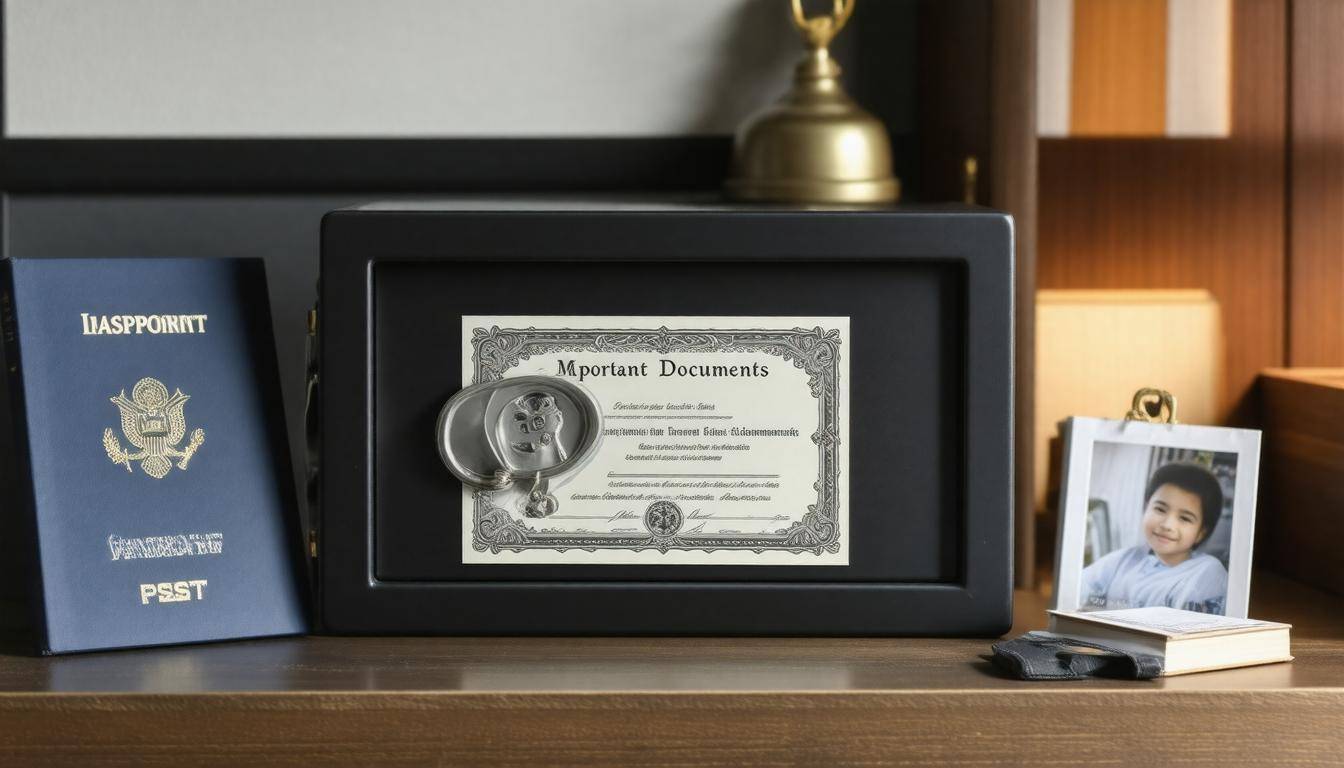
Long-term safety measures are essential for protecting your birth certificate from gradual wear and unforeseen incidents. Imagine having that important document deteriorate simply because it wasn’t stored properly or inspected regularly. The peace of mind that comes from knowing you’ve taken the necessary steps to safeguard this vital record is invaluable.
Archival Quality Storage
One of the best ways to ensure your birth certificate remains protected is to store it in an archival-quality folder or envelope. When choosing storage solutions, consider products made from acid-free materials like those available from Gaylord Archival. These specially designed containers provide long-term protection against environmental damage such as light exposure, which can cause fading, and humidity, which can lead to mildew growth. Imagine placing your certificate in a protective sleeve that not only keeps it safe but also extends its lifespan by maintaining its original quality.
To give your birth certificate the best chance at longevity, think about its environment. Keep it in a designated, cool, dry place with minimal fluctuations in temperature and relative humidity levels—ideally between 30% and 50%. This simple adjustment can make a significant difference in how well the document ages, preventing common issues like brittle edges or discoloration.
Regular Inspections
Performing regular checks on your stored documents every six months is another pivotal step. During these inspections, examine the state of your birth certificate to ensure it hasn’t been affected by any fungi or moisture. Look for any signs of damage such as wrinkling, discoloration, or even unwanted pests that may have managed to sneak into your storage area. For example, visualize yourself opening your folder and being greeted with a pristine document that has remained untouched by time—a small but effective ritual that pays off significantly.
Beyond simple storage and regular check-ups, it’s also worthwhile to adopt a combined approach to storage. By thoughtfully integrating various methods and tools, you can create a more robust system that nurtures the preservation of essential documents.
Combining Storage Approaches
The key to protecting vital documents, such as birth certificates, lies in combining physical and digital storage options. This approach not only bolsters security but also ensures you’re prepared for unexpected events.
By maintaining a physical copy securely at home while simultaneously backing it up digitally, you create redundancy that can be a lifesaver if disaster strikes. Imagine this: you wake up one morning to find your basement flooded or a fire has broken out. If you’ve stored only a physical copy of your birth certificate, you might find yourself scrambling to replace it amidst the chaos. But with an electronic backup stored on an external hard drive or secure cloud service—albeit cautiously—you’ll have quick access to what you need.
Physical and Digital Combination
Utilizing both physical and digital storage means you’re covering all bases. Keep your original documents in a safety deposit box, a fireproof safe, or a waterproof bag at home. By doing so, they remain protected from typical household risks like water damage and theft.
At the same time, it’s wise to scan these documents and save the files in an encrypted format on your computer or a portable hard drive. You might even choose to utilize password-protected services that ensure additional safety without sacrificing ease of access. Thus, if something were to happen to your originals, you wouldn’t be left without proof of identity during tumultuous times.
To illustrate this point further, let’s explore how remote and local storage methods work together effectively.
Remote and Local Storage
Take for instance one family I know who have mastered the art of document protection. They kept their physical birth certificates locked away in a sturdy home safe, ensuring it was free from theft or damage. But that wasn’t all; they took the next step by scanning each essential document and saving those secure digital copies in cloud storage accessible only by them.
This dual-layer system means that whether it’s misplacement during an evacuation or loss due to natural disasters, neither robbery nor calamity would hinder their ability to retrieve crucial documents swiftly. They simply log into their cloud storage from anywhere using their phones or laptops and download what they need.
Combining different storage approaches for your vital records creates efficiency and security which can alleviate stress during emergencies. As we shift focus, let’s consider ways to enhance the protection of these important documents further.
Tips for Document Security
Safeguarding your birth certificate is not just about hiding it away; it’s about ensuring that it remains secure against potential threats.
The first step toward that goal involves using strong passwords. When you store digital versions of important documents, a robust password acts as your first line of defense. Think of passwords as the keys to secured vaults—your keys need to be complex and distinctive. A mix of uppercase and lowercase letters, numbers, and special symbols creates a formidable barrier against unauthorized access.
So, whether it’s an external hard drive or a cloud storage solution, take the time to craft a solid password.
As we emphasize digital security, it’s crucial to think about encryption.
Encryption transforms your data into something unreadable without the corresponding key, making it nearly impossible for malicious entities to access your information. Thankfully, many user-friendly encryption options are available today, enabling even non-tech-savvy folks to easily encrypt sensitive files. Using reputable encryption software ensures that even if someone manages to access your digital copies, they cannot make sense of them without your decryption key.
Now let’s discuss physical storage because protecting your birth certificate also means protecting its physical form. This brings us to fireproof storage solutions.
What happens if a fire breaks out in your home? Having a fire-resistant safe can protect your important documents from potential damage. Even if other parts of your home suffer while the fire rages on, knowing that your birth certificate is safe in a fireproof pouch can bring you peace of mind.
However, storing documents securely goes beyond just choosing the right containers; it’s equally essential to control access.
Consider who truly needs access to sensitive documents like your birth certificate. Limit both physical and digital access to trusted individuals only and continuously review who has those permissions. Just like a vault can be compromised by careless handling, so too can your documents be threatened by sharing with the wrong person. Establish a clear understanding of why only certain individuals should have access and reinforce those boundaries.
Finally, let’s look at the importance of regular updates. Changes in technology or personal circumstances mean that what worked yesterday might not work today. Make it a habit to periodically review and update your digital copies; ensure you’re still using effective storage solutions that meet current security standards. Just because you set something up well doesn’t mean it will stay secure indefinitely.
Following these guidelines doesn’t just secure a piece of paper; it safeguards an essential facet of your life.
By utilizing strong passwords, encrypting sensitive files, storing originals in fireproof safes, controlling access carefully, and regularly updating security measures, you create multiple safety nets around one of the most crucial documents you possess: your birth certificate. It’s not just documentation; it’s part of your identity and worth protecting diligently.
In today’s digital age, securing personal documents is more critical than ever. By taking these steps, you ensure that one of your most vital records remains safe from theft or loss.