
In today’s unpredictable world, having a financial safety net is more important than ever. Imagine waking up one day to find your car won’t start or that you’ve received a surprise medical bill. How would you handle it if you didn’t have enough savings? This is where a cash emergency fund becomes crucial. It offers peace of mind and security during tough times, acting like a cushion against life’s unexpected bumps. In the following sections, we’ll dig into how much you should aim to save, why it’s so vital, and tips to get you started on building your own emergency fund, ensuring that when life throws those surprises your way, you’re ready to face them head-on.
It is typically recommended to save between three to six months’ worth of living expenses for a cash emergency fund. For example, if your monthly expenses total $3,000, aim to have between $9,000 and $18,000 saved to ensure you have adequate financial coverage during unexpected events.

Why You Need a Cash Emergency Fund
Having a cash emergency fund serves as your first line of defense against life’s unpredictable twists and turns. Life, as we know, is full of surprises; be it sudden medical emergencies, unexpected home repairs, or unforeseen job loss that can leave you scrambling to find the funds needed to cover these costs. Without an emergency fund, many people are forced to resort to high-interest loans or credit cards, which often leads to a cycle of debt that can feel overwhelming. The statistics speak volumes: 56% of Americans could not cover a $1,000 emergency expense with savings, leaving them vulnerable in times of need.
Think of your cash emergency fund as a financial parachute. Just like you wouldn’t want to start skydiving without one, you don’t want to navigate through life without this crucial financial cushion. When equipped with an emergency fund, you can face uncertainties with confidence. It allows you to manage sudden expenses without spiraling into debt, making it easier to keep your mental well-being intact during tough times.
Imagine Tina’s situation—she is a graphic designer who found herself in dire straits when her main freelance client went bankrupt. Luckily, Tina had six months’ worth of living expenses saved up in her emergency fund. Although she experienced initial panic, this financial cushion allowed her to cover bills and necessities while urgently seeking new clients. Instead of dipping into her retirement savings or applying for loans with high interest rates, she navigated through this crisis with peace of mind.
The importance of having an emergency fund extends beyond just covering expenses; it promotes long-term stability. It helps in preventing potential financial stress, allowing you to focus on opportunities rather than being confined by fear of unforeseen expenditures. Knowing you have money set aside means you can take calculated risks in your career or pursue personal goals without the fear of jeopardizing your finances.
Furthermore, establishing this fund isn’t merely about reaching an arbitrary number—it’s about developing a mindset. Start with a plan; aim for three to six months’ worth of living expenses, keeping that money separate from your regular savings accounts to avoid accidentally spending it on non-emergencies. Automating your transfers directly into this account after receiving your paycheck makes saving more manageable and less susceptible to impulse purchases.
Now that we understand the necessity of having such a safety net, let’s explore how to determine the specific amount that suits your needs effectively.
Calculating Your Emergency Fund Amount
Determining the right amount for your emergency fund is not as daunting as it may sound; in fact, it’s quite straightforward when you break it down. First, gather all your financial data and give your living expenses a thorough inspection. This step is crucial because these are the payments that will continue even when unexpected situations arise, like job loss or medical emergencies. Imagine being prepared for a sudden life disruption—a cushion of financial security feels immensely reassuring.
Step I – Calculate Monthly Expenses
The foundation of your emergency fund is rooted in understanding exactly what you’re spending each month. Start by creating a comprehensive list of both fixed and variable monthly expenses. Fixed expenses include things like rent or mortgage payments that remain consistent, while variable expenses fluctuate—groceries or dining out, for instance. Having an accurate view of these amounts gives you a realistic starting point.
Here’s a closer look at what those numbers might look like:
| Expense | Amount |
|---|---|
| Rent/Mortgage | $1,200 |
| Utilities | $150 |
| Groceries | $400 |
| Transportation | $200 |
| Loans/Other | $300 |
| Total | $2,250 |
In total, your monthly expenses add up to about $2,250. This figure serves as the bedrock for establishing the amount you need to save.
Step II – Multiply for Safety Net
With that monthly total in hand, it’s time to create your safety net. You’ll want to multiply your total monthly expenses by the number of months you plan to secure. Financial experts often recommend saving enough to cover three to six months’ worth of expenses.
Imagine this scenario: if we take our total monthly expense of $2,250 and multiply it by three months, you’re looking at needing approximately $6,750 tucked away. On the other end of the spectrum, if you choose to aim for six months, that’s $13,500 in savings.
But before settling on an amount, consider assessing your job stability. If there’s uncertainty in your employment status—like if you’re a freelancer or working gig-to-gig—you might feel more comfortable aiming higher. Many people in such situations strive for a cushion between 9 and 12 months instead.
All these figures may seem overwhelming at first glance, but having clarity on how much you’re aiming to save delivers peace of mind.
Now that we’ve established the target amount that feels right for you, let’s move forward into some practical ways to effectively enhance your savings strategy.
Effective Saving Techniques
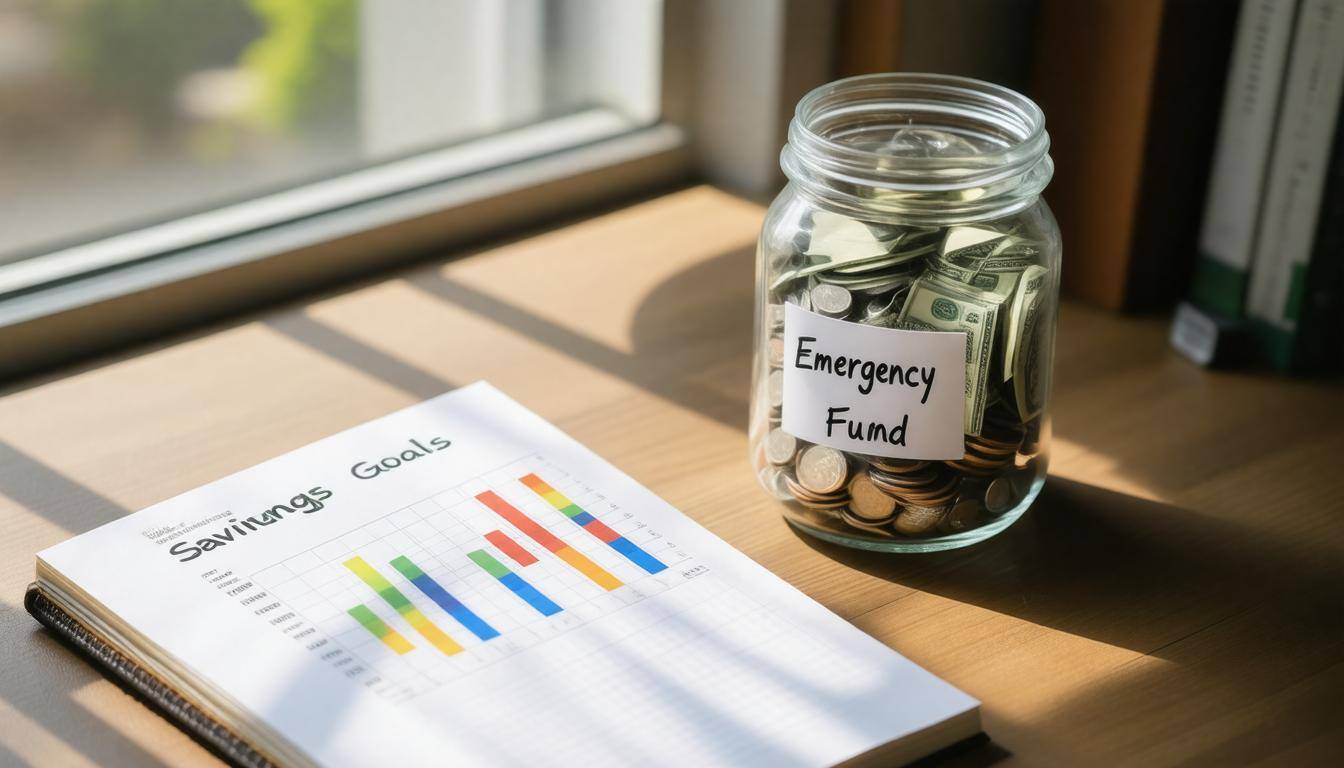
One of the simplest yet most effective saving techniques you can employ is to automate your savings. Once you set up an automatic transfer from your checking to your savings account right after you receive your salary, you essentially “pay yourself first.” This means that your emergency fund grows effortlessly without you needing to think about it each month. Think of it as setting up a recurring bill, except in this case, you’re billing yourself for a future you care about.
Many online banking apps allow you to designate a specific amount for auto-transfer each month. So even if it’s just a small amount, making it automatic instills a sense of security over time, ensuring that you consistently build your fund without sacrificing everyday luxuries or facing the temptation to spend what you’ve earmarked for savings.
Alongside automation, another powerful tactic is to cut non-essential expenses. This does not necessarily mean living a frugal life devoid of enjoyment; rather, it’s about making informed choices. Begin by identifying which areas of your spending can be reduced without significantly impacting your quality of life. Perhaps it means dining out less frequently or evaluating subscription services that may no longer serve a purpose. For instance, if you decide to skip your daily coffee shop visit—which could cost approximately $5—you could save around $150 each month!
Consider using budgeting tools like Mint or YNAB (You Need A Budget) to monitor your spending habits. These resources can provide insights into your financial behaviors and help pinpoint where adjustments can be made effectively.
Take Mike, a software engineer who adopted this approach. By simply bypassing his daily Starbucks run, he managed to squirrel away an impressive $3,000 over the course of just one year! Mike didn’t forgo enjoying coffee altogether but instead allocated those funds strategically for special occasions rather than day-to-day indulgences.
Once you’ve established these savings practices and see progress accumulating, it’s essential to create a dedicated savings account for your emergency fund. This serves two main purposes: First, it keeps your emergency savings separate from your regular checking or other accounts, reducing the temptation to dip into those funds. Second, many high-yield savings accounts offer better interest rates than traditional banks, allowing your money to grow while remaining accessible when needed.
As you incorporate these approaches into your financial routine, taking the next steps toward organizing and securing those funds will further enhance your financial readiness.
Setting Up a Dedicated Savings Account
Keeping your emergency fund separate from your regular savings can prevent accidental spending, a pitfall many fall into unknowingly.
Picture this: it’s the middle of a shopping spree and you catch a glimpse of that trendy jacket. You think, “Just one small dip into my savings won’t hurt!” But it does; it chips away at your safety net and undermines the very purpose of having an emergency fund.
This is why it’s prudent to create a distinct account solely for emergency reserves.
High-Yield Savings Account Options
Consider opting for a high-yield savings account that allows you to maximize your interest earnings while fostering solid growth for your fund. Unlike standard accounts that often yield uninterested returns, these specialized options offer rates that surpass traditional banks by magnitudes.
Choosing platforms like Ally Bank, Marcus by Goldman Sachs, or Discover Online Savings ensures your funds work harder for you, earning anywhere from 2.5% to 3% on savings.
Imagine if you have $10,000 parked in one of these high-yield accounts—at just a 3% interest rate, you’d earn $300 in a year without doing anything extra. It’s a low-maintenance way to bolster your emergency fund while keeping it accessible for when life throws unexpected expenses your way.
Ease of Access
However, as appealing as instant gratification may be, ease of access must be balanced with restraint. It’s vital that while you ensure the money is accessible in times of need, you also guard it against unnecessary temptations.
A transfer period of around 24 hours strikes an ideal balance; it’s sufficient time to consider whether the withdrawal is truly necessary but still quick enough for unforeseen emergencies. This model encourages you to pause and ask yourself if that unexpected expense genuinely warrants tapping into your safety net.
Setting up a dedicated account not only helps to safeguard your emergency funds but also equips you with better strategies to tackle unanticipated costs effectively. As we shift our focus now, we’ll explore how to best prepare for those surprising financial situations that life inevitably throws our way.
Planning for Unexpected Expenses

Life is unpredictable, and planning for unexpected expenses should be part of everyone’s financial strategy. Whether it’s a sudden medical expense or an unforeseen home repair, having a plan helps you react calmly instead of letting anxiety take over. An emergency fund softens the blow of these situations, allowing you to face them head-on rather than scrambling for cash when time is of the essence.
Common Unexpected Costs
Unexpected costs often fall into several categories that most people will encounter at some point. Medical emergencies can arise from accidents or sudden illnesses and are often unaffordable without prior savings in place. With high-deductible health plans (HDHPs), individuals can face out-of-pocket costs as steep as $1,650 before their insurance even kicks in. It’s the kind of surprise that can change your financial landscape overnight.
Home repairs account for another significant category of unexpected costs. Imagine living in your house when suddenly you discover a major leak or damage to your foundation that could cost thousands to fix—like $5,000 for foundation repair or upwards of $15,000 for roof replacement. These situations require immediate funding, which can be quite hefty.
Buffer for Irregular Incomes
If your income varies—say you’re a freelancer or self-employed—it’s even more crucial to pad your emergency fund further. Adding an extra month’s worth of expenses into your fund acts as a cushion during leaner months. If one month goes dry without contracts or clients, you’ll still have peace of mind knowing you’re covered.
Jill, a freelance writer, shared her experience about adding an additional $2,250 to her emergency fund specifically for those quieter months. By taking this proactive step, she not only avoided financial anxiety but also felt empowered to focus on securing her next project instead of worrying about immediate monetary concerns.
Establishing such buffers does wonders beyond just emotional comfort; they significantly enhance your overall stability and readiness for financial challenges ahead. As we consider the intricate benefits these measures provide, let’s explore the broader impact on one’s financial well-being.
Financial Security Benefits
Beyond merely covering unexpected expenses, having a well-established cash emergency fund significantly boosts your overall financial health. Imagine waking up one day knowing that if your car breaks down or you face an unplanned medical bill, you have funds readily available to tackle those issues.
This peace of mind not only allows you to manage immediate costs but also fosters a sense of security that ripples through all aspects of your financial life.
Reduced Stress and Anxiety
Knowing there’s a buffer between you and life’s unpredictability can ease the burden of anxiety that often accompanies financial uncertainty.
Take, for example, the findings from the American Psychological Association in 2024; they revealed that 72% of individuals with emergency funds reported experiencing significantly lower stress levels compared to those without. When your finances aren’t a constant source of worry, it allows you to focus on other areas of life, ultimately leading to better mental health and greater productivity at work or home.
Avoiding High-Interest Debt
Furthermore, having an emergency fund keeps you from relying on high-interest loans or credit cards during times of crisis.
Picture this: you’re faced with an unexpected medical bill and without savings to fall back on. What do many people resort to? Often, they turn to credit cards showcasing exorbitant interest rates. On the flip side, when you have an emergency fund, you can confidently handle those surprise expenses without sacrificing your long-term financial goals or accumulating debt that could take years to pay off.
Better Investment Decisions
Moreover, possessing a cash cushion in the form of an emergency fund can enhance your confidence when it comes time to make long-term investments.
Without the lurking fear of needing immediate cash for unforeseen events, you’re free to pursue potentially lucrative opportunities that might require holding onto your investments longer than you’d initially planned. This strategy not only has the potential for financial growth but also enriches your portfolio by allowing it to mature properly without interruptions.
Establishing a robust cash emergency fund isn’t merely a smart move; it’s essential for laying the groundwork for a secure financial future. By providing both peace of mind and stability, it empowers individuals to navigate life’s unexpected twists without derailing their larger aspirations.
The act of saving doesn’t just shield you from immediate crises; it is an investment in your own ability to thrive amid uncertainty.
What are experts’ opinions on the minimum amount needed for an emergency fund?
Experts generally recommend that individuals maintain an emergency fund equivalent to three to six months’ worth of living expenses. This range is endorsed by financial advisors like Dave Ramsey and Suze Orman, who argue that such a cushion provides sufficient protection against unexpected costs such as medical emergencies or job loss. A survey by Bankrate found that only 39% of Americans can cover a $1,000 emergency expense with savings, highlighting the importance of establishing a solid financial safety net.
Are there any strategies for building up my emergency fund quickly?
To build your emergency fund quickly, consider the “50/30/20 rule,” where 20% of your income goes directly into savings. Additionally, automate your savings by setting up a direct deposit from your paycheck to your savings account; studies show that automating savings can increase deposits by up to 30%. Cutting unnecessary expenses and using windfalls—like tax refunds or bonuses—can also boost your fund significantly. Aim for three to six months’ worth of living expenses as a solid benchmark.
How does the recommended amount for an emergency fund differ for single individuals versus families?
The recommended amount for an emergency fund typically suggests that single individuals should aim for three to six months of living expenses, whereas families may need to target six to twelve months due to the increased responsibilities and potential financial obligations, such as childcare and household expenses. According to financial experts, families are often more vulnerable to sudden income loss, making a larger cushion essential. In fact, surveys indicate that 42% of families report anxiety about unexpected expenses, highlighting the importance of a robust emergency fund.
How much should I ideally save in my emergency fund based on my income and expenses?
Ideally, you should aim to save three to six months’ worth of living expenses in your emergency fund. This amount provides a robust safety net that can cover unexpected events like job loss or medical emergencies. Financial experts recommend building up this fund based on your income and fixed expenses; for instance, if your monthly expenses are $3,000, you should strive to save between $9,000 and $18,000. A survey by Bankrate found that only 39% of Americans could cover an unexpected $1,000 expense, highlighting the importance of having a well-funded emergency fund.
What types of emergencies should an emergency fund be prepared for?
An emergency fund should be prepared for various unexpected situations such as job loss, medical emergencies, urgent home repairs, and significant car expenses. Statistics show that nearly 70% of Americans will face a financial emergency at some point in their lives, emphasizing the importance of having a safety net. Ideally, aiming for three to six months’ worth of living expenses ensures you are covered for these unforeseen circumstances, allowing you to navigate challenges without resorting to debt.