
When emergencies strike, every second counts, and having your important documents at the ready can ease a lot of stress. Imagine trying to gather your family and belongings during a crisis only to find yourself scrambling to locate vital papers like your ID or insurance policy. It’s overwhelming, right? That’s why having an Emergency Documents Grab List is essential—not just another task on your to-do list, but a fundamental step in ensuring you and your loved ones are prepared for anything life throws at you. It doesn’t take much time to create one, but the peace of mind it brings is priceless. Let’s explore what items should make up this crucial list so that you’ll be ready when it really matters.
An Emergency Documents Grab List should include critical items such as identification (driver’s license, passports), medical records, insurance papers, property deeds or rental agreements, and any important financial documents. Having these documents organized and easily accessible will streamline your preparations during an emergency evacuation.
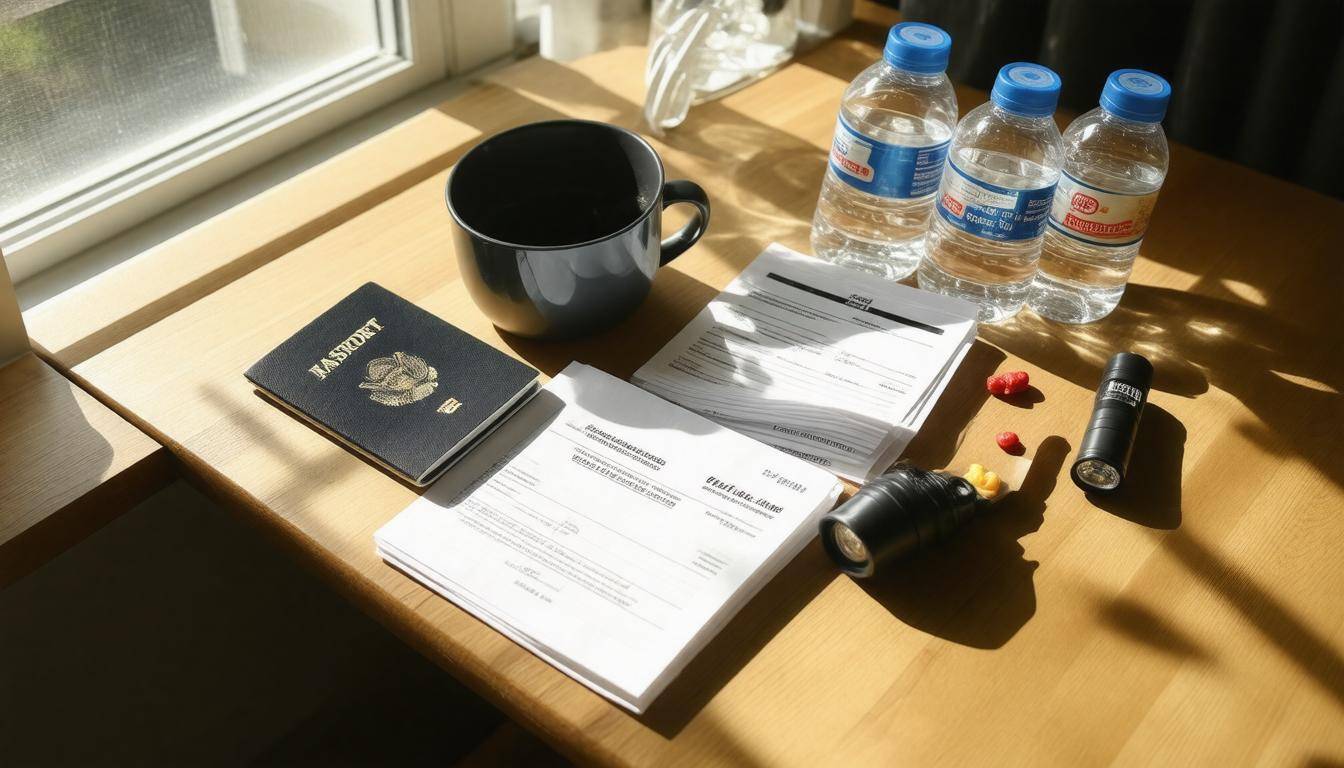
The Critical Importance of an Emergency Grab List
An emergency grab list serves as your lifeline during chaotic moments. It ensures that you have all necessary documents and items ready to go at a moment’s notice. When every second matters, rummaging through drawers or frantically searching for essential papers can add unnecessary stress to an already dire situation.
Consider how overwhelming it might feel to be on the verge of evacuation only to realize you’ve left behind key documents like identification, insurance papers, or even medical records. This is where preparation shines its brightest.
“Being prepared means you are not just going through the motions; you’re taking control when unseen challenges arise.”
The significance of this preparation cannot be overstated. For example, during the unprecedented 2022 California wildfires, many people were forced to evacuate within moments, often without prior warning. Those who had taken the time to develop a comprehensive grab list reported fewer complications since they could quickly access vital documents necessary for identification and emergency services.
In contrast, individuals lacking such preparations faced severe obstacles, hampering their ability to receive help or continue their lives amidst the chaos.
According to FEMA, more than 60% of those who underwent sudden evacuations faced significant hurdles due to missing essential documentation. Such statistics aren’t just numbers; they reflect real lives and experiences—individuals grappling with delays in accessing healthcare, reclaiming possessions from evacuated areas, and verifying identities while seeking refuge away from home.
It becomes clear that having an organized emergency grab list is not merely convenient; it is vital for maintaining control and alleviating stress during turbulent times.
However, knowing which documents should make up this list is equally essential. Items like your driver’s license, social security card, insurance policies, and bank account details can protect your interests in trying times. It’s also wise to include personal health information such as vaccination records or prescriptions which could be lifesaving if you require immediate medical attention.
When crafting your grab list be sure to think about your unique circumstances—like any family pets or elderly members—who may need supplies tailored specifically for their needs. Something as simple as including extra pet food or medications could make a world of difference.
You wouldn’t want your furry friend looking at you with those big eyes during a disaster while their favorite treats are still on the shelf!
What you put on this grab list will reflect you and your family’s needs and readiness level. Preparing one doesn’t need to be daunting; much like organizing a well-planned trip—wherever life may take you next!
As we look closer at what truly constitutes essential identity-related materials for everyday challenges, we’ll discover how these documents underpin both our safety and our sense of self in unpredictable situations.
Identity Essentials
Identity documents serve as the cornerstone of your emergency preparedness; they are not merely pieces of paper but vital tools that prove who you are when it matters most. In the chaotic aftermath of a disaster, whether it’s a natural catastrophe or an unexpected evacuation, these documents can be the key to accessing necessary aid services and support systems. Imagine showing up at a shelter in need of help but being unable to verify your identity—this is where having your documents ready can make all the difference.
Knowing exactly which identity documents to gather can help streamline your readiness plan and alleviate some stress when urgent situations arise.
Important Identity Documents to Have
When assembling your emergency grab list, start with the essentials. Government-issued IDs, such as passports and driver’s licenses, carry significant weight during emergencies—they provide immediate proof of your identity and residency, which many shelters and organizations require. Each family member should have their own identification, including state IDs if they’re available.
Next, don’t overlook social security cards. These are essential for identifying family members and crucial for accessing various governmental aids after a disaster. Keep a copy for each family member in your designated grab bag.
It’s equally important to have birth certificates on hand. This document is particularly useful when proving familial relationships, which can become necessary under certain circumstances. Furthermore, if you’ve had any life events that would alter your civil status, such as marriage or divorce, include copies of those certificates as well.
If you are an immigrant or part of a mixed-status household, ensure that you have all relevant immigration papers. Documentation may include visas or green cards to establish legal presence and eligibility for assistance programs.
Additionally, consider keeping recent photographs of each family member alongside these documents. In the unfortunate event of separation during an emergency, these images can facilitate quicker identification processes and assist responders in locating loved ones more effectively.
Having organized your identity essentials sets the stage for ensuring that your financial resources are also secured and easily accessible when you need them most.
Financial Necessities
Financial documents are your safety net during emergencies. When chaos strikes, having these documents can make the difference between a swift recovery or a prolonged struggle. Their purpose is straightforward: to provide clear access to your funds and help you quickly establish your financial identity in times of crisis. Ready access to cash and other resources ensures you can meet immediate needs, whether for temporary housing, essential supplies, or medical care.
Key Financial Documents to Include
-
Bank account details and statements: Proof of funds for quick transactions.
-
Credit card information and recent statements: Ease of payment and verification of available credit.
-
Copies of checks: Useful for establishing fund availability or making payments if digital methods fail.
-
Mortgage or property deeds: Vital for asserting ownership and securing temporary assistance from financial institutions.
-
Vehicle title and insurance policies: Essential if cash is needed or if you need to file a claim post-disaster.
It’s important to ensure these crucial documents are organized for easy retrieval. Print them out, but also consider saving electronic versions in a secure cloud storage service. This way, if your physical copies are lost, you’ll still have access when necessary.
For example, think about Sarah who faced devastation from a hurricane. Because she had kept her mortgage documents safe and easily accessible, she was able to negotiate with her bank promptly for emergency loans. Without that foresight, she could have stumbled into financial peril at the worst possible time.
Moreover, along with financial papers, it’s equally vital to keep records related to personal histories secured as they play an indispensable role during turbulent times.
Family and Medical Records
Family and medical records are essential in ensuring that you and your loved ones receive ongoing medical care, especially during emergencies when continuity is vital. Imagine being evacuated from your home due to a disaster; having access to key medical information can make a world of difference.
Here’s what should be included in your emergency grab list:
First and foremost, immunization records for each family member are crucial, as they outline vaccinations and health history that may be required by shelter facilities or healthcare providers.
Another key component is the medical history and prescriptions for everyone; this means detailing chronic conditions, allergies, and necessary medications. For instance, if someone in your family has asthma, knowing their medication dosage and schedule can ensure they don’t miss a beat.
Furthermore, remember to gather contact information for your primary healthcare providers. This includes their names, phone numbers, and addresses, allowing healthcare personnel to verify histories quickly. An often-overlooked item is health insurance cards along with any recent claims; these documents can expedite care coverage intersections between your family’s needs and available services post-disaster.
A heartwarming story illustrates the vital role of preparedness: a mother in Texas found herself facing catastrophic floods yet attributed her child’s swift access to asthma medication directly to her organized medical records. Without those documents, timely relief would have been much more challenging.
In our increasingly digitized world, ensuring you have digital backups or copies of all these important documents is equally essential. This allows for easy access to critical information about your family’s medical needs whenever necessary. Let’s explore how best to manage those digital versions.
Digital Backups and Copies
The rise of digital technology has made it easier than ever to safeguard our important documents. Imagine a scenario where, amid the chaos of a natural disaster, you can access crucial information simply by logging into your cloud service from a nearby computer or smartphone. This convenience highlights the importance of having secure, encrypted digital backups of your essential documents.
In fact, statistics indicate that about 70% of Americans lack digital backups for their vital files, a gap that can quickly turn into a disaster when even half of all disaster survivors report losing critical paperwork.
Utilizing cloud services like Google Drive, Dropbox, or OneDrive allows you to store these backups conveniently while keeping them protected with encryption. Not only does this provide peace of mind, but it also ensures that your documents are not just stored in one place—making them less vulnerable to loss during emergencies. When saving these files, opt for formats like PDFs; they maintain formatting and can easily be accessed on various devices.
Picture this: you’re running out the door as the skies open up, but there’s your precious folder with a lifetime’s worth of documents—completely soaked. Cloud storage makes that scenario far less dramatic (and wet).
How to Create Secure Digital Backups
Creating secure digital backups might seem daunting at first, but it’s quite manageable with some straightforward steps:
To start, scan or photograph all your significant documents. This includes IDs, insurance papers, medical records, and anything else you wouldn’t want to lose sight of. After digitizing them, ensure they’re organized well by creating clearly labeled folders on your device or within your cloud storage. This organization saves time when you’re trying to find something in a hurry.
Next comes protecting sensitive information. Encrypting files with strong passwords is crucial—you want to ensure that only you (or trusted family members) can access your private information. Regularly updating these backups is equally important; life changes such as moving into a new house or changing doctors often involve updated documents.
With these digital backup practices in place, you’ll be well-equipped to secure your vital information against any disaster. Now let’s take a closer look at some essential items you should have prepared for quick reference when moments matter most.
Recommended Grab List
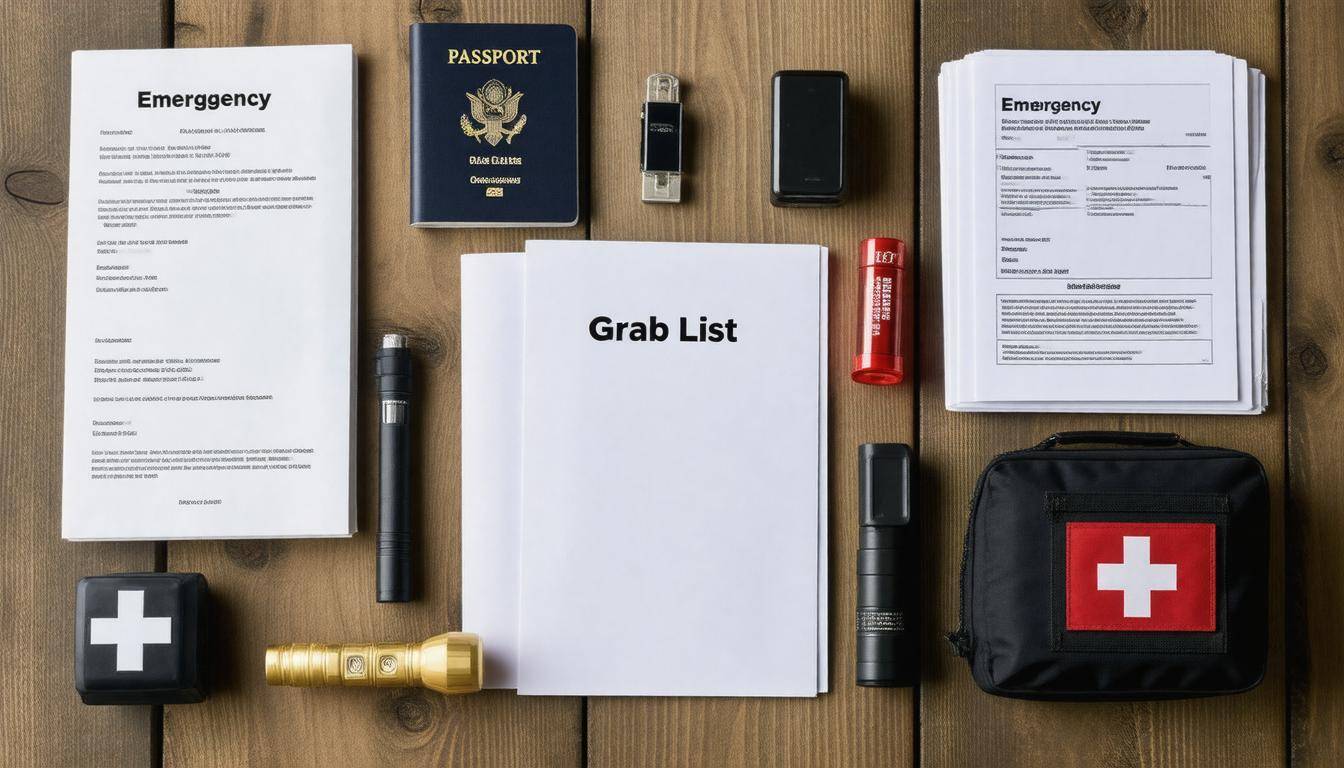
The essentials you’ll need during an emergency are not just about having the documents; it’s about being able to access them swiftly and effortlessly. Imagine you’re in a situation where every second counts. In that moment of urgency, you don’t want to be sifting through piles of papers or rummaging through drawers. Therefore, ensuring you have a well-organized grab list can be a lifesaver. Here’s what you should focus on:
| Category | Essential Documents |
|---|---|
| Identity Essentials | Passports, Driver’s licenses, Social Security cards, Birth certificates |
| Financial Necessities | Bank account info, Credit card statements, Mortgage paperwork |
| Medical Records | Immunization records, Health insurance cards, Prescriptions |
| Family Records | Marriage certificates, Adoption papers, Guardianship documents |
| Digital Backups | USB drives with encrypted documents, Access info to cloud storage |
Within these categories, each document serves a purpose that may seem small individually but could become monumental during an emergency. For instance, without identification documents like a passport or driver’s license, you may struggle to establish who you are or even access certain services. Furthermore, financial documentation is crucial; having quick access to bank account information or credit card statements can facilitate essential transactions when time is of the essence.
Let’s explore these categories further. Think about identity essentials—these foundational documents anchor your identity and grant you access to services. They include not just your passport and driver’s license but also social security cards which are pivotal when dealing with government agencies or verification processes.
Moving from personal identification to financial documentation highlights another layer of preparedness that we’re often unaware of until we face a crisis.
The financial necessities category offers peace of mind. With this paperwork—the likes of mortgage agreements and current credit card statements—you’ll be better equipped to manage your finances even when circumstances are challenging. If you’re away from home or facing an evacuation, having these documents securely stored will allow you to monitor and maintain financial stability.
On the healthcare front, maintaining up-to-date medical records in your grab list cannot be overlooked. This includes immunization records for children as well as prescriptions needed for specific conditions. These records can help medical teams provide care more efficiently should those needs arise suddenly.
When natural disasters strike unexpectedly, it’s always good to have proof that your family is legally protected.
Consequently, documents related to family records such as marriage certificates or guardianship papers take on a vital role in emergencies too. Not having these could complicate familial arrangements when seeking shelter or assistance during tumultuous times.
Finally, let’s not forget the necessity for digital backups within this grab list. In our technology-oriented world, simply storing physical copies is not enough anymore. With USB drives containing encrypted documents along with access information stored safely in cloud storage, you’re ensuring redundancy against potential loss due to physical damage—like fire or water destruction.
A well-prepared grab list not only safeguards essential information but also smoothly transitions us into exploring how best to store these important items efficiently.
Practical Storage Tips
When preparing your emergency documents for storage, think carefully about how they’ll be organized—this foresight can make all the difference in an emergency.
First and foremost, consider using waterproof and fireproof safes to store your essential documents. A safe that combines these two features provides a solid layer of protection against common disasters, ensuring that your vital information is preserved when you need it most.
Organizing your documents in clear labeled binders or expandable file folders is another way to keep everything easy to access. Not only does this organization bring clarity, but it also minimizes the frantic searching for documents when every second counts. Each label should succinctly indicate what type of documents are contained within so any family member can quickly find what they need.
Imagine a family during a chaotic evacuation scenario. With an easily accessible go-bag containing labeled binders—with sections for ID documents, insurance information, and medical records—they can grab everything in moments, rather than rifling through piles of papers.
While having organized storage at home is critical, remember that portability matters too.
Lightweight and compact solutions can make a significant difference, especially when you need to evacuate quickly. Storing critical documents on a USB flash drive ensures you have digital copies available, which can be invaluable if you lose physical copies during a disaster. In addition to traditional paper formats, think about using cloud storage for documents you might not want to carry physically; this provides instant access from any device if needed.
But what happens when it’s time to update these important documents?
That’s where regular maintenance comes into play. Schedule checks of your safety items every six months to replace expired documents and remove outdated information. Having a checklist visible near your emergency kit will help ensure consistency—it serves as a reminder of critical items that may need attention. Taking these proactive steps not only helps in emergencies but also fosters peace of mind knowing that you’re prepared.
This thoughtful approach to document management naturally leads us to consider how we can further enhance accessibility and organization during unforeseen challenges.
Keeping Everything Accessible
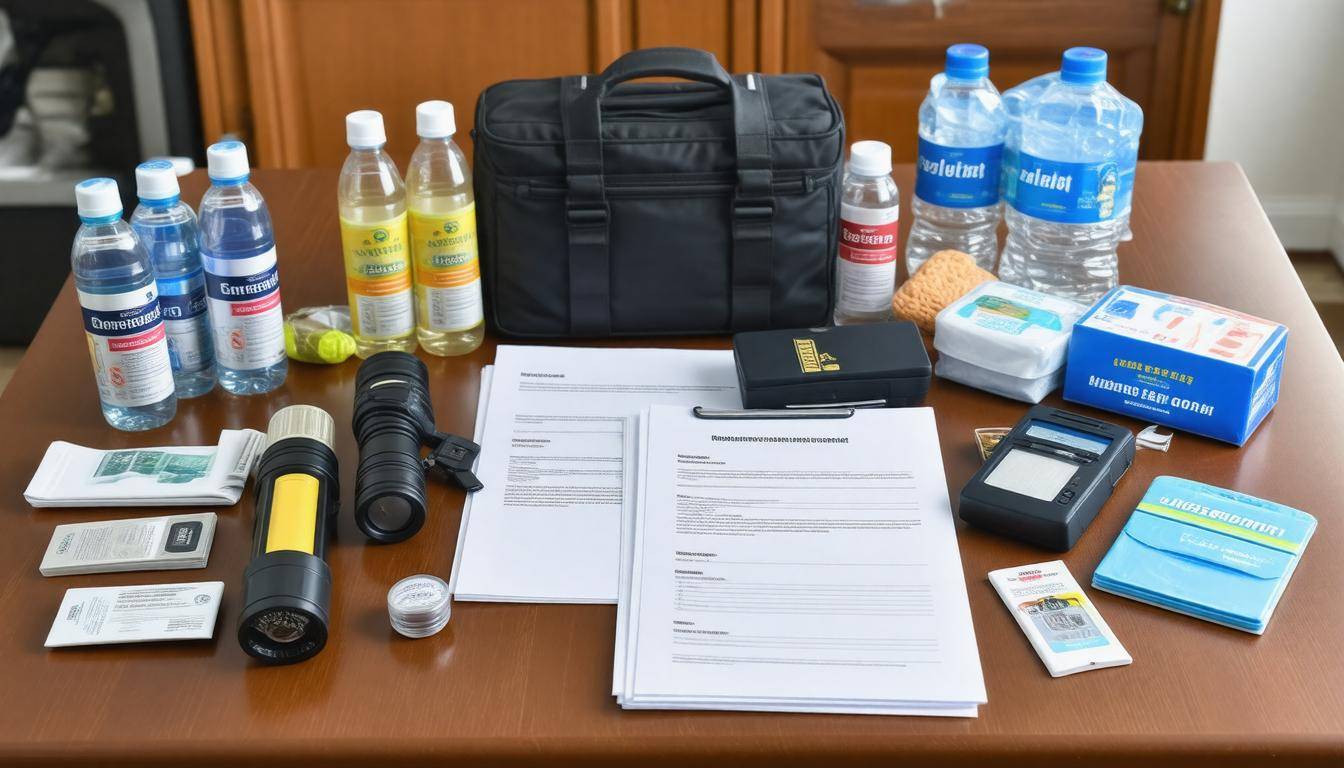
Accessibility is the name of the game when it comes to emergency preparedness. In moments of chaos, having a clear grab list and knowing exactly where your essential documents are can make all the difference in keeping your family organized and ready to act swiftly.
Imagine this scenario: it’s the middle of the night, and you hear sirens outside; an evacuation order has been announced. Your heart races as you scramble out of bed; what do you do? You should immediately know where your grab list is and who is responsible for gathering specific items.
To ensure everyone knows the location and significance of these items, consider scheduling regular family meetings. These gatherings are not only opportunities to remind family members of the importance of the grab list but also to practice what needs to be done in case the worst happens. Repetition breeds familiarity, helping each person understand their role during an emergency.
It’s important to store grab lists and backup documents in multiple locations: think cars, workplaces, and convenient spots in your home.
Assigning responsibilities within your family can help streamline the process. Maybe one person grabs critical documents while another collects necessities like water or medication. Each family member’s role becomes clear under pressure, cutting down on confusion and ensuring that everything that needs to be collected makes it into your emergency kit.
Periodic Reviews
Conducting periodic checks on your grab list is essential for maintaining its relevance. If you assess it at least twice a year—perhaps during seasonal changes or around holidays—you’ll keep it updated with the latest information on medications or important documents.
A father from Florida provides a great example here; he kept a second set of copies at his workplace. When an unexpected evacuation occurred, he could quickly reunite with his family, equipped with vital paperwork that would otherwise have been left behind.
By following steps such as placing grab lists in strategic locations, assigning roles, and reviewing regularly, you’ll find yourself much more equipped to handle emergencies effectively. The peace of mind that comes from being prepared can alleviate some anxiety surrounding potential disasters, making all the difference when time is of the essence.
Being proactive about your emergency documents will ensure you’re never caught off guard when a situation arises.
What specific documents should be included on an emergency grab list?
Your emergency grab list should include essential documents such as passports, birth certificates, Social Security cards, medical records, financial statements, and insurance policies. According to FEMA, having these documents accessible can significantly reduce recovery time in disasters, ensuring that you have proof of identity and ownership when seeking aid or rebuilding. Keeping digital copies alongside physical ones can also streamline the retrieval process during emergencies.
How can I organize my emergency documents for quick access?
To organize your emergency documents for quick access, create a dedicated, waterproof folder or binder labeled with categories like Identification, Financial Records, Medical Information, and Home Inventory. Store it in an easily accessible location—ideally near an exit—and keep digital copies in a secure cloud service for backup. Studies show that having a well-organized emergency plan can significantly reduce stress during crises, leading to faster response times in critical situations.
How often should I review and update my emergency documents grab list?
You should review and update your emergency documents grab list at least once a year, or whenever there are significant life changes such as moving, marriage, or the birth of a child. This ensures that all essential documents are current and relevant; statistics show that 70% of people do not keep their emergency preparedness plans up-to-date, which can hinder their effectiveness during an actual emergency. Regular reviews help mitigate this risk and ensure you are always prepared.
What strategies can I use to ensure that my family knows where to find the grab list in case of an emergency?
To ensure your family knows where to find the grab list in an emergency, establish a routine of discussing and practicing emergency plans together. Place copies of the grab list in easily accessible locations, such as on the refrigerator, in a family organizer, or digitally on shared cloud services that everyone can access via their phones. Research shows that families who regularly practice emergency drills are 70% more likely to effectively execute their plans when faced with real situations. Additionally, hold periodic meetings to review and update the list, reinforcing its importance and familiarity among all family members.
Are there digital alternatives to physical copies of essential documents?
Yes, there are many digital alternatives to physical copies of essential documents. Cloud storage services like Google Drive and Dropbox enable users to securely store and access important files from anywhere, ensuring they are readily available in emergencies. A survey by Pew Research found that 92% of adults own a mobile phone, making digital access even more feasible. Moreover, using encrypted formats or password protection enhances security, providing peace of mind while maintaining convenience.