
In an age where smartphones and the internet dominate communication, it might be surprising to learn that ham radio remains a crucial tool for emergency situations. You may wonder, how can a decades-old technology still hold such significance today? Well, when disasters strike—like hurricanes or wildfires—cell towers can collapse and the internet can go down, leaving you feeling helpless. That’s where ham radios come in—they allow people to communicate when everything else fails. In this guide, we’ll break down the essentials of ham radio operation, illustrating how knowing just a few basics can prepare you for emergencies and empower you to connect with others in your community. Whether you’re a curious beginner or looking to enhance your skills, this guide will help you understand why ham radios are more than just a nostalgic hobby; they’re lifelines in critical moments.
Ham radio serves as a vital tool for emergency communication by providing reliable means of contact when traditional methods fail. Basic knowledge includes understanding key equipment such as transceivers and antennas, obtaining the appropriate licensing (typically a Technician Class license), and participating in organizations like ARES or CERT to enhance your skills and network with other operators during crises.

Why Choose Ham Radios for Emergencies?
Dependable in Critical Situations
In times of natural disasters like hurricanes or earthquakes, communication systems can be extremely fragile. When cell towers topple and internet lines go down, it can feel like we’re cut off from the world. However, ham radios stand apart due to their ability to function independently of conventional networks. They utilize robust technology that enables operation even when commercial systems fail.
Imagine a scenario: during Hurricane Maria in 2017, communication across Puerto Rico was shattered, with over 90% of the grid down. Yet, ham radio operators stepped in to fill the communication void, showcasing their incredible resilience and reliability.
When the situation is dire and every second counts, having a dependable communication tool can make all the difference.
Flexibility and Range
The versatility of ham radios extends beyond durability; they are also designed to operate over varying distances. This means that whether you need to communicate with someone in your community or reach out to others across the country, ham radios provide that freedom.
For instance, in localized emergencies like community events or search-and-rescue operations, operators can maintain clear connections right within their neighborhoods. Conversely, when disaster strikes on a larger scale—let’s say a wildfire threatening multiple towns—operators can relay crucial messages to distant regions where aid might be mobilized.
Notably, ham radios have been instrumental in facilitating communication during non-catastrophic events as well. Operators consistently serve their communities during marathons and public festivals where quick updates are necessary to manage crowds safely.
Alongside flexibility and range comes another remarkable feature: cost-effectiveness and accessibility.
Cost-Effective Communication Solution
What truly sets ham radios apart is not just their functionality but also their affordability compared to other emergency communication tools. Basic ham radio equipment can start at around $100, providing a significant cost advantage over satellite phones which typically come with hefty price tags and monthly fees.
But it’s not just about the initial investment; ongoing maintenance and participation in local amateur radio clubs can further enhance skills and preparedness—adding tremendous value to this option.
In a world where readiness fuels safety, investing in a simple ham radio setup could be one of the wisest moves for emergency preparedness. Not only does it provide a reliable backup communication system during crises, but it fosters community connection through shared knowledge and support among operators.
Now that you’ve seen the compelling benefits of ham radios in emergencies, let’s examine how organized response agencies can enhance this proactive approach even further.
Getting Licensed and Training Resources
To legally operate a ham radio, obtaining a license is essential, and this can feel daunting. However, breaking it down into manageable steps makes the process easier and more approachable. Starting with the Technician Class license is highly recommended, as it introduces you to the basics of amateur radio without overwhelming you. This entry-level license includes vital information on regulations, operating practices, and basic electronics theory.
The ARRL (American Radio Relay League) offers comprehensive study guides that break down complex topics into easy-to-digest chunks. For anyone looking for a structured approach to learning, these guides serve as an excellent foundation. Include practice exams to test your knowledge along the way; these aren’t just helpful—they can give you a sense of what to expect when you sit down for the actual exam.
Step-by-Step Guide to Getting Licensed
The first step towards earning your license is definitely to study the basics—this groundwork will prepare you for your test. Here’s how you can navigate this process:
-
Study the Basics: Begin with resources that cover the essentials of amateur radio, like operating protocols and safety considerations. Use flashcards or quizzes from platforms such as HamStudy.org; these engaging methods make retention easier.
-
Take the Test: Once prepared, it’s time to find a nearby testing session through the ARRL website or local amateur radio clubs. You’ll need identification and any required fees before participating in the multiple-choice exam. It’s vital to know that passing this test isn’t just about luck; confidence in your preparation matters greatly.
But passing the test is only part of the journey.
Continued Learning
After receiving your Technician Class license, it’s crucial to embrace continuous learning. Engaging with local ham clubs allows for collaborative growth where seasoned operators share their experiences and insights with newcomers. Participating in events like field days or community service projects further enhances practical skills while also expanding your network.
Online forums and ARRL training sessions provide flexibility in learning at your own pace, ensuring you’re never stagnant in your knowledge base. Resources like HamStudy.org offer valuable practice questions and flashcards that can be instrumental for ongoing education. Exploring more advanced subjects or participating in local training programs will not only keep your licensing active but can provide new opportunities within both emergency communications and the broader ham radio community.
Investing time in understanding both foundational and advanced aspects of ham radio prepares you not just to communicate effectively but also equips you to contribute meaningfully during emergencies when reliable communication is paramount.
As we explore these concepts further, it’s important to familiarize ourselves with what equipment you’ll need to get started effectively.
Essential Equipment for Ham Radio
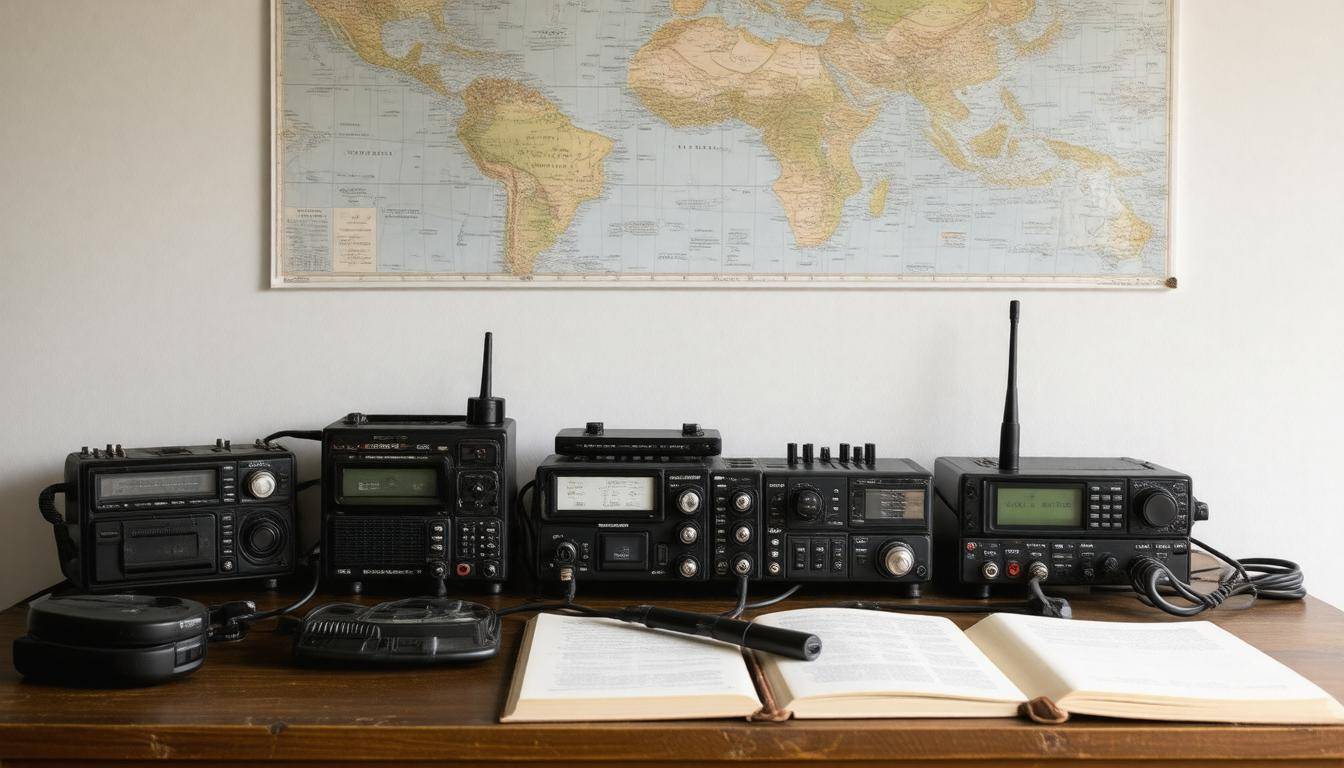
Owning the right equipment is crucial for effective communication, especially during emergencies when every second counts. A well-chosen setup not only increases the clarity and reliability of your transmissions but also enhances your overall experience as an amateur radio operator. Each ham radio setup typically contains several core components, which can either function separately or together to form a functional communication system.
Core Components
Every ham station should include a transceiver, which plays the vital role of sending and receiving signals—essentially the heart of your operation. You also need an antenna, which acts like your radio’s ears and mouth, enhancing transmission range so that your voice can reach far beyond the immediate vicinity. A reliable power source maintains consistent operation, preventing disruptions during critical communications due to a drained battery. Additionally, having a microphone ensures clear voice communication, minimizing misunderstandings in tense situations.
| Equipment | Purpose |
|---|---|
| Transceiver | Sends and receives signals |
| Antenna | Enhances transmission range |
| Power Supply | Ensures consistent operation |
| Microphone | Clear voice communication |
While having these core components is essential, it’s important to understand their specific functions and how they can meet your needs. For example, selecting a transceiver with dual-band capabilities, such as the Yaesu FT-60R or Icom IC-2730A, allows you to operate on both VHF and UHF frequencies, providing you with greater versatility in various conditions.
The choice of antenna can significantly impact your communication efficiency. A portable antenna like the Diamond X50A offers excellent performance for both VHF and UHF frequencies, making it ideal for emergency responses where mobility is crucial. It’s recommended that you consider factors like height and placement to achieve optimal reception and transmission.
As you become more involved in amateur radio activities, you’ll appreciate the importance of a dependable power supply—think of it like fueling a car. Without sufficient power, even the most advanced setup can fall short. For emergencies, a 12V lead-acid battery (7Ah or 12Ah) ensures your equipment runs smoothly if mains power becomes unavailable.
Creating an emergency go-kit is another smart strategy—it should contain essential items like a handheld transceiver, spare batteries, and perhaps even a portable antenna so you’re always prepared.
Each component plays its own distinct role while harmonizing together to enhance your effectiveness as an operator. Understanding this synergy will prepare you better for diverse communication scenarios you may encounter ahead.
Choosing Transceivers and Antennas
Selecting Transceivers
When it comes to ham radio, the choice of transceiver can significantly influence your experience and effectiveness in both casual communication and emergency situations. Portable transceivers, including handheld models, are incredibly convenient for on-the-go operations—think hiking or emergency preparedness scenarios.
While they offer ease of use and mobility, their limitations often arise from lower power output and reduced range. On the other hand, base station transceivers pack a punch with higher power capabilities and can connect you to distant stations; however, they demand a dedicated space and typically utilize larger antennas.
The real beauty lies in understanding your needs: if you’re looking for convenience and portability, a handheld model might be your best bet. But if you’re interested in long-range communication with robust signal strength, investing in a base station setup could be the way forward.
Many operators have found joy in models like the FT-891 or ICOM IC-7300, both known for their robust features yet unique quirks. For instance, while the FT-891 is versatile, it lacks an internal tuner, which may require extra investment down the line for those listening in more demanding conditions. Understanding these specifics allows operators to maximize their investment and get the right setup tailored to specific communication needs.
Think about it this way: whether you’re communicating across town or feeling adventurous enough to reach out several hundred miles away, having the right transceiver makes all the difference.
Opting for the Right Antenna
Now let’s pivot our focus toward antennas—the unsung heroes of ham radio setups. The antenna you choose will dramatically impact signal strength and clarity during transmission. A well-designed antenna achieves one primary goal: efficiently directing your signal toward its intended destination while minimizing interference from extraneous noise.
For example, consider a Yagi antenna; this type excels at directional focus, making it suitable for targeting specific locations and allowing you to communicate effectively over distances. In contrast, a vertical antenna provides omnidirectional coverage—wonderful for those times when you want to reach out broadly without concern for what direction your signals might bounce back from.
The key takeaway here is balance: selecting an antenna should stem from assessing your operational territory and goals. If you reside in an area where long-distance contact is typical or required—for emergencies especially—a Yagi could serve you exceptionally well. However, if you plan on being mobile or only interacting with nearby stations, opting for a versatile vertical antenna might suit you better.
Choosing the right transceiver along with an effective antenna is vital for enhancing communication experiences and ensuring reliable connections during crucial times. Let’s now explore essential components that will support your radio activities effectively.
Power Sources and Key Accessories
Having reliable power sources is akin to having a lifeline for your ham radio operation, especially in emergency situations. When traditional communication methods fail, you want to be confident that your equipment will still run smoothly. That’s where backup power solutions come in, allowing you to maintain communication when it matters most.
Backup Power Solutions
Power outages can frequently become your reality during an emergency, so having alternatives is crucial. Deep-cycle batteries are a popular choice among ham operators due to their ability to discharge energy over long periods without losing effectiveness. They can recharge quickly and efficiently, making them ideal for longer-term use compared to standard batteries which may drain far too quickly.
Adding a portable solar panel to your setup can transform how you source energy. Imagine placing a 100-watt solar panel outside; this not only harnesses renewable energy but significantly prolongs your operational hours even in extended outages. Solar options are particularly appealing as they allow you to utilize nature’s key resource—sunlight—while avoiding the noise of generators.
Consider also portable generators, which provide immediate backup power during severe weather events or situations where access to sunlight isn’t feasible. However, always check fuel levels and maintain these gadgets regularly to avoid complications when you really need them.
Must-Have Accessories
Besides the power sources, certain accessories can enhance your ham radio experience and efficiency. Coaxial cables are essential for connecting antennas—without quality cables, you risk signal loss that could obstruct communications during critical times. Invest in high-quality coaxial cables designed for longevity and performance.
Adding SWR meters allows operators to measure what’s known as the Voltage Standing Wave Ratio. This is crucial, as it helps determine if your antenna is correctly tuned; misaligned antennas could lead to equipment damage or inefficient operation. Surge protectors serve as guardians against electrical spikes that might occur during storms or power fluctuations. Such small yet effective devices validate the integrity of your entire setup, ensuring all components work harmoniously without fear of damage.
By prioritizing reliable backup power sources alongside essential accessories, you establish a comprehensive ham radio system equipped for various challenges. This proactive approach ensures that you’re well-prepared for scenarios requiring effective communication solutions.
Setting Up Your Communication Network
Establishing an effective communication network can make all the difference when every moment counts. Imagine a situation where cell towers have fallen silent, and traditional communication methods have failed. This is when ham radio operators become lifelines in communities. To build this robust network, start with your foundational setup. A base station in a central location is crucial; it should ideally have a clear line-of-sight for better signal propagation. The more obstacles—like buildings or trees—you have between your antenna and the intended receiver, the less effective your communication will be.
Incorporating repeater stations into your layout is another critical aspect to consider. These devices receive radio signals and retransmit them at a higher power level or new frequencies, effectively extending your reach much further than a single operator could achieve alone. During community emergency drills, I’ve seen how strategically placed repeaters allow multiple operators to communicate seamlessly, ensuring that everyone stays updated on any situation at hand.
You can’t overlook the importance of coordinating with local amateur radio clubs or organizations like ARES and CERT. Their members can guide you on optimal repeater locations based on experience and enhancements that may already exist in your area.
To enrich the capabilities of your communications, you need to actively participate in local organizations that leverage ham radio for collective safety.
Building a Reliable Network
Once you have your base station set up, think about collaborating with others in your community. Forming a group of fellow amateur radio operators allows knowledge sharing and improves emergency readiness. Join organizations such as ARES (Amateur Radio Emergency Service) or RACES (Radio Amateur Civil Emergency Service) for access to training resources and drills designed specifically for real-life emergencies.
- Organizations like ARES provide structure, ensuring that everyone knows their role during an actual emergency response.
- Engaging with groups helps you stay abreast of technology updates and methods that can streamline communication.
- Regularly participating in drills not only hones skills but also strengthens relationships within your community of operators.
It’s vital that each participant maintains their equipment diligently, as individual reliability contributes to the network’s overall effectiveness. Conduct routine checks, test communication channels regularly, and keep spare parts readily available. This kind of preparedness fosters confidence within the network; everyone knows that when disaster strikes, they can rely not only on their equipment but also on each other.
When networks are interconnected through active participation and regular practice, they create a solid foundation for reliable emergency communications where it’s most needed.
Joining the Amateur Radio Community
Being part of the ham radio community is rewarding beyond just technical communications; it fosters bonds with others who share your passion. For many enthusiasts like John from California, joining a local ham radio club has meant finding mentors who simplify navigating the complex world of radio operation. The guidance offered by experienced operators can be invaluable—helping you understand regulations, equipment choices, and troubleshooting common issues. It’s like having a support group where everyone speaks the same language—literally!
Community Support and Collaboration
The camaraderie within these clubs offers more than just operational help. Members often share visions for projects that benefit all, whether it’s emergency preparedness drills or antenna building workshops. Sharing knowledge is key in this community—many clubs host regular meetups where members discuss their latest setups or experiences. This collaboration is essential when preparing for events like emergency communications or simply sharing tips on improving signal strength.
“The moment I joined my local ham radio club, I felt welcomed,” shares another member, Rebecca. “Everyone was eager to help me set up my first station.” Her experience reflects the encouraging atmosphere that amplifies learning and growth in this hobby.
Local and Global Events
Participating in events such as ARRL’s Field Day not only enhances your skills but also connects you to amateurs worldwide. These competitions simulate emergency communication situations, prompting teams to set up stations quickly and efficiently, testing their readiness in real-world scenarios. It’s exhilarating to operate under such pressure while working toward a common goal with fellow hams.
Beyond competitive events, local clubs frequently organize:
- Workshops: Covering topics from digital modes to specialized equipment.
- Loaner Programs: Offering newer members access to equipment without the daunting upfront costs.
- Social Gatherings: These provide an informal setting to share stories and experiences, reinforcing those important relationships within the community.
Engaging actively in this thriving network cultivates not just individual growth but also collective resilience during emergencies, which leads seamlessly into exploring how everyone can practice this preparedness effectively.
Practicing Emergency Preparedness with Ham Radios
Regular practice drills aren’t just about appearing knowledgeable; they play a vital role in ensuring that you’re genuinely ready when an emergency arises. Imagine the shock of waking up to find communications down due to a disaster—would you feel confident in your ability to reach out for help? This is where regular drills come into play, providing the opportunity to simulate real-world scenarios and become familiar with your equipment. The more you practice, the better you’ll respond in an actual emergency.
Conducting Practice Drills
Consider organizing periodic drills with your local ham club. These practice sessions are designed to mimic emergency conditions, allowing you to experience the pressures you might face when the stakes are high. Engaging in these scenarios can significantly enhance your response time and overall effectiveness as an operator.
Participating in events like the Simulated Emergency Test (SET) conducted annually by ARRL offers an excellent framework for honing your skills under realistic conditions.
“You can’t wait for emergencies to happen before figuring out how to operate,” a mentor once told me. “Practicing makes all the difference.”
To make the most of these drills, it’s essential to schedule regular communication checks with fellow operators. This reinforces teamwork and builds camaraderie, ultimately improving coordination when it matters most. Additionally, it’s wise to test your backup power sources during these practices. You never know when you will need them, so adjustment and verification should be routine.
Just as importantly, use these opportunities to review and update your emergency communication plan based on insights gained from the drills. Note what worked well and what can be improved; this reflective process ensures that you’re always refining your approach.
- Schedule regular communication checks with fellow operators, strengthening connections for coordinated response.
- Test your backup power sources to ensure they function correctly and make necessary adjustments.
- Review and update your emergency communication plan, factoring in lessons learned during practice sessions.
Like any skill, proficiency in using ham radios during emergencies grows with practice. By dedicating time to these drills, you’ll elevate not just your ability but also the assurance of those who rely on you during critical moments.
Remember, preparedness is key; consistent practice ensures reliability in times of need. Embracing a proactive mindset guarantees you’re always ready for whatever challenges arise along the way.
What are some essential practices for operating ham radio during emergencies?
Essential practices for operating ham radio during emergencies include maintaining clear communication protocols, utilizing designated frequencies for emergency traffic, and ensuring regular equipment checks to guarantee functionality. It’s crucial to have a basic understanding of radio etiquette to facilitate effective communication under stress. Additionally, in situations like natural disasters, ham radio operators can be vital; for instance, they provided critical support during 90% of major hurricanes in the past decade by relaying important information when traditional communication infrastructures failed.
How can I join local ham radio clubs or groups focused on emergency preparedness?
To join local ham radio clubs or groups focused on emergency preparedness, start by searching online for amateur radio clubs in your area through websites like ARRL (American Radio Relay League) or local community boards. Many clubs offer introductory meetings or workshops where you can meet members and learn about their emergency communication efforts. Statistics show that communities with organized ham radio groups have improved disaster response times by up to 50%, highlighting the effectiveness of collaborative emergency communication. Don’t hesitate to reach out and attend a meeting; you’ll find a supportive network ready to welcome new members!
How does licensing work for amateur radio operators, and what are the requirements?
Licensing for amateur radio operators involves passing a written exam that tests knowledge of radio theory, regulations, and operating practices. The process varies by country; in the U.S., the Federal Communications Commission (FCC) issues three classes of licenses: Technician, General, and Extra. Each level requires increasingly complex exams, with over 700,000 licensed operators in the U.S. as of 2023, demonstrating the significant interest in this hobby. Generally, applicants must be at least 18 years old for most licenses, although no minimum age is required for the Technician class.
What role does ham radio play in disaster response coordination with government agencies?
Ham radio plays a crucial role in disaster response coordination by providing reliable communication when traditional infrastructure fails. Amateur radio operators, often referred to as “hams,” can establish emergency communication networks and relay vital information to government agencies during crises. For instance, during Hurricane Katrina in 2005, ham operators delivered over 48,000 messages for first responders and assisted in connecting them with affected communities. The National Oceanic and Atmospheric Administration (NOAA) has recognized that amateur radio is essential for effective emergency management, particularly in rural areas where other forms of communication may be limited.
What specific equipment do I need to get started with ham radio for emergency communication?
To get started with ham radio for emergency communication, you’ll need a transceiver (preferably a handheld model for portability), a power source (such as a rechargeable battery), an antenna (a simple dipole or vertical antenna works well), and basic accessories like headphones and a microphone. According to the American Radio Relay League (ARRL), having reliable equipment is crucial; in emergencies, amateur radio operators often play a vital role in providing communications—highlighting the importance of being well-equipped.