
In a world where unpredictable natural disasters seem to lurk around every corner, having the right home insurance is more important than ever. Many homeowners are shocked to discover that their standard policies might not cover the full extent of potential damages, especially when it comes to floods or earthquakes. With statistics indicating that nearly 25% of homes are at risk from these calamities, it’s crucial to understand how to protect your most significant investment—your home. This guide will walk you through the essentials of home insurance for disaster coverage, equipping you with the knowledge you need to make informed decisions and secure your peace of mind.
The Complete Guide to Home Insurance for Disaster Coverage outlines essential information about protecting your home from various natural calamities such as floods, earthquakes, and hurricanes. It includes an overview of different types of insurance policies available, explains key terms like Builders Risk and General Liability Insurance, and offers tips on how to assess your insurance needs to ensure adequate coverage in the face of potential disasters.

Home Insurance for Natural Disasters: An Overview
Home insurance for disaster coverage is an essential component of protecting your investment. It safeguards homeowners against financial setbacks caused by catastrophic events such as floods, fires, earthquakes, hurricanes, and wildfires. These policies provide peace of mind and shield you from potentially crippling repair costs that can arise after a calamity.
For example, around 90% of U.S. homeowners do not hold flood insurance despite living in areas susceptible to flooding. This oversight can lead to devastating financial losses when unexpected storms hit.
It’s worth noting that disaster-related coverage often varies widely depending on the insurer, meaning it’s imperative for homeowners to conduct thorough research.
This variability becomes critical during times of crisis since some providers include specific disaster coverage while others do not. Understanding what’s included in your policy can save you from nasty surprises down the line. Did you know that nearly 25% of homes face risks related to fire or flooding? This statistic emphasizes the growing need for tailored home insurance products that address these dangers effectively.
Types of Disaster Coverage
| Coverage Type | Average Annual Cost | Notes |
|---|---|---|
| Flood Insurance | $700 | Many homeowners lack this coverage. |
| Earthquake Insurance | $800 | Crucial in seismic zones. |
| Wildfire Insurance | $1,000 | Necessary in high-risk areas. |
| Hurricane Insurance | $1,200 | Coastal regions should prioritize this. |
One vital aspect homeowners often overlook is how deductibles affect their overall claim strategy in the event of a disaster.
The average deductible typically ranges from $1,000 for flood insurance to as high as 20% of the total insured amount for earthquake coverage. This means if your property sustains significant damage, you’ll need to cover that deductible before your policy kicks in. Understanding these details can greatly influence your decision-making process when selecting a suitable insurance plan.
Furthermore, reputable insurers such as State Farm, Allstate, and Farmers Insurance are known for their comprehensive disaster coverage options. A common recommendation from financial advisors is to compare multiple quotes; many homeowners fail to do this and could end up paying significantly higher premiums than necessary. By bundling home and disaster policies—an increasingly popular trend—you might enjoy discounts that can save you up to 25% on overall costs.
Maintaining adequate awareness surrounding personal belongings is key to ensuring you have sufficient protection.
Keeping an updated inventory helps verify that you’ll have enough coverage in place should disaster strike. Surprisingly, 40% of homeowners neglect to review their policies regularly—don’t be part of that statistic! Take action now and invest time into understanding your home insurance needs thoroughly; it might make all the difference when facing unforeseen circumstances.
With the right knowledge and preparation, homeowners can ensure they are well-equipped to handle the unpredictable nature of disasters and the importance of proper coverage cannot be understated.
Why Disaster Coverage is Essential
According to the National Association of Insurance Commissioners, nearly 25% of U.S. homes are at risk of damage from natural disasters. This statistic alone highlights the vulnerability of many homes across the nation. In the aftermath of such events, families often grapple with devastating losses, underscoring the necessity of having adequate disaster coverage.
Take, for instance, the 2018 Camp Fire in California, which caused over $16.5 billion in damages. Those left without sufficient insurance coverage faced immense financial strain—losing not only their homes but also their peace of mind. When unexpected calamities strike, it becomes clear that having a robust insurance policy isn’t merely an option; it’s essential for both security and mental well-being.
Disaster coverage serves as a financial safety net, helping families navigate the challenging journey of rebuilding and recovering after loss. It plays a crucial role in restoring lives by covering not just physical structures but also addressing emotional aspects of recovering from a catastrophe. After weathering a storm—literally or figuratively—it’s vital to feel reassured that one can move forward without crippling debt from reconstruction costs or personal property loss.
Without proper disaster coverage, homeowners can be left vulnerable, struggling with recovery that’s far beyond what they had prepared for.
However, it’s important to recognize that not all disasters are covered under standard policies, necessitating specialized plans tailored to particular risks. Let’s examine what kinds of disasters you may need coverage for and how to ensure you’re adequately protected.
Types of Disasters: What’s Covered?
When it comes to home insurance, not all disasters are treated equally. Some are inherently risky and unpredictable, necessitating additional layers to ensure that your home remains safeguarded.
For starters, let’s discuss earthquakes. Typically absent from standard homeowners’ insurance policies, earthquakes pose a significant threat in certain regions. If you live in an area where seismic activity is common, it’s wise to consider an add-on or separate earthquake insurance to protect your investment.
Moving on to floods, which are often underestimated but are relatively common occurrences. In fact, up to 90% of U.S. disasters involve flooding in some way. This usually requires a separate flood insurance policy. Many homeowners turn to the National Flood Insurance Program (NFIP) for such coverage since most standard policies don’t include water damage resulting from floods.
Now let’s talk about hurricanes. Homeowners living in coastal areas might find their standard policy covers wind damage but doesn’t extend to storm surges, which can be catastrophic. It is crucial to ensure you have adequate coverage tailored to the risks posed by hurricanes in your region, especially after witnessing severe season patterns like those observed recently.
When considering wildfires, these are generally included under standard homeowner’s policies. However, if you reside in an area prone to wildfires, you should expect higher premiums due to increased risk factors. Monitoring these risks carefully and consulting with your insurer about specific wildfire coverage options will help you rest easier at night.
As a real-life illustration, millions of homeowners sought out enhanced coverage after extreme weather events over the past years made them more aware of their vulnerabilities.
Given this variation in disaster coverage, understanding which type suits your needs will play a critical role in protecting one of your most significant financial investments: your home while also laying the groundwork for wiser choices ahead.
Choosing the Right Policy

Choosing the right home insurance policy can indeed feel daunting, especially when faced with multiple options that seem to blend into one another.
However, breaking it down into a few essential factors can make this process much easier. Begin your journey by closely examining the specific risks prevalent in your area. It’s vital to pinpoint these risks because they directly influence what kind of coverage you need.
For instance, if you reside in Florida, prioritizing hurricane coverage makes sense given the state’s vulnerability to tropical storms. On the other hand, a resident of Oklahoma should focus primarily on tornado protection as their top priority.
Understanding these geographical nuances can set the stage for informed decisions about your insurance needs.
As you navigate this complex landscape, don’t hesitate to reach out to local insurance agents who can provide personalized insights based on current local trends and risks. They often have invaluable knowledge not only about broader trends but also about what specific policies have successfully covered past claims in your area.
Consulting with an expert allows you to cut through confusing jargon and empower yourself with choices tailored specifically to your unique circumstances.
After gathering data on local risks and talking to professionals, it’s time for the next important step: comparing different policies.
This isn’t just about checking off a box; rather, it’s an opportunity to analyze what each policy covers and assess any exclusions or limitations that may exist. Most homeowners’ insurance policies provide standard protection for certain disasters, yet many homeowners are surprised to learn that not all policies cover specific calamities like floods or earthquakes without additional riders.
To effectively compare policies, keep a checklist handy that outlines each proposed policy’s coverage details—such as limits, deductibles, and exclusions.
This side-by-side comparison will provide a clearer picture of what you’ll actually receive from each insurer. Additionally, consider exploring bundled options where home insurance and disaster coverage are combined into one package, often resulting in cost savings.
As you prepare to engage with these various offerings and weigh their merits against your needs, understanding the specifics of each option will guide you toward making an informed choice. Next, we’ll look at how different policies stack up against each other in more detail.
Comparing Different Policies
To effectively choose the best home insurance for disaster coverage, you must analyze more than just the costs involved. Look at coverage limits, which outline how much the policy will pay out for different types of disasters. For instance, a policy with a higher limit for wildfire damage can be invaluable in an area prone to such threats.
Additionally, be sure to scrutinize any exclusions listed in the policy documents. These are areas not covered by insurance and could leave you financially vulnerable when disaster strikes.
Financial stability is another critical factor. An insured homeowner wants peace of mind knowing their company can handle claims when they arise. Make sure to research the financial health of the insurance provider through ratings from independent agencies like A.M. Best or Standard & Poor’s.
Companies like State Farm, Allstate, and Farmers Insurance come highly recommended for their comprehensive disaster coverage and customer support.
| Insurance Company | Coverage Areas | Special Add-ons | Customer Ratings |
|---|---|---|---|
| State Farm | Nationwide | Earthquake, Flood | 4.5/5 |
| Allstate | Nationwide | Wildfire, Hurricane | 4.3/5 |
| Farmers Insurance | Nationwide | Tornado, Storm Surge | 4.4/5 |
Understanding what you pay for in terms of premiums and deductibles is also essential as these factors can heavily influence your decision.
Premiums are the amounts you pay regularly for your insurance, while deductibles are what you must pay out-of-pocket before your insurer starts covering damages from a loss. Some policies may offer lower premiums but require higher deductibles when you file a claim. This means you’ll need to weigh what you’re comfortable paying now versus what you could potentially have to cover later if disaster strikes.
It’s crucial to balance affordability with adequate coverage, ensuring that when the worst happens, you’re not left high and dry. Always remember that insurance isn’t just about getting a good deal; it’s about ensuring you’re adequately protected against whatever life throws your way.
As we navigate these vital factors, let’s explore how to better understand costs associated with each policy type to make informed decisions.
Understanding Premiums and Deductibles
When browsing through home insurance policies, you’ll encounter two significant terms: premiums and deductibles.
Premiums are the regular payments that you make to keep your insurance policy active, functioning like a membership fee that offers protection against various calamities.
On the other hand, deductibles represent the amount you must pay out-of-pocket when you file a claim after a disaster strikes. For instance, if your deductible is $1,000 and you experience a loss valued at $5,000, you will pay the first $1,000 while your insurance covers the remaining $4,000. Understanding these components can significantly impact your financial preparedness during crises.
The average annual disaster coverage premium in high-risk areas typically spans from $500 to $2,000. This wide range depends on several factors such as location, home value, the type of construction, and even historical claims data in your area.
Now, let’s explore why these elements matter. Some may argue that opting for higher premiums with lower deductibles is a better choice because it provides peace of mind knowing that they will pay less in the event of a disaster. It’s like having a safety net; if something goes wrong, there’s less stress about unexpected expenses.
However, others might counter this by suggesting that choosing lower premiums with higher deductibles allows them to save money in the long run. They advocate setting aside the difference in an emergency fund so they can manage those out-of-pocket costs when needed.
Personal anecdotes often underscore this debate; many homeowners have different experiences based on their unique financial situations and risk tolerances. It’s about what feels right for your individual circumstances.
The interplay between premiums and deductibles is also influenced by broader trends in the insurance market today. With claims costs rising due to severe weather events across regions like South Carolina—where hurricanes have led to substantial damage—insurance companies are adjusting their pricing structures accordingly. This means that as premiums climb, you might need to reevaluate what you’re willing to pay for peace of mind versus actual cash savings.
Once you’ve chosen and understood your policy regarding premiums and deductibles, familiarize yourself with the following process for filing claims to ensure you’re prepared when disaster strikes.
Steps for Filing a Claim
Filing a claim is no simple task; however, breaking it down into manageable steps can make the process seem less daunting. The first critical step is to document the damage thoroughly. As soon as it is safe to do so, take your smartphone or camera and capture clear photos and videos of everything affected by the disaster. Photograph structural damages, any belongings that are visibly destroyed, and even things like water levels if flooding occurred—every bit of evidence counts. By doing this early and comprehensively, you’ll have a solid record to present alongside your insurance claim.
Once the damage is documented, the next step requires you to reach out to your insurance company with information about what happened.
Promptly contacting your insurance company is paramount; aim to do this as soon as possible. When you call, provide them with all necessary documentation you’ve gathered. The more organized your information, the smoother the claims process will be. Have essential details at hand—policy numbers, specifics about the incident, and your documentation ready to share. Many homeowners don’t realize that a structured approach here can significantly expedite their claims.
Following your notice, the insurance company will likely send someone to evaluate the extent of the damage.
This brings us to the next step: prepare for an adjuster meeting. The adjuster’s job is to assess damages accurately and make an informed recommendation on how much coverage you should receive based on your policy. Be present during this visit; walk the adjuster through your documentation while highlighting any areas you believe require extra attention. Create an open dialogue—feel free to explain nuances regarding certain damages that may not be immediately obvious.
After the adjuster’s visit, comes another crucial aspect: gathering repair estimates.
Obtaining reliable repair estimates from licensed contractors should be your next focus. It’s essential to choose local contractors who understand the specific requirements for repairs following disasters in your area. When you get these estimates, write down as many details as possible regarding the scope of work and expected timelines for completion. This information will be invaluable when submitting to your insurer as supporting evidence for claim validation.
A practical voice emerges through stories—like that of Jane from Texas—who emphasizes how vital prompt communication and thorough documentation were in her journey after experiencing major flooding in her home. Her advocacy for staying ahead of claim filing with both her insurer and contractors underscores how proactive management can facilitate a smoother recovery process.
Successfully navigating this claims process sets the stage for what comes next—a phase where restoration efforts pave the way for rebuilding lives after a disaster.
Repair and Recovery After a Disaster
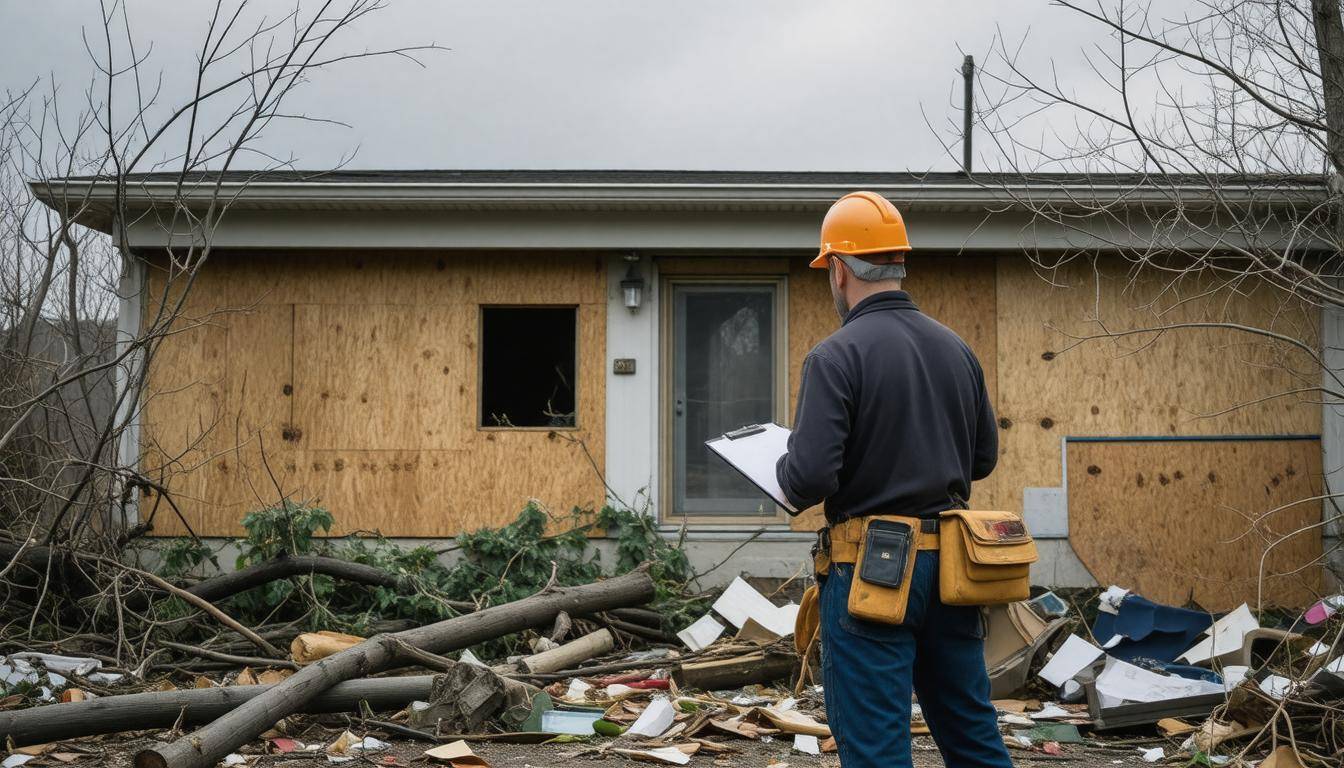
The process of repairing your home after a disaster can indeed feel overwhelming. However, with a solid plan in place, it becomes manageable. It’s crucial to start by prioritizing essential repairs that will make your home livable again. This might include fixing structural damage, plumbing issues, or restoring electricity. These repairs ensure that you can return to everyday life as quickly as possible amidst the chaos.
Once you’ve addressed urgent repairs, turn your attention to aesthetic and non-urgent fixes. For instance, damaged walls may need repainting, or flooring might require replacement. While these improvements contribute to your home’s comfort and appearance, they can generally wait until you’ve secured the safety and functionality of your space.
Many homeowners discover significant advantages in collaborating with disaster recovery specialists. These professionals not only understand the complexities of repair but also can navigate the often bewildering landscape of insurance paperwork and regulatory compliance. Their expertise saves you time and potential mistakes that could delay your reconstruction efforts. In fact, engaging with specialists who are well-acquainted with local regulations can expedite many processes—ensuring everything proceeds smoothly from start to finish.
Another essential aspect is to meticulously save all receipts and invoices related to repairs. Why is this important? Because your insurance may reimburse you for these expenses! Keeping organized records—not just for major renovations but also for minor repairs—can simplify the claims process immensely.
After successfully completing the repairs, it’s wise to reassess and update your home insurance policy to better mitigate future risks. Home insurance is not static; as you make updates or changes in your home or lifestyle, your coverage needs may evolve as well. For example, if you’ve replaced traditional roofing materials with more fire-resistant options after an incident, informing your insurer might qualify you for additional discounts.
Remember, recovery isn’t just about rebuilding structures—it’s about restoring a sense of safety and stability in your life.
This multifaceted approach to recovery ensures both physical restoration and emotional well-being following a disaster. Stay proactive in updating your policies and maintaining records for a smoother journey ahead.
What types of disasters are commonly covered by home insurance policies?
Home insurance policies commonly cover disasters such as fire, theft, vandalism, and certain natural disasters like windstorms and hail. However, it’s important to note that floods and earthquakes typically require separate policies or endorsements. According to the Insurance Information Institute, approximately 1 in 20 homeowners will file a claim related to severe weather each year, highlighting the importance of understanding your policy’s coverage limits and exclusions for disaster-specific incidents.
Are there exclusions or limitations in disaster coverage that homeowners should be aware of?
Yes, homeowners should be aware that disaster coverage often comes with exclusions and limitations. Commonly excluded disasters include flooding, earthquakes, and wear-and-tear damage. For instance, according to the Federal Emergency Management Agency (FEMA), about 90% of natural disasters in the U.S. involve flooding, yet only around 15% of homeowners have flood insurance. It’s crucial for homeowners to review their policies in detail and consider additional coverage options to ensure comprehensive protection against potential disasters.
How can homeowners determine the right amount of disaster coverage for their property?
Homeowners can determine the right amount of disaster coverage by conducting a thorough assessment of their property’s value, including the cost to rebuild and replace personal belongings. They should consider local risks—like floods or earthquakes—and review state averages for similar homes. A good rule of thumb is to obtain coverage for at least 80% of the home’s total replacement cost; according to the National Association of Insurance Commissioners, underinsurance is common, with nearly 60% of homes in the U.S. being undervalued for insurance purposes. To tailor policies effectively, seeking a professional appraisal can provide an accurate baseline for sufficient coverage.
What steps can homeowners take to lower their premiums while still having adequate disaster coverage?
Homeowners can lower their premiums while maintaining adequate disaster coverage by taking proactive measures such as installing smoke detectors, security systems, and storm-resistant features, which can lead to discounts of up to 20%. Additionally, bundling home insurance with auto or other policies often results in further savings. Conducting regular reviews of coverage and raising deductibles can also decrease costs without significantly sacrificing protection. According to industry data, homes equipped with mitigation features reduce the likelihood of claims, thus contributing to lower overall premiums.
How does the claims process work when filing for disaster-related damages under a home insurance policy?
The claims process for disaster-related damages under a home insurance policy typically begins with the policyholder notifying their insurance company as soon as possible after the event. They will need to document the damage, which includes taking photographs and compiling an inventory of affected items. The insurer may then send an adjuster to assess the damage, after which a claim decision is made based on the policy terms. According to industry statistics, around 70% of homeowners who file claims for natural disasters receive some form of compensation, emphasizing the importance of proper documentation and prompt reporting in ensuring adequate coverage.