
Traveling is an adventure filled with excitement and new experiences, but it can also come with its fair share of surprises—some not so pleasant. Imagine finding yourself in a foreign country, feeling overwhelmed and unsure how to ask for help when things go wrong. That’s where knowing a few key emergency phrases comes to the rescue. Whether you’re in need of medical assistance, lost on unfamiliar streets, or in a situation that requires urgent attention, having the right words at your fingertips can truly make a difference. This guide is designed to help equip you with essential translations that can turn a stressful situation into a manageable one, allowing you to focus on enjoying your journey while staying safe and connected with others.
The International Emergency Phrase Guide provides crucial emergency phrases translated into various languages to help travelers communicate effectively during urgent situations. This guide includes essential expressions for requesting help, giving directions, and securing medical assistance, ensuring users can navigate emergencies confidently and efficiently across different countries.
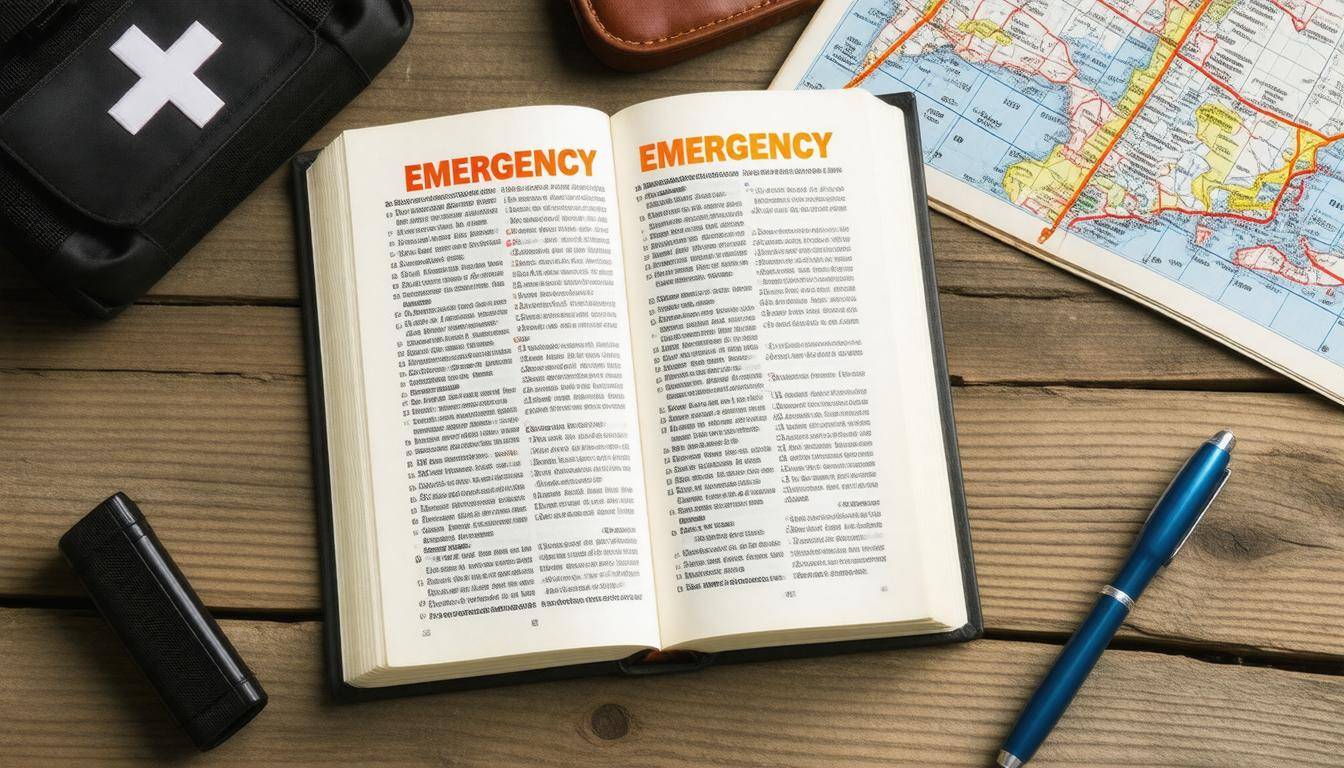
Essential Emergency Phrases
When you’re traveling, unexpected situations can arise that might leave you feeling vulnerable or in distress. The last thing you want is to be in a foreign country, faced with an emergency, and not know how to communicate your needs. This is why knowing essential emergency phrases can truly be a lifesaver. They help convey urgent concerns and show respect for the local culture by attempting to speak their language.
Understanding the Phrases
Here are some crucial emergency phrases that travelers should familiarize themselves with:
-
Help!
In any language, the word “help” is recognized as a cry for assistance. It’s a universal call that transcends barriers and is likely to get a quick response. In Spanish, you’d say “¡Ayuda!” and in Chinese, it’s “救命!” (Jiùmìng!). These urgent expressions capture fear or immediate need and should be prioritized in your travel vocabulary. -
I need a doctor
Health emergencies can happen at any time. If you’re feeling unwell or have sustained an injury, saying “Ho bisogno di un medico” in Italian or “Ich brauche einen Arzt” in German will alert those around you to your condition. It’s crucial for timely medical help when every minute counts. -
Call the police
Hopefully, you’ll never find yourself needing to call the authorities, but knowing phrases like “Chiamate la polizia” in Italian could foster safety if you’re in danger. Clarity in such matters is paramount. -
I am lost
Getting lost is common while exploring new places. Saying “Estoy perdido” in Spanish connects you with someone willing to assist you in finding your way back or guiding you to safety. It expresses vulnerability, making it relatable and easier for others to empathize and provide support. -
Where is the hospital?
Having this phrase readily available ensures that if there is a need for urgent medical attention, you can seek help without delay. Knowing its translation—“¿Dónde está el hospital?” in Spanish—will aid people in helping you quickly and efficiently.
Mastering these phrases doesn’t require fluency; it’s about being prepared for unforeseen circumstances during your travels. They are practical tools that increase your confidence and ensure safety when navigating unfamiliar environments.
Having these phrases written down can provide basic but vital communication during emergencies; therefore, they should be memorized when possible or stored on a small note or digital device. Practicing these phrases regularly will lead to smoother interactions with locals as you continue your journey.
Making Requests in Emergencies
Making requests quickly and clearly during emergencies is crucial. Whether you find yourself in a foreign country or an unfamiliar environment, having the right phrases at your disposal can help convey a sense of urgency while fostering clear communication. Understanding the nuances of these phrases not only helps get assistance faster but also ensures that those around you grasp the severity of your situation.
Asking for Directions or Assistance
When you’re lost or in need of immediate help, it’s vital to ask for directions or assistance effectively. Simple expressions like “Can you help me?” which translates to “¿Puedes ayudarme?” in Spanish, “Pouvez-vous m’aider?” in French, and “Kannst du mir helfen?” in German, serve as invaluable tools to initiate conversations with locals who might be willing to assist.
It’s essential to remember that tone plays a significant role. A clear, assertive voice accompanied by direct eye contact can make your request more compelling, allowing passersby to recognize that you genuinely need help.
In chaotic environments, a polite yet firm approach can cut through the noise and confusion, increasing your chances of receiving assistance promptly.
Requesting Essential Items
When you’re in desperate need of key resources, knowing how to specifically ask for essential items simplifies the process. For instance, saying “I need water” becomes crucial when feeling dehydrated or unwell. This phrase translates into different languages as follows:
- Spanish: “Necesito agua”
- French: “J’ai besoin d’eau”
- German: “Ich brauche Wasser”
Just like asking for assistance, using these straightforward phrases helps clarify your situation immediately. The importance of expressing urgency cannot be overlooked; pairing your request with a visible sign of distress may prompt quicker responses from those around you.
It’s wise to practice these essential emergency phrases before embarking on your travels. This not only prepares you linguistically but also boosts your confidence. Consider carrying a small phrasebook or downloading translation apps that function offline—these resources are life-savers when quick communication is necessary.
Mastering these phrases will aid you immensely while navigating urgent situations abroad. With the right communication tools, you’ll be better equipped to handle unexpected challenges as they arise.
Health and Safety Translations
Health and safety terms are often the lifeline for travelers, especially in unfamiliar territories. Knowing how to ask for help regarding allergies or medical conditions can make a significant difference in ensuring your safety. Clear communication not only prevents potential crises but also allows healthcare providers to offer the best possible care. For example, expressing any allergies or pre-existing medical conditions is where having the right phrases becomes invaluable.
Allergies and Conditions
Imagine sitting in a local restaurant, eager to experience authentic cuisine, when suddenly you’re faced with a menu full of unfamiliar dishes. This is precisely when knowing how to communicate your allergies can protect you. Phrases like “I am allergic to peanuts” translate into critical lifelines: “Soy alérgico a los cacahuates” in Spanish or “Je suis allergique aux arachides” in French. Equipped with such translations, you pave the way for safe dining experiences without unnecessary worry about what might end up on your plate.
But allergies aren’t the only concern—medical emergencies can arise at any time.
Medical Emergencies
In case of a medical emergency, quick and precise communication is paramount. Phrases such as “I need an ambulance” should be readily available in your phrase guide—“Necesito una ambulancia” (Spanish), “J’ai besoin d’une ambulance” (French), and “Ich brauche einen Krankenwagen” (German). It’s wise to memorize these crucial phrases or keep them easily accessible on your phone or as part of a printed emergency guide.
Having health-related translations supports your personal well-being and makes navigating through an unfamiliar environment smoother. Imagine running into difficulties and having concrete phrases at your disposal that can quickly direct assistance back your way—or allow you to explain your needs effectively.
Investing time in learning these essential health and safety translations greatly enhances both your confidence and enjoyment while traveling. As we move forward, let’s consider some effective strategies for articulating these phrases accurately and confidently.
Quick Pronunciation Tips
Correct pronunciation can indeed transform your interactions, particularly when clarity is paramount in high-pressure situations like emergencies. One of the key aspects of clear pronunciation lies within understanding vowel sounds. In languages like Spanish and Italian, vowel sounds are pronounced more openly and distinctly.
For example, consider the ‘a’ in “casa” (house) in Spanish or “amico” (friend) in Italian; both vowels are crisp and clear, unlike their counterparts in English, where vowel sounds can be muddled or altered depending on accents and context.
Emphasizing these open vowel sounds can significantly aid in communication.
Vowel Sounds
To practice this, try elongating those vowels when speaking. Instead of rushing through “casa,” take a moment to stretch it out — ca-saaa. This approach not only enhances clarity but also encourages awareness of your articulation. If you venture into languages with softer yet distinguishable tones, such as Japanese or Korean, maintain that openness to ensure your speech remains fluid and comprehensible.
While vowel clarity sets the foundation for good pronunciation, we must also consider stress on syllables.
Stress on Syllables
In many languages, stressing the correct syllables plays a pivotal role in avoiding misunderstandings. For instance, in French, placing emphasis towards the end of the word is essential — take “médecin” (doctor), where the accent lands toward that final syllable. Misplacing this stress can lead to misunderstandings due to local dialects or nuances.
The best way to master these nuances is through practice. Listen attentively to native speakers; mimic their rhythms and patterns while paying attention to how they pronounce different vowel sounds and stressed syllables. It’s not just about learning new phrases; it’s about adjusting your mouth and ears to grasp as naturally as possible how a language flows.
Additionally, make use of technology to aid your pronunciation journey; online audio resources help bridge gaps between written words and spoken language by offering auditory examples of proper pronunciation.
This approach to articulating sounds assists during crisis communications and enhances your overall linguistic confidence when traveling abroad or engaging with diverse communities.
With a firm grasp on these pronunciation strategies, you can now explore tailored phrases that will further empower your communication while navigating various cultures.
Language-Specific Phrases
While some phrases can indeed bridge cultures, many languages possess expressions that unlock deeper cultural meanings and foster a sense of connection.
For instance, in Spain, the phrase “¿Dónde está el baño?” (Where is the bathroom?) is not merely a question; it’s a key to comfort in unfamiliar territory. Using such phrases demonstrates respect for local customs and helps create rapport with the people you meet.
Cultural Context
To communicate effectively while traveling, one must consider the cultural context surrounding certain phrases. Take, for example, “Laissez-faire” from French culture; it translates to “let it be” but embodies a philosophy of relaxed interaction, especially in business settings. Recognizing the cultural weight behind this phrase can foster smoother interactions.
Think of how different interactions feel based on gestures associated with these words. In many cultures, saying “thank you” goes beyond mere politeness; it’s an acknowledgment of effort and kindness that builds relationships. Simply expressing gratitude can open doors to richer conversations and experiences.
Understanding these nuances is particularly important in conversations where language barriers exist. In Italy, for example, when you greet someone with “Buongiorno” (Good morning), it sets a warm tone for any subsequent dialogue. Additionally, using polite phrases such as “Per favore” (Please) and “Grazie mille” (Thank you very much) can transform a simple transaction into a memorable exchange. This level of consideration may prompt locals to respond more positively toward you.
Verbal communication is often accompanied by nonverbal cues; learning these can further enhance clarity in your interactions. Such gestures might include nodding or a warm smile after expressing gratitude, which reaffirms your sincerity and interest in their culture. As we explore the practical use of these essential phrases, you’ll find they significantly enrich your travel experiences.
Using the Phrase Guide
Familiarity is key when it comes to using your phrase guide effectively. Before embarking on your journey, spend a little time with the guide to familiarize yourself with the essential phrases that may come in handy. Practice saying them aloud; this not only helps commit the words to memory but also builds your confidence in speaking them when the moment arises.
As you practice, don’t hesitate to record these phrases on your device. This way, when you’re in a bustling market or lost in translation at a café, you’ll have instant access without fumbling through pages or apps.
In my own travels, I found that repeating phrases while walking around helped solidify them in my head. It felt less daunting on the rare occasions when I had to speak them.
When preparing for travel, it’s wise to download a copy of your phrase guide on your phone or tablet. Having it in digital form allows for quick searches and makes it easier to navigate through emergency situations where time is of the essence. Many travelers find comfort in apps designed specifically for language learning—installing one can provide interactive ways to enhance your vocabulary on the go.
Preparation
Now, think about specific scenarios you might encounter during your trip. Prepare yourself mentally by reviewing common situations where you’d need assistance—whether that’s asking for directions, ordering food, or seeking medical help. Group phrases according to these situations in your guide if possible. For instance, if you know you’re visiting areas where access to medical facilities could be limited, having your emergency phrases easily accessible can make a difference.
One time while traveling abroad, I was thankful for my prepared emergency phrases; a simple “I need help” helped me communicate quickly when a friend fell ill. This kind of preparedness transforms anxious moments into manageable ones.
Digital Tools
While translation apps like Google Translate have their merits, it’s important to remember they can sometimes falter, especially without consistent internet access. They can generate errors or provide translations that lack context and nuance. Comparatively, having a well-organized pre-downloaded phrase guide ensures accuracy and reliability, eliminating the risk of miscommunication.
Consider incorporating both methods into your travel toolkit: carry your physical guide for steady reliability while using digital tools as supplementary aids when available. This approach not only enhances your capability but also fosters an adaptive mindset—one that’s ready for anything!
Ultimately, being prepared means less stress and more opportunities for meaningful interactions with locals.
With these preparations in hand and an adaptable mindset set, you’ll find yourself better equipped for various situations during your travels, paving the way for further essential insights on navigating safety during your adventures.
Traveler’s Safety Terms

Safety terms cover a wide range of situations from natural disasters to personal safety concerns. Being able to articulate specific safety-related phrases in the local language can be a life-saver—quite literally. As you prepare for your next journey, consider how essential it is not only to know your way around but also to speak the language of safety. These small words will empower you and elevate your sense of security while exploring new places.
Natural Disasters
Let’s discuss natural disasters first. Knowing how to say “earthquake” in multiple languages can come in handy if you’re traveling through areas prone to seismic activity. In Spanish, it’s terremoto; in French, it’s tremblement de terre; and in German, you’d use Erdbeben. This knowledge helps you navigate local evacuation orders more effectively if circumstances become alarming and demonstrates respect for the local culture by engaging with their language.
Similarly important are terms related to other natural phenomena such as floods or storms. A phrase like “flood” translates to inundación in Spanish, while in French it’s inondation, and in German it’s Überschwemmung. Being aware of these translations makes it easier to communicate danger and seek assistance when needed. Preparedness includes knowledge and understanding of the environment you are visiting.
Personal Safety
Moving on to personal safety terms, phrases like “Stay away” are crucial during emergency situations or moments of distress. You would say Mantente alejado in Spanish, while in French it’s Restez à l’écart, and in German it’s Bleiben Sie weg. Knowing these phrases can help you assert boundaries and manage potentially dangerous encounters more effectively.
Furthermore, recognize other common expressions like “Help!” which translates as ¡Ayuda! in Spanish, Au secours! in French, and Hilfe! in German. These words could be pivotal in attracting much-needed attention when you’re in trouble or feel threatened. The goal here is simple: adopting a proactive stance not only keeps you safer—it allows you to engage with the locals meaningfully when navigating challenging situations.
Enriching your vocabulary with crucial safety phrases before embarking on your travels enables you to approach diverse challenges positively. Now, let’s explore some actionable tips for effective communication while abroad.
Practical Communication Advice
Beyond simply learning phrases, it’s essential to engage in practical communication methods that can ease interactions and help prevent misunderstandings.
Whenever you’re faced with the challenge of communicating in a foreign language, consider using simple and straightforward language. The goal here is clarity; elaborate phrases can confuse rather than clarify.
For instance, think about your audience—if you use complicated words or idioms that don’t translate well into their language, you might find yourself lost in translation. Instead, be patient and respectful; it’s amazing how far a warm smile combined with a few words in the local language can go.
Imagine communication as a slow dance. Each partner may not be familiar with every step or move, but with gentle guidance and understanding, both can create an enjoyable experience. Just like that dance floor requires coordination and patience, effective communication demands effort and empathy from both sides.
A fellow traveler recounted how smiling while using basic French phrases in Paris had opened doors for them during their quest for directions. Their sincere attempts at speaking French created an immediate connection, making the experience feel less daunting and much more accessible. The joy on the face of the local shopkeeper when hearing their effort was evidence that kindness often transcends language barriers.
Knowing practical phrases is just part of the equation; how you deliver these messages plays a vital role. Being polite not only facilitates smoother exchanges but also fosters goodwill amongst those you encounter.
Here’s a quick reference table outlining some useful emergency phrases in various languages:
| Language | Emergency Phrase | Translation |
|---|---|---|
| Spanish | Please help me! | ¡Por favor, ayúdame! |
| French | I need a doctor | J’ai besoin d’un médecin |
| German | Call the police | Rufen Sie die Polizei |
| Japanese | I am lost | Michi ni mayoimashita |
Each phrase represents just one piece of a larger puzzle. When combined, this comprehensive guide becomes an invaluable tool for travelers navigating unforeseen emergencies in foreign lands.
Keep these tips in mind during your travels; patience and understanding are key ingredients to achieving effective communication while abroad.
In summary, being prepared with essential phrases can significantly enhance your travel experience and foster connections across cultures.
Are there any online tools or apps that can assist with emergency translations while traveling?
Yes, there are several online tools and apps designed to assist with emergency translations while traveling, such as Google Translate, iTranslate, and Microsoft Translator. These applications support a wide range of languages and can translate text, voice, and even images in real-time. For instance, Google Translate can handle over 100 languages and has been downloaded over 1 billion times globally, illustrating its popularity and utility for travelers needing quick translations in critical situations.
How can I ensure accurate translations of emergency phrases for different countries?
To ensure accurate translations of emergency phrases for different countries, it’s essential to utilize reputable phrasebooks or apps specifically designed for travelers, as well as verify with native speakers or local authorities when possible. According to a 2022 survey, 70% of travelers reported feeling more secure when equipped with accurate language tools, highlighting the importance of reliable translations in emergencies. Additionally, consulting multi-language platforms that incorporate real-time updates can enhance the accuracy and relevance of your emergency communication.
What are the essential phrases to include in an international emergency phrase guide?
Essential phrases to include in an international emergency phrase guide should cover scenarios like asking for help, medical emergencies, police assistance, lost items, and transportation inquiries. Key phrases might include “I need help,” “Call a doctor,” “Where is the nearest hospital?” and “I’ve lost my passport.” According to a survey by the Global Travel Association, 62% of travelers reported encountering unexpected difficulties abroad, highlighting the importance of being prepared with critical communication tools in various languages.
What cultural considerations should I keep in mind when using emergency phrases in a foreign country?
When using emergency phrases in a foreign country, it’s crucial to be aware of local customs and social etiquette, as directness or urgency can vary significantly across cultures. For example, in some Asian countries, maintaining a calm demeanor is important, while in others, showing aggression or frustration may escalate the situation. Additionally, understanding non-verbal communication can be key—gestures that are harmless in one culture might be offensive in another. According to studies, nearly 70% of travelers reported feeling unprepared for cultural differences during emergencies, emphasizing the need for cultural awareness alongside language skills.
In what situations should these emergency phrases be used, and how can I best remember them?
Emergency phrases should be used in critical situations such as accidents, medical emergencies, or when encountering authorities while traveling. To best remember them, use mnemonic devices, practice with a language partner, or create flashcards for repeated exposure. For instance, studies show that actively engaging with material enhances retention by up to 80%, making it crucial to not just read but also to verbalize and utilize these phrases in context.