
When it comes to extreme weather, being prepared can make all the difference between safety and chaos. Munich, with its beautiful landscapes, can quickly turn unpredictable when storms roll in or the temperature drops. That’s why having an Extreme Weather Preparation Kit isn’t just a good idea; it’s essential for anyone living in the area. Knowing what to include in your kit can feel overwhelming, but don’t worry. This guide will help you gather everything you need to brave any stormy night or snowy day with confidence. So let’s dive into the must-have supplies that keep you and your loved ones safe when nature throws its worst at us!
A Munich Extreme Weather Preparation Kit should include essentials such as non-perishable food, sufficient water supply, a first-aid kit, flashlights with extra batteries, warm clothing, blankets, and any necessary medication. It’s also important to have an emergency plan and a portable phone charger in case of outages.
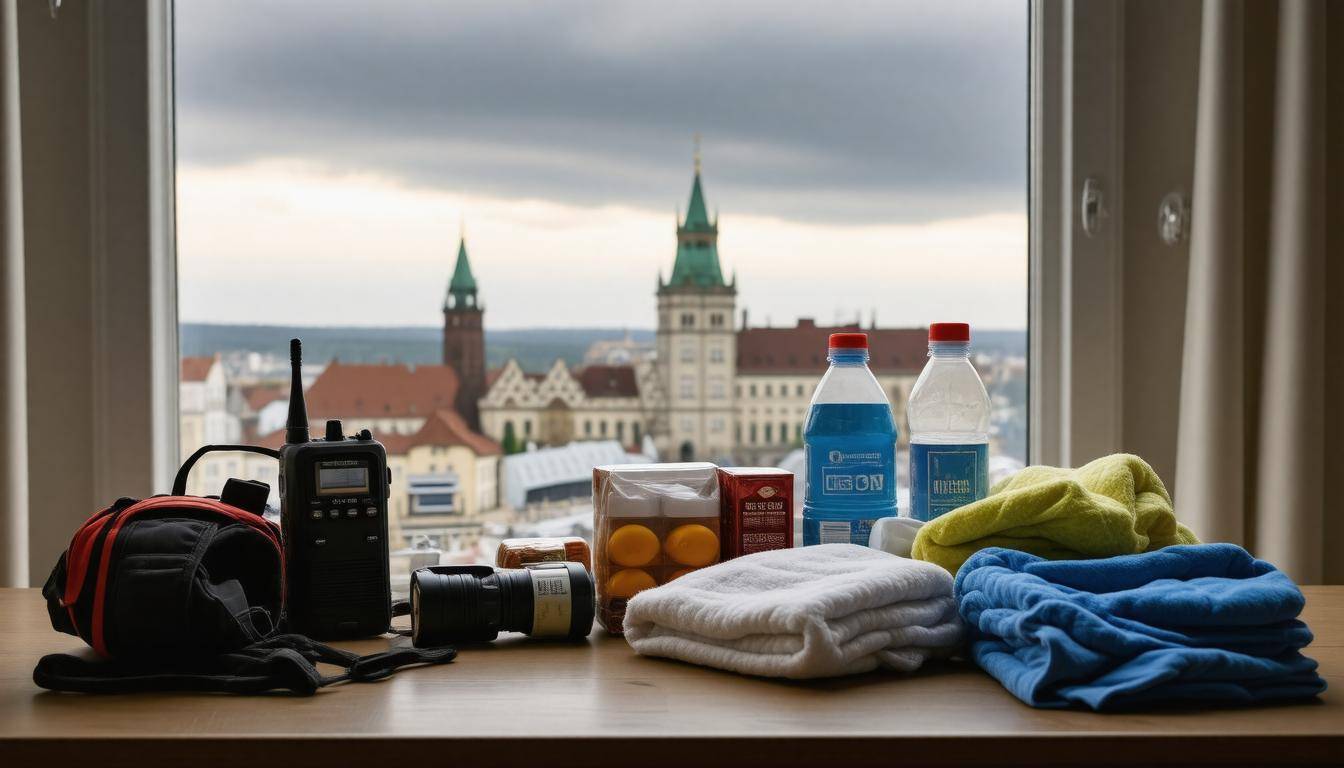
Essential Items for Your Munich Extreme Weather Kit
First and foremost, starting with non-perishable food and water is essential. Store at least three days’ worth of food, focusing on items like canned goods, high-energy bars, and dried fruits that can withstand time without refrigeration. Each person in the household should be using one gallon of water per day. For example, if you have a family of four, aiming for twelve gallons will not only keep everyone well-hydrated but also support various emergency needs like cooking or cleaning.
Next up, let’s talk about keeping your space illuminated and functional during power outages.
Lighting and power are key to maintaining safety and comfort during emergencies. Including quality flashlights along with extra batteries ensures you won’t be left in the dark. If your finances allow, consider investing in a portable generator with enough fuel to see you through extended outages. Solar-powered chargers are incredibly resourceful too; they provide a way to keep devices charged without depending on traditional power sources, giving you peace of mind that your communication lines remain open.
Speaking of communication, having the right devices can make all the difference.
Adding communication devices to your kit is vital. A battery-powered or hand-crank radio helps you stay updated on emergency broadcasts and local alerts, which is invaluable when external power is down. Pairing that with a reliable power bank for your mobile devices means you maintain a line to the outside world. It’s worth noting that cellular networks can falter during extreme events, so investing in two-way radios adds an extra layer of communication while fostering greater connectivity among your loved ones.
As we prepare for the worst-case scenarios, we must not forget our health and hygiene needs.
Health should remain a priority—this is where personal hygiene items come into play. Curating a basic hygiene kit can save you from discomfort or illness when resources become scarce. Items such as hand sanitizer and moist towelettes are essential extras to emphasize cleanliness while garbage bags help keep waste contained. Additionally, including plastic ties may come in handy when securing items or organizing your kit efficiently.
Finally, making sure you’re secure in terms of identification can’t be overlooked.
Securing important documents is paramount for quick access during emergencies. It’s essential to store copies of vital records—like IDs, insurance policies, and medical records—in a waterproof container. This precaution protects your essential paperwork from potential water damage during flooding or other incidents while ensuring you can swiftly recover your identity and support when assistance is necessary.
Inventorying these crucial items shows the backbone of your extreme weather kit. Next, we’ll explore essential gear and equipment designed to bolster your readiness for any situation that arises.
Survival Gear and Equipment
Extreme weather requires not just any gear, but specifically designed equipment that stands up to the elements. Having portable weather-resistant tents is a practical starting point. They provide crucial shelter when conditions turn harsh—think rain, snow, or strong winds. It’s wise to select brands like North Face and Therm-a-Rest, celebrated for their resilience in rough conditions.
Alongside a sturdy tent, consider investing in sleeping bags rated for sub-zero temperatures and high-quality insulated blankets. These items will help ensure that you remain warm even in freezing conditions, allowing for better rest and recovery during demanding situations.
To further enhance your survival setup, incorporating a variety of useful tools can make a significant difference.
A multi-tool like a Swiss Army Knife is invaluable; it offers multiple functionalities which can be critical when you’re improvising solutions under pressure. Whether you need to build a makeshift shelter or perform repairs on your gear, this tool serves numerous purposes. Simply think about how often one might need a can opener or screwdriver unexpectedly!
Additionally, duct tape is another indispensable item due to its versatility—you’ll find it useful for everything from patching gear to securing supplies together.
Among these essentials, don’t overlook the importance of fire. Having means to start a fire can save lives while providing warmth and a way to cook food. A fire starter kit or waterproof matches should be included in your kit, ensuring you have reliable options at all times.
Water access is another critical aspect of survival; without it, even the best gear can be rendered useless. In addition to packed drinking water, invest in a portable water filtration system such as a Lifestraw or Sawyer Mini. These tools allow you to draw clean drinking water from natural sources like lakes or rivers—a lifesaver if your stored supplies are depleted. Just imagine being caught miles from civilization with no fresh water; having this capability could be what keeps you alive.
According to survival expert John Doe, “A reliable filtration system is the backbone of a good emergency kit; it ensures you’re never caught without safe drinking water.” His experience underscores the necessity of planning ahead and preparing for every eventuality in extreme environments.
After fortifying yourself with proper survival gear, understanding how to manage medical issues that may arise amidst challenging weather conditions becomes equally vital.
First Aid Supplies for Emergencies

In extreme weather situations, immediate access to healthcare may be compromised, and that’s where a well-prepared first aid kit becomes your first line of defense. You never know when a minor injury or medical emergency might arise, so packing a robust selection of basic medical supplies is pivotal.
Start with essentials like adhesive bandages, sterile gauze pads, and adhesive tape for treating simple cuts and scrapes. These items can effectively manage wounds and provide necessary protection against further injury. The next critical component is antiseptic wipes, which help clean the area around an injury and minimize the risk of infection. Additionally, antibiotic ointment serves as an extra barrier against bacteria.
Once you’ve laid down the foundation of your first aid kit with these basic supplies, it’s essential to consider medications and treatments that can alleviate various ailments.
Medication and Treatments
Having a range of over-the-counter medications on hand can make all the difference when you’re faced with common pain or allergies. Pack items such as ibuprofen for pain relief, aspirin to tackle headaches or inflammation, and antihistamines to combat allergic reactions. Make sure to include personal prescription medications you or your family members rely on regularly; however, ensure that you monitor their expiry dates closely since expired medication won’t serve its purpose in an emergency.
Managing injuries isn’t just about coping with pain; specialized medical equipment plays a vital role in providing effective care.
Specialized Medical Equipment
A few specialized tools in your kit can significantly enhance how you deal with unexpected medical issues. For instance, include a digital thermometer to check for fever; knowing a person’s temperature can inform decisions on whether further medical attention is necessary. A pair of tweezers proves invaluable for extracting splinters or for tick removal, while scissors are handy for cutting gauze, tape, or clothing away from an injured area.
Every kit should also house an emergency first aid manual that guides you through more complex procedures should the need arise. Don’t underestimate life-saving tools like a thermal blanket, which helps prevent hypothermia during severe cold snaps, or a splint to stabilize potential fractures. Having these items on hand means you’ll be better equipped to manage various eventualities you might face during extreme weather conditions.
Beyond simply curating supplies, protecting them from water damage emerges as another critical element to consider, particularly given Munich’s inclination toward both snowy and rainy conditions.
Packing a Waterproof Emergency Kit
Ensuring your emergency supplies remain dry can mean the difference between safety and peril, especially in unfavorable weather conditions. Imagine being caught in a snowstorm with soggy gear; it’s not just uncomfortable but can compromise your ability to respond effectively. Thus, packing your kit in waterproof containers is essential.
Selecting Waterproof Containers
To start, consider using specialized waterproof bags or containers. Dry bags—often seen in kayaking adventures—are perfect for this purpose due to their ability to seal tightly against water. You might also want to incorporate large Ziploc bags, which are incredibly handy for organizing smaller items like first-aid supplies, snacks, or electronic devices within your larger containers. Every layer of protection adds an extra line of defense against moisture.
Pro Tip: When packing, limit air exposure by removing excess air from your Ziploc bags before sealing them. This reduces space and minimizes moisture that can lead to dampness.
Utilizing Waterproof Gear
Alongside your storage, it’s crucial to include waterproof clothing. Investing in high-quality gear like rain jackets, pants, and boots will shield you from wet conditions. Brands such as Gore-Tex are known for their reliable protection that breathes while keeping water out. Picture being able to move freely and confidently during a sudden downpour rather than being stuck in sodden clothes that would only make matters worse.
Remember to accessorize wisely; items like waterproof gloves and hats help maintain body heat while protecting you from the elements, ensuring you’re ready for whatever comes your way.
Incorporating Desiccants
Finally, let’s talk about pesky moisture that invades even the most tightly sealed bags. Placing desiccants or silica gel packets inside your waterproof containers can significantly reduce humidity levels. These tiny packets absorb moisture that may seep in over time, providing added protection against rust on tools or sogginess in food supplies.
Make it a habit to check these packets periodically; if they turn color, it’s time for replacement. It’s a small effort that goes a long way toward maintaining the integrity of your emergency kit.
Taking these precautions not only prolongs the life of your supplies but also greatly enhances your readiness for extreme situations ahead.
Winter Preparedness Items
Severe winter weather in Munich necessitates gear that can withstand snowstorms and freezing temperatures. Maintaining warmth and comfort is paramount during these conditions, and one of the best ways to stay safe is by investing in high-quality winter apparel.
Insulated Clothing and Footwear
Start with insulated jackets, snow pants, thermal undergarments, and sturdy winter boots that feature good traction. These items are essential not just for comfort but also for avoiding injuries due to slippery surfaces. Investing in clothing from reputable brands like Columbia or Sorel can make a noticeable difference in performance. Moreover, don’t forget to check for windproof and waterproof features, as these can greatly enhance your experience when facing inclement weather.
When it comes to footwear, prioritize boots with insulated linings and deep treads to provide stability on icy ground. It’s worth trying boots on while wearing thicker socks that you would typically use during winter; this ensures a snug fit even when layering up.
Heat Retention Items
Beyond clothing, heat retention items play an indispensable role. Good hand warmers can offer immediate comfort; prefer the reusable types as they are eco-friendly and maintain warmth for extended periods. Additionally, stocking up on thermal blankets—especially those designed for emergencies—can save you when unexpected situations arise.
Accessories like gloves, hats, and scarves should not be overlooked either; having extras can prove invaluable if your garments get wet or are lost. Remember: a well-warmed head keeps the body significantly warmer overall. This may sound simple, but it’s effective—so keep reserves of headgear handy!
Vehicle Preparedness
If you drive during winter storms, preparing your vehicle is crucial. Create a winter roadside emergency kit equipped with essentials such as a shovel for digging out of snowdrifts and an ice scraper for visibility. Consider carrying kitty litter—this handy item provides traction if you find yourself stuck on slick surfaces.
Additionally, having an emergency flasher could attract attention should you face a breakdown in harsh conditions, while a thermal sleeping bag will keep you warm if stranded overnight. Checking your vehicle’s fluid levels before the first heavy snowfall has kept many drivers one step ahead of potential issues.
To master the challenges of Munich’s cold season, being equipped is non-negotiable. It’s now time to shift focus towards managing other seasonal threats that may arise unexpectedly in warmer months.
Preparing for Heat and Summer Storms
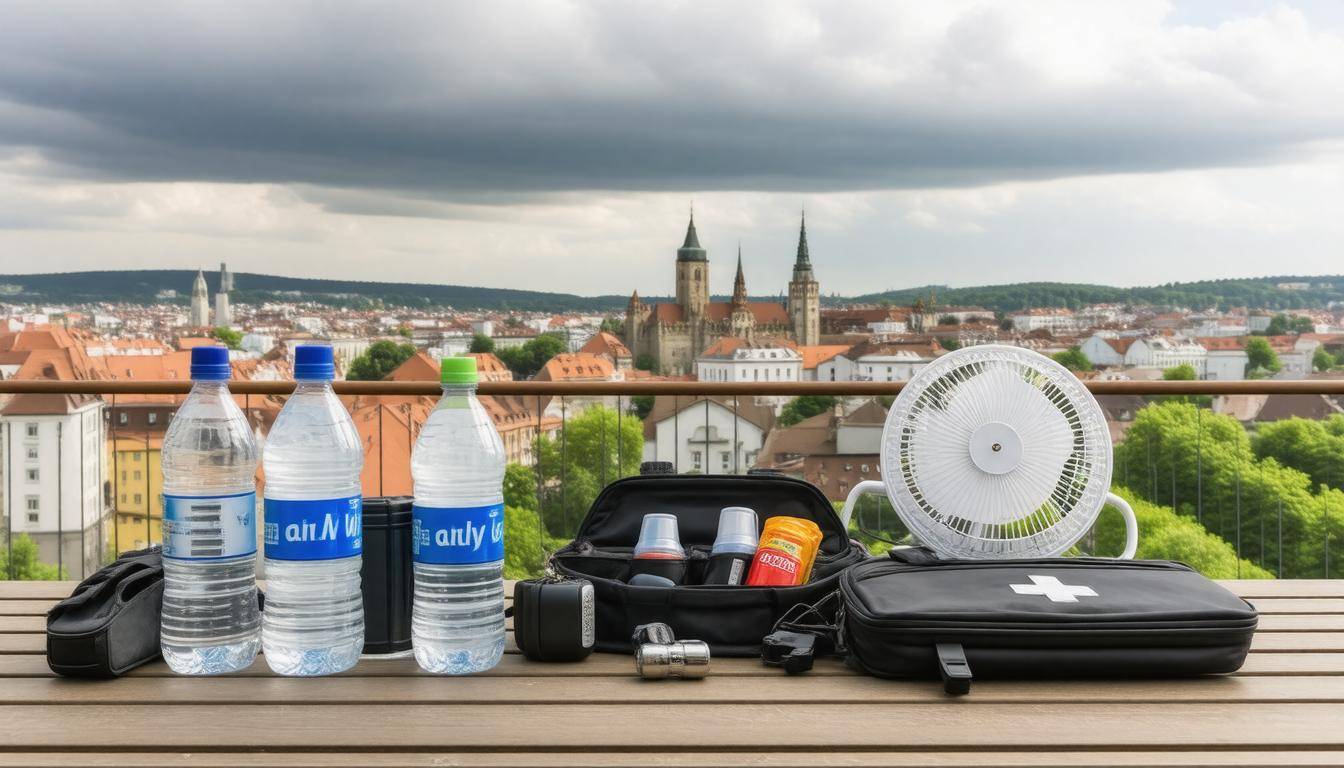
Hot and stormy summer conditions in Munich require special items to stay cool and protected. When temperatures rise, it’s not just about finding shade; it’s about actively creating a cooler environment around you. One effective method is utilizing various cooling solutions throughout your home or on the go. For instance, portable fans can be a lifesaver, offering instant relief when positioned near a window to circulate air effectively. Similarly, cooling towels are an easy-to-carry option that cools as they absorb sweat—simply wet one, wring it out, and enjoy the instant refreshment.
Yet, staying cool is only half the battle during Munich’s unpredictable summers; preparing for sudden storms is equally important.
Cooling Solutions
In addition to fans and cooling towels, consider investing in personal misting devices. These compact gadgets spray a fine mist of water onto your skin, providing quick relief from oppressive heat. Furthermore, placing your fan near a bowl of ice can amplify its cooling effects. The air passing over the ice creates a refreshing breeze that feels remarkably cooler. Don’t overlook your windows; using reflective window film can reduce heat gain significantly while still allowing natural light into your home.
Now, let’s discuss how to guard against the potential chaos that summer storms can bring.
Storm Protection Gear
Storm protection gear is crucial as thunderstorms gather rapidly in Munich’s summer months. First on your list should be a sturdy portable shelter—it can mean the difference between safety and exposure. Look for lightweight designs that are easy to set up and can withstand strong winds. Additionally, heavy-duty tarps serve two purposes: they provide waterproof coverage when draped over objects or used as makeshift roofs during sudden downpours while also being versatile enough for various outdoor situations.
While storm preparations are key, ensuring you stay hydrated through the heat is perhaps the most critical aspect of summer readiness.
Hydration Strategies
Finally, let’s talk about hydration strategies because staying hydrated is pivotal during hot weather. Always have extra water on hand—at least two liters per person per day if you anticipate spending extended time outdoors. However, it’s not only about water; electrolytes also play a crucial role in keeping your body functioning properly. Consider packing electrolyte tablets or sports drinks to replenish what you lose through perspiration. Dehydration can sneak up quickly during sweltering summer months, leading to fatigue or even heat-related illnesses.
By integrating these essential techniques for cooling solutions, storm protection gear, and hydration into your preparation efforts, you’ll foster more effective responses to Munich’s lively summer challenges which can set you up perfectly for managing extreme heat conditions ahead.
Checklist for Extreme Heat
First and foremost on your checklist should be hydration supplies. As temperatures climb, staying hydrated becomes paramount. A few extra water bottles can make a significant difference when you’re out and about. Consider adding electrolyte solutions to your kit too; they help replenish essential minerals lost through sweat. You never know when you might need that extra boost, especially during prolonged exposure to high temperatures.
Next is cooling gear, an essential ally against extreme heat. Items like portable fans are lightweight and easily packable, making them perfect for outdoor spaces or while traveling. Cooling towels are a wonderful addition as well; they can be soaked in cold water and provide immediate relief by simply draping over your neck. And don’t forget about sun hats—preferably wide-brimmed—to shield your face and neck from direct sunlight. These small adjustments can significantly enhance your comfort.
Consider this: The right gear not only keeps you cool but also boosts your morale during those sweltering days when everything feels heavier under the heat.
Then we move to sun protection. High-SPF sunscreen isn’t just a summer accessory; it’s a necessity. Reapplying it frequently is more effective than slathering a single layer in the morning. Pair it with sunglasses that reduce glare and protect your eyes from harmful UV rays. It’s wise to invest in UV-protective clothing too, especially if you’re spending extended periods outdoors. Many brands now offer lightweight shirts and pants designed to block the sun without sacrificing breathability.
Of course, shelter items like portable shade or shelters are indispensable in extreme heat conditions. If you’re planning outings, a collapsible canopy or tarp can provide refuge from relentless sunlight, creating a space where you can relax and cool down, even in the open air. This simple measure can turn an exhausting day into one of enjoyable summer fun.
Lastly, ensure you have the necessary safety equipment included in your checklist. Emergency contact numbers should be at hand, especially if you’re venturing out alone or into unfamiliar areas. A first aid kit is vital too—not just any kit, but one specifically tailored for heat-related illnesses such as heat exhaustion or heatstroke. By being proactive about safety and having these essentials on hand, you’ll feel far more secure navigating temperature extremes.
With meticulous preparation in place for extreme heat situations, it’s equally essential to maintain readiness for all types of weather conditions that may arise throughout the year.
Final Safety Tips for All Weather Conditions
Comprehensive preparedness involves taking proactive steps that leave nothing to chance. One of the most effective ways to ensure your family is ready for emergencies is to develop an emergency plan.
Drafting this plan includes identifying specific roles for each family member, so everyone knows what to do when trouble arises. For instance, assign responsibilities such as communicating with outside contacts or gathering important documents. Practicing the plan regularly allows family members to become familiar with their roles, which can significantly reduce panic during an actual event.
Make sure you also know the safest routes to nearby shelters and emergency services. Distributing written copies of this plan ensures everyone stays informed and ready.
In addition to having a solid plan in place, it’s crucial to leverage community resources effectively.
Familiarizing yourself with local emergency contacts and shelters can make all the difference when disaster strikes. Keeping a list of these critical contacts—emergency services, local hospitals, and nearby shelters—handy means you won’t waste valuable time searching for information.
Moreover, Munich’s local government websites are excellent resources that continuously provide updates and details specific to each type of extreme weather condition. Subscribing to alerts from these sources can keep you informed about imminent dangers and recommended safety precautions.
No safety protocol is complete without routine checks and attention to detail.
Regularly checking and updating your emergency kits is paramount. Over time, supplies can become outdated or depleted, making them ineffective when you need them most.
It’s a good practice to rotate food and water supplies; ideally, replace items every six months or so. Don’t forget medications—check expiration dates and replenish prescriptions as needed. Additionally, make sure that all equipment, like flashlights and batteries, remains in working order.
Conducting these maintenance checks enables you to be confident that you’ll have reliable resources at your disposal when extreme weather conditions hit.
By adopting these preparations as part of your regular household routine, you’ll find yourself not just alert but genuinely prepared for whatever surprises Munich’s ever-changing climate throws your way.
Staying proactive in your preparation not only enhances your safety but also gives you peace of mind amid uncertain weather patterns. Equip yourself with knowledge, resources, and readiness for every storm.