
When it comes to office safety, many people focus on fire drills and emergency alarms, but what about knowing the way out? Imagine being at work and suddenly facing a situation that requires you to think quickly. Would you know which door to take? Having a solid understanding of emergency exits isn’t just helpful; it can be life-saving. Many workers aren’t aware of their nearest exits, and that’s a problem. This guide will walk you through essential strategies for creating clear evacuation maps, clearly identifying exit routes, assembly points, and even where gear like fire extinguishers are located. By focusing on these aspects, we’re taking significant steps toward ensuring safety during emergencies—because when the alarm rings, every second counts.
The Office Building Emergency Exits: Mapping Guide includes essential strategies for creating clear and accessible evacuation maps, including the identification of exit routes, assembly points, and locations of fire extinguishers. It emphasizes the importance of regular drills and the need for well-marked, unobstructed exit paths to ensure safety during emergencies.

Building Safety Through Effective Exits
Ensuring that a building is equipped with well-marked exit routes is critical for saving lives when disaster strikes. When we think about safety, it’s easy to focus on fire extinguishers and alarms. However, without clear and accessible exit strategies, those safety measures can quickly become futile.
Imagine a scenario where panic sets in during a chaotic event like a fire; individuals may struggle to find their way out of the building if the exit signs are unclear or poorly situated. In moments of crisis, seconds matter—and efficient exits can be the difference between life and death.
Research has shown that buildings with clearly marked exits can reduce evacuation time by an average of 30%. This significant improvement comes from ensuring that individuals know precisely where they need to go to evacuate safely. Furthermore, statistics reveal that 70% of office workers are unaware of their nearest emergency exit—a staggering figure highlighting the importance of proactive education about evacuation procedures. If someone doesn’t even know where to go, all the alarms in the world won’t be enough to ensure their safety.
It is essential that employers maintain comprehensive evacuation maps throughout an office building, indicating not only exit routes but also other critical information, such as locations for first aid kits and fire extinguishers.
This visibility is vital—not just in offering employees peace of mind but also in ensuring swift action during emergencies. The layout should never impose confusion; firefighters and rescue teams need clear paths to access affected areas quickly without bottlenecks.
To facilitate this understanding, every employee should participate in regular drills to familiarize themselves with both marked exits and unmarked escape routes. The National Fire Protection Association (NFPA) recommends at least two exits per floor in office buildings—an essential guideline that emphasizes flexibility during emergencies. Visual cues—brightly colored signs with clear instructions—should always point towards these exits while remaining unobstructed at all times.
It’s equally important to consider external factors that may come into play during an emergency. For example, identifying assembly areas upwind from potential hazards minimizes risk but also prepares evacuees for safe regrouping after exiting the building. Regular drills foster confidence but can only be effective if everyone is aware of where to go once they leave the building.
As you ponder how your organization manages its emergency response protocols, reflect on whether your workplace truly prioritizes easily accessible exits and clear signage. These elements are foundational for immediate safety and instrumental in fostering a culture of preparedness among all employees.
Transitioning from understanding the importance of effective exit strategies, let’s explore more practical aspects involved in effectively marking and mapping these crucial pathways.
Mapping Your Emergency Exits
When we talk about mapping emergency exits, it involves a meticulous approach that goes beyond mere outlining on paper. This process is fundamentally tied to safety and needs to include multiple components to ensure its effectiveness.
To begin with, you should survey the building. A walkthrough helps you spot all potential exits, which means not only main doorways but also secondary ones and windows that may serve as escape routes during emergencies. While you’re at it, take note of the surroundings outside each exit. Are they easily accessible? That matters when every second counts.
Once you’ve mapped out potential exits, it’s time to evaluate risk by considering various emergency scenarios.
Just as no two fires are identical, emergencies can unfold in numerous ways – from floods to explosions to workplace violence. When charting your exit routes, think critically about each scenario’s impact on the paths you’ve identified.
For instance, does your primary exit lead through a hallway that might flood during heavy rains? Does the nearest stairwell become inaccessible if a fire breaks out on that floor? Listing these emergency scenarios, along with their possible implications for evacuation plans, can help illuminate safer pathways. This approach deepens your understanding of hazards specific to your building and makes it easier to create an evacuation plan that can adapt under pressure.
Collaborating with experts can elevate your mapping efforts significantly.
Next, consider working closely with fire safety experts as you refine your evacuation strategies. Their insights into local codes and building regulations are invaluable in identifying hazards that you may overlook during your initial survey.
They often bring expertise about structural integrity and traffic patterns inside buildings, where bottlenecks could pose major risks during an evacuation. Their professional experience can help delineate practical escape routes while emphasizing critical considerations such as door width and exit capacity requirements established by organizations like the International Building Code (IBC) and the National Fire Protection Association (NFPA).
For example, if you’re working with a 10-story building, collaborating with a fire safety expert might reveal that certain floors need additional exits due to high occupancy levels or potential hazards inherent to specific layouts.
After going through these steps, solidify your preparations by documenting everything carefully.
Documenting your findings and creating evacuation maps is where it all comes together. These maps should be conveniently placed then prominently displayed so they are visible at any given moment.
They must highlight exit locations, the route to those exits, and areas designated for assembly once evacuees exit the building safely. By doing this, you’re not just creating a plan; you’re establishing a lifeline for everyone inside the premises in times of crisis.
As each aspect is woven together seamlessly, developing robust guidance in navigating potential emergencies leads naturally into examining how to further enhance clarity regarding exit locations and signage within your office environment.
Identifying Exits and Signage
Clear, visible signage is vital for directing people to safety during a crisis. In the event of an emergency, time is of the essence, and properly identifying exits ensures that everyone—employees and visitors alike—can find their way quickly and efficiently.
The importance can’t be overstated; indeed, poor signage can lead to confusion and hesitation, which are detrimental in high-stress situations. Notably, incidents like the one at the Marriott Hotel in San Diego highlighted how poorly marked exits can hinder an evacuation. Guests reported delays as they struggled to find their way due to inadequate signage, reminding us that every second counts when safety is on the line.
To avoid such scenarios, it is paramount to use standardized exit signs with illuminated letters to increase visibility. These signs should be strategically placed at eye level, ensuring they stand out against various backgrounds. An effective layout will have these signs visible from different angles throughout the area, allowing individuals to navigate even if they are disoriented or panicking.
Additionally, employing consistent symbols and color codings on exit signs helps instill confidence and clarity, reducing the likelihood of misdirection.
According to the National Fire Protection Association (NFPA), proper exit signage can significantly shorten evacuation times by up to 25%. This statistic underscores the crucial role that clear exit paths play in emergency preparedness. Shaving valuable minutes off an evacuation can make all the difference not only in protecting lives but also in minimizing chaos.
Furthermore, the most effective signage takes into account building layouts and natural sightlines. Signs should be placed near doors leading to exits but also along pathways leading there.
Consider this: a well-thought-out path guiding people toward emergency exits resembles a breadcrumb trail leading home; it encourages users onward without confusion or hesitation.
With clearly marked exits established as our foundation, we now turn our attention toward optimizing the labeling systems for stairwells and doors to further enhance understanding during crises.
Labeling Stairwells and Doors
Proper labeling of stairwells and doors in an office building is fundamental for emergency preparedness. This practice enhances safety and provides vital guidance during critical moments. When an alarm sounds or danger arises, every second counts; clear signage can direct individuals to safety, mitigating panic and confusion. Imagine being in a chaotic situation where smoke fills the air; properly labeled exits can make all the difference between a safe escape and needless uncertainty.
Importance of Clear Signage
Consider a scenario where employees scramble during an evacuation. If stairwell doors are clearly marked, they can swiftly locate routes to safety without wasting precious time. What if, instead of gray walls looming over you, vibrant signs guided your steps? This visual clarity is essential; effective labeling greatly reduces misdirection.
Testimonial: “In our last fire drill, labeled stairwells made evacuations smoother and helped us account for everyone faster,” said Mike Harris, Office Manager at TechCorp. His experience highlights how strategic labeling aids efficient evacuation and fosters a culture of preparedness among staff members.
Best Practices for Labeling
To optimize label effectiveness within your office space, consider these best practices:
-
Use Universal Symbols: Opt for symbols widely recognized to communicate emergency messages quickly.
-
High Contrast Colors: Use bold colors for signage to ensure visibility; bright green for exits and red for fire hazards are effective choices.
-
Consistent Font Usage: Adopt easy-to-read sans-serif fonts like Arial or Helvetica to maintain uniformity.
-
Visibility Constraints: Labels should be large (with a minimum height of 6 inches) so they can be easily read from afar.
Table Example for Stairwell Labeling
Here’s an example layout that may serve as a guideline:
| Area Type | Label Example | Location |
|---|---|---|
| Main Stairwell | Stairwell A | At each floor entry |
| Emergency Exit | Exit A.1 | Above door |
| Fire Escape | Fire Exit B | All floor landings |
By utilizing structured labeling systems across your facility, you prepare everyone—not just employees but also guests—for potential emergencies.
Clearly labeled exits minimize confusion and ensure people know exactly where to go. It lays the foundation for focused behavior during stressful situations, where clarity is essential.
With effective labeling established, attention now shifts toward how to create an emergency exit map that seamlessly integrates these principles for optimal safety and navigation.
Designing the Emergency Exit Map

An emergency exit map should be intuitive and instantly recognizable, allowing individuals to identify their escape routes without hesitation. The layout should have clear markings for exits, paths, and key safety equipment like fire extinguishers and first aid kits. Consider a straightforward design that avoids clutter; too much information can be overwhelming during a critical situation.
To enhance visibility, using contrasting colors can be highly effective. For instance, bright red could signify emergency exits, while a more neutral color palette may represent common pathways. This technique helps guide the eye toward safe areas instantly. Additionally, including a legend becomes essential; it should summarize symbols and color meanings to quickly educate anyone unfamiliar with the layout. By presenting the map clearly and logically, you’re improving the likelihood that people will follow it correctly under duress.
Furthermore, placement of these maps is critical for effectiveness. You’ll want to position them in high-traffic areas such as break rooms, close to elevators, and at all main entrances. These spots ensure maximum visibility and allow employees to familiarize themselves with evacuation routes during daily activities—an essential factor when emergencies arise. Don’t forget to update these maps regularly! Renovations or changes in equipment locations can make previously clear paths misleading, so it’s vital that everyone always has access to current information.
As we look ahead to how these principles apply in creating effective layouts and establishing efficient movement strategies within buildings, it’s crucial to recognize the role of practice in preparing for unforeseen situations.
Floor Plans and Evacuation Routes
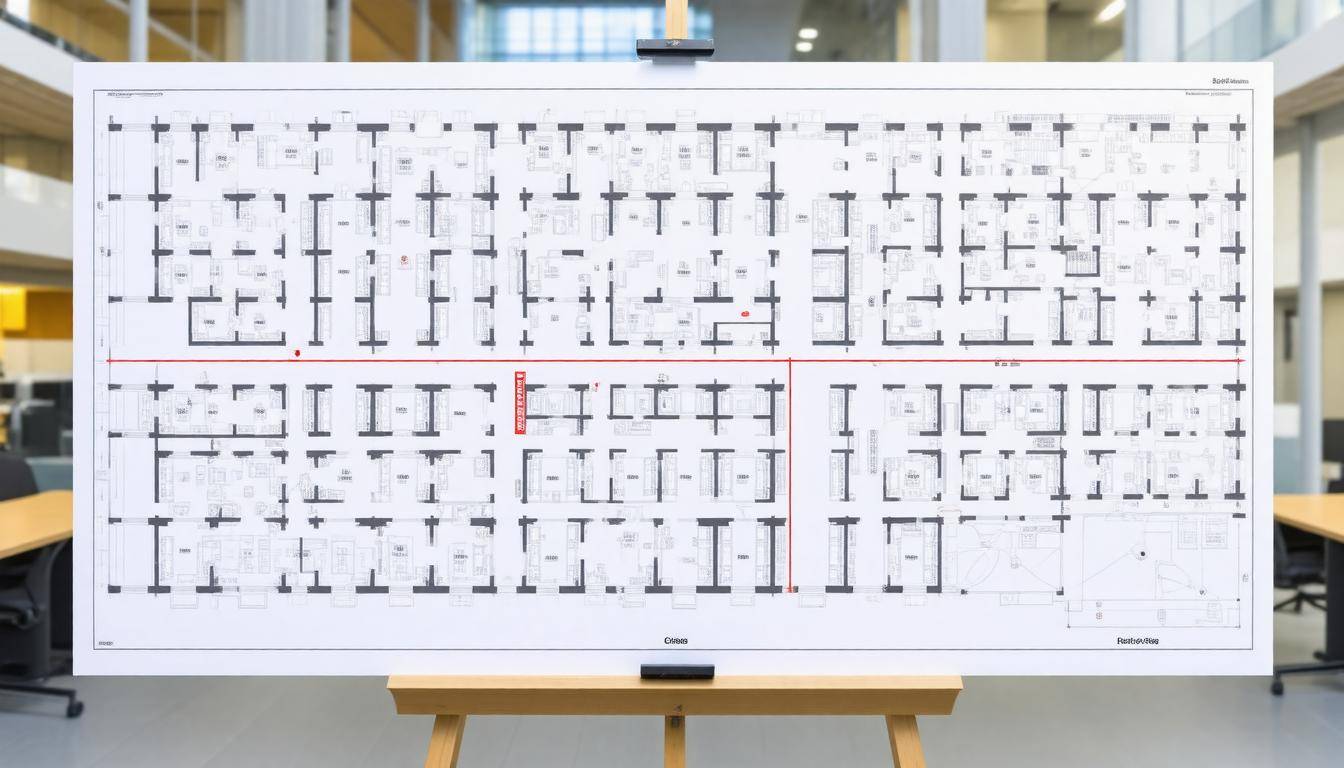
Floor plans serve as the backbone for any emergency evacuation strategy. They provide a visual guide to the layout of the building, showcasing all rooms, corridors, and exits. These blueprints must prominently feature evacuation routes that are clearly marked and specifically designed to facilitate swift movement.
For instance, integrating bright colors such as green for exits helps ensure these critical pathways stand out against a more complex backdrop of office spaces.
An important factor to consider is the flow of people within the building. Creating evacuation routes requires careful planning to avoid bottleneck areas, such as narrow hallways or congested spaces.
During an emergency, panic can set in swiftly, and any points of congestion can significantly delay evacuations. Therefore, it’s prudent to implement alternative pathways so that if one exit becomes blocked or inaccessible, occupants have another route to safety without hesitation.
A well-thought-out evacuation strategy can reduce overall evacuation times by up to 30%, as evidenced by numerous reports highlighting its effectiveness. This significant margin underscores the value of investing time and resources into comprehensive planning.
Moreover, accessibility should always be a priority in these plans, ensuring that they cater to all individuals within the building.
It’s crucial for floor plans and evacuation routes to accommodate everyone, including those with disabilities. As part of your mapping process, consider marker placements and signage that can easily be understood by individuals with various needs.
For example, tactile maps or braille signage will assist visually impaired personnel in navigating towards safety seamlessly.
Additionally:
- Display maps in high-traffic areas such as entrances, break rooms, and near elevators for maximum visibility.
- Ensure evacuation materials like first aid kits and fire extinguishers are strategically located along these routes.
- Conduct regular reviews of these floor plans to keep them reflective of any changes within the office layout or personnel requirements.
Strong floor planning paired with well-devised evacuation routes lays the groundwork for workplace safety during emergencies.
Moving forward, it’s essential to focus on how design principles can create environments that are welcoming and functional for every individual present.
Accessible and Inclusive Design
Accessibility in emergency design means ensuring that all employees can navigate their workplace safely during an emergency, regardless of their physical or sensory abilities. This stress on inclusivity showcases a commitment not only to safety but also to creating a supportive environment that recognizes individual needs. By implementing thoughtful design elements, organizations foster an atmosphere where everyone feels empowered to respond appropriately in emergencies.
A key aspect is understanding the specific needs of individuals with mobility impairments. It’s not enough to have just stairways as exit routes; incorporating features like elevators and ramps into emergency plans can make a significant difference for wheelchair users or those with other mobility challenges. Furthermore, these accessibility features must be easy to identify and use quickly during stressful situations. Evaluating your building’s layout and identifying potential barriers is essential for creating a more inclusive environment.
Incorporating technology into emergency signage can be incredibly beneficial. Installing tactile maps provides visually impaired individuals with the ability to feel their path to safety. These could be supplemented with audible alerts that announce important directions or instructions during an evacuation scenario. Using both visual and auditory signs ensures that all sensory needs are considered. This multi-faceted approach minimizes confusion and enhances the overall safety experience for everyone in the building.
For example, the headquarters of Acme Corp took extra steps by installing braille maps alongside auditory cues, transforming their evacuation process into an inclusive event. The success of such initiatives highlights how dedicated efforts towards accessibility meet legal obligations and exhibit a company’s commitment to its employees’ well-being.
As we examine how to implement these inclusive measures effectively, it’s also crucial to focus on preparing all employees to confidently use these resources when needed.
Training Employees on Exit Procedures
Proper training ensures that employees feel equipped and informed when faced with the possibility of an emergency. It goes beyond simply knowing where the exits are; it’s about understanding how to react swiftly and effectively during high-stress situations. Picture this: you’re at work, perhaps engaged in a task that has your full attention, when suddenly an alarm blares. In moments like this, having clear training can make all the difference between chaos and calm.
Initial Briefing
The journey begins with an initial briefing session. This is where managers engage in conversation with their teams to emphasize the importance of being familiar with evacuation routes and procedures. They should clearly articulate potential emergencies—fires, floods, or other unforeseen events—and explain how these situations will dictate the course of action employees need to take. Taking time for this initial discussion sets a solid foundation. It fosters a shared understanding among employees about the role each person plays in ensuring everyone’s safety during an emergency.
But just talking isn’t enough; practical experience is needed next.
Regular Drills
Think of regular drills like practicing fire drill routines from childhood—they’re just as important now! Organizing quarterly fire and evacuation drills not only reinforces knowledge but also builds muscle memory among employees. During these drills, individuals get hands-on practice walking through exit routes under simulated conditions. This experiential learning diminishes confusion; if employees know what to do before an actual emergency occurs, they’re far more likely to respond with clarity and confidence when it really matters.
“Our quarterly drills have improved our evacuation times by half,” reported John Smith, HR Manager at BioTech Labs.
It’s incredible how consistent practice shapes behavior and creates familiarity. Regularly scheduled drills—including walkthroughs for newcomers—should be embedded in your organization’s routine, so everyone knows how to exit safely regardless of their location within the building.
Feedback Loop
After each drill, there needs to be a structured feedback loop where employees can express concerns or share insights. Collecting feedback enables organizations to evaluate the efficacy of their training programs while identifying areas for improvement. Consider setting aside time during team meetings or conducting anonymous surveys after drills; encouraging open communication contributes to creating a more responsive emergency plan overall. Perhaps there were details that remained unclear during practice or certain exits that may not have been well-marked; addressing these insights makes future drills even more impactful.
Therefore, consistent training builds confidence and ensures safety for all employees because preparedness is key – both for leaders guiding their teams and for staff executing their knowledge under pressure.
This coherent approach to emergency exit planning fosters an environment where safety is prioritized and understood by everybody, paving the way toward creating a truly resilient workplace capable of handling emergencies effectively.
In summary, prioritizing employee training on exit procedures not only enhances individual preparedness but also strengthens organizational resilience during emergencies. When everyone knows what to do and where to go, safety becomes a collective responsibility.