
In any office environment, emergencies can strike without warning, leaving little time to react. That’s why having a reliable emergency lighting system in place is crucial for safety compliance and peace of mind. Imagine being in a dark corridor during an evacuation; even just a flicker of light can help guide people to safety. This guide will walk you through the essentials of office emergency lighting systems—from selecting the right fixtures to ensuring they are properly installed and maintained. Each decision you make contributes directly to your workplace’s safety and reliability, preparing your team for whatever unforeseen events may occur. So, let’s shine a light on what it takes to keep your office safe and compliant!
The setup guide for Office Emergency Lighting Systems includes step-by-step instructions on selecting suitable emergency lighting units, ensuring compliance with local voltage specifications, and proper installation techniques for exit signs in accordance with International Building Codes (IBC) and National Fire Protection Association (NFPA) standards. It also addresses responsibilities for facility managers regarding maintenance and regular testing to ensure the system operates effectively during emergencies.
Selecting Emergency Lighting Fixtures
First and foremost, when it comes to emergency lighting, brightness is a critical factor. The minimum lighting level required by safety regulations typically hovers around 1 foot-candle or 10 lux. Imagine being in a dark hallway during an emergency—it’s imperative to have enough light so that individuals can navigate their surroundings safely and efficiently.
LED lights are fast becoming the gold standard for emergency lighting due to several advantages. Not only do they boast energy efficiency, but they also have impressive lifespans of up to 50,000 hours. This means less frequent replacements, which translates to cost savings over time. If you’re concerned about installation costs, while average installation for LED fixtures sits at about $150 per unit, consider the long-term benefits and reduced energy consumption in your calculations.
“Choosing the right fixture isn’t just about price; it’s about the value it brings in terms of safety and reliability.”
Furthermore, compatibility with existing infrastructure is essential. Before making any purchases, assess your office’s current wiring and voltage requirements to ensure smooth integration with the new fixtures. Many local emergency lighting units must meet specific voltage specifications, so understanding these needs ahead of time not only saves you money but also prevents headaches later on.
Another aspect that should not be overlooked is the duration of battery backup. Standard LED fixtures usually offer about 90 minutes of backup power during emergencies; however, high-performance models can last up to 4 hours. This extended duration could be crucial during longer evacuations or power outages, ensuring that employees feel secure until help arrives or they can safely exit the building.
When considering specific products, options like the Lithonia Lighting EU2C LED Emergency Light or the Sure-Lites ERE LED Remote Capable Emergency Light Kit come highly regarded thanks to their effectiveness and adaptability within various office settings. Both products meet compliance standards such as UL 924 and NFPA 101, reassuring you of their safety and reliability.
It’s also important to keep in mind that each office space may have unique needs—factors such as ceiling height, layout, and other variables will help determine the best types of fixtures for your environment. Following this line of thought, let’s explore the distinct kinds of lighting that can enhance workplace functionality and safety.
Types of Office Lights
One crucial aspect of effective office emergency lighting involves knowing the specific types of lights that best fit your environment. Each area within an office may have unique requirements based on its layout and typical usage, making it vital to select the right fixtures. When considering emergency lighting, we often gravitate toward a few reliable options: recessed lighting, wall-mounted lights, and exit signs.
Recessed Lighting
Recessed lighting serves as an elegant solution for hallways and large open spaces because it keeps the illumination unobtrusive while still providing excellent visibility. These lights are typically installed directly into the ceiling and work particularly well in drop ceiling environments. A popular option is the HALO HLA4 LED Emergency Recessed Light, which offers efficient lighting and fits seamlessly with modern architectural designs. In an emergency, these lights activate quickly, ensuring that even dimly-lit areas remain visible, propelling occupants toward safety.
Wall-Mounted Lights
Wall-mounted lights are especially useful for doorways or stairwells needing extra visibility. They should be positioned strategically to highlight exits and key junction points. The Lithonia Lighting ELM2L LED Emergency Light is designed specifically for this purpose; it provides strong illumination while clearly marking exit routes. Such fixtures enhance visibility so that anyone navigating through dimly lit spaces can do so confidently and securely.
Exit Signs
Exit signs play a pivotal role in any emergency lighting setup by clearly indicating exit routes and enabling swift evacuations. It’s essential for these signs to be highly visible, whether illuminated or self-luminous—such as those utilizing electric or photoluminescent materials. The effectiveness of evacuation efforts often relies on the combination of emergency lights and prominently displayed exit signs guiding people safely out of the building. Choosing effective exit signage not only meets safety regulations but also offers peace of mind.
By understanding these lighting solutions, we can effectively plan how to distribute light sources throughout your office space, ensuring smooth navigation in case of an emergency. Let’s look at how to illuminate various areas efficiently to maximize safety compliance.
Illuminating Different Areas
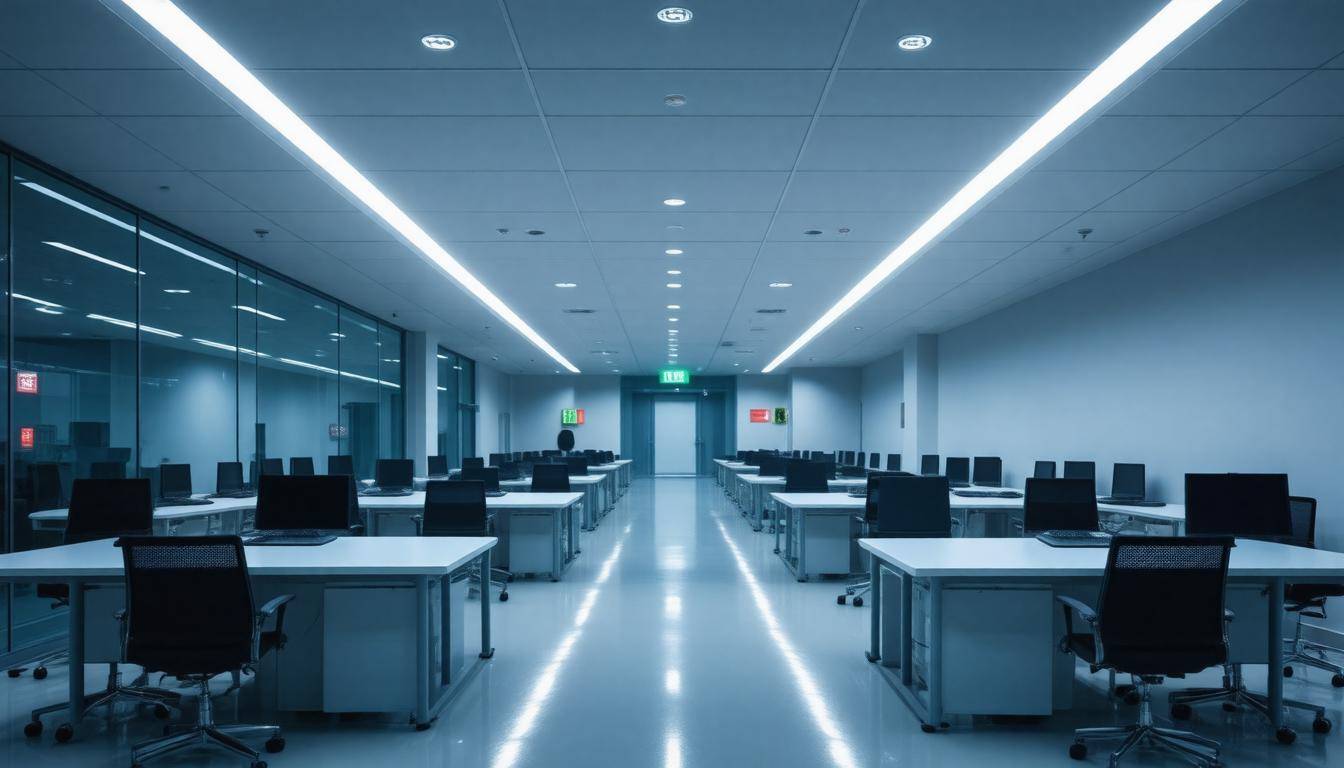
Every office space presents unique challenges, and effective emergency lighting is essential for ensuring safety during unexpected situations. When we think about primary workspaces, imagine those busy desks filled with employees hard at work. Installing ceiling-mounted emergency lights in these areas is imperative. This type of lighting should provide widespread illumination that helps eliminate shadows that can obscure critical objects or movement.
For optimum effectiveness, consider some key recommendations: ensure the lights have adjustable heads to direct the light where it’s needed most, position these lights at regular intervals to create uniform lighting, and cover all corners to avoid dark spots. Even minor adjustments can significantly impact visibility during an emergency, ensuring each desk’s functional area means everyone knows exactly what to do, even under duress.
Stairwells and Corridors
Moving onto stairwells and corridors – these are often the lifelines in emergency situations. Wall-mounted emergency lighting is crucial here as it guides people safely to exits. Attention should be given to several installation tasks: place lights adjacent to stairwells for effective illumination from above, mount them around turns and landings for clear visibility when navigating in a hurry, and install lights above each doorway as people exit into potentially hazardous spaces. Notably, these units must maintain functionality for at least 90 minutes during a power outage; it’s not just about having the lights on but ensuring they last long enough for a safe evacuation.
Restrooms and Storage Areas
Even smaller spaces like restrooms and storage areas demand attention when planning emergency lighting. We often overlook these areas thinking their size makes them unimportant, yet a reliable light source can mean safety assurance during a crisis. Compact LED units can do wonders here—installing them provides adequate illumination without overwhelming the area or consuming too much power. Remember that even in a restroom, a well-lit path ensures that everyone is aware of potential hazards on the floor and where the exits lie.
Once you’ve explored the types and positioning of lights, the next step involves understanding how to lay the groundwork for the installation process ahead.
Installing Fixtures
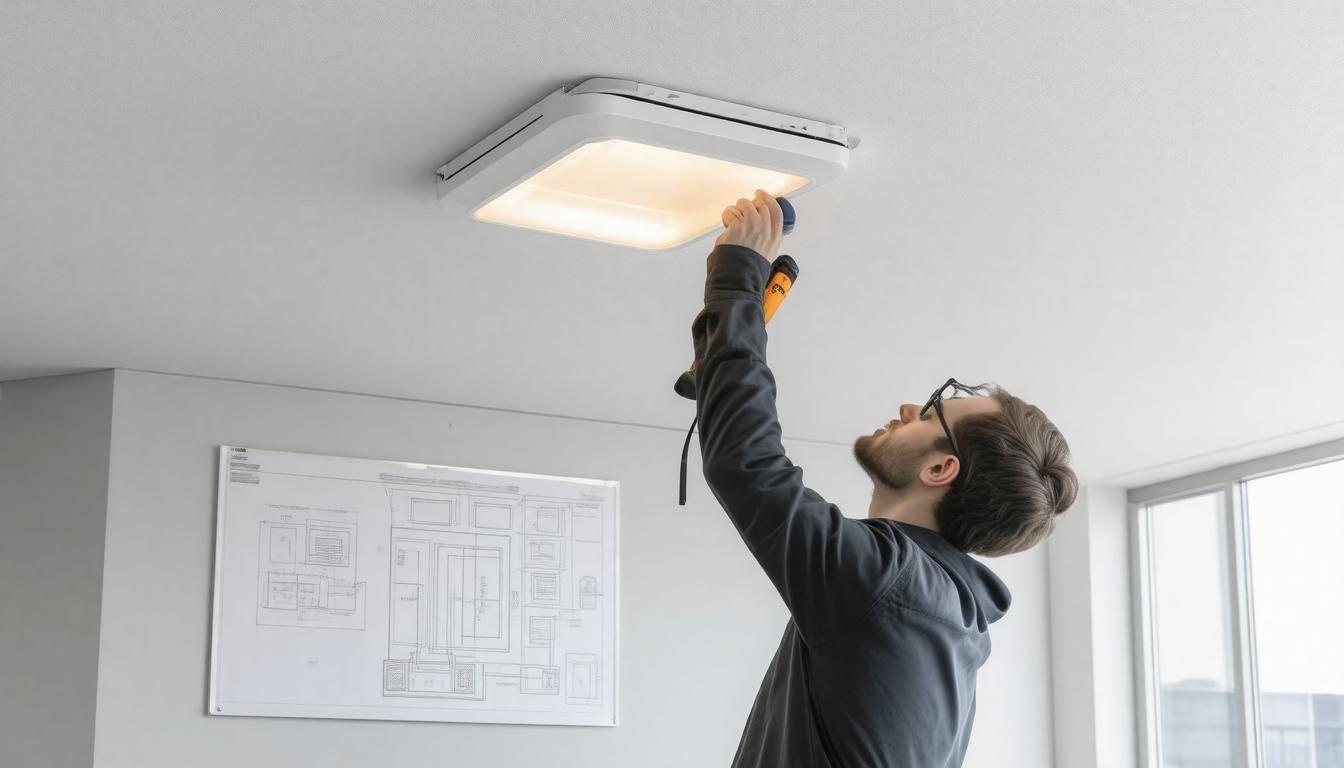
Proper installation of emergency lighting systems is not just a box-ticking exercise; it’s integral to ensuring safety during an emergency. To begin with, after you have established your layout plan, take those designs and transform them into reality by starting with the electrical wiring setup. This involves engaging a certified electrician who understands both local codes and sound electrical practices. It’s important that the wiring is installed correctly and efficiently, particularly the connections for backup power sources such as batteries or generators. These power sources will help keep your lights functional during outages, which must last long enough to comply with mandated durations set by safety regulations.
Think of it this way: if the lights go out, you wouldn’t want to be left in the dark simply because your wiring wasn’t up to scratch.
Once the electrical work is completed, it’s time to fix the fixtures in place. Following the manufacturer’s installation guidelines is crucial at this stage; each type of fixture has its specific requirements regarding how it should be mounted. Make sure to use appropriate tools and double-check that all screws and connections are secure to avoid malfunctions later on. It’s akin to assembling a piece of furniture—if all parts aren’t fastened correctly, it could lead to future disappointments!
Testing
After securing the fixtures, testing becomes paramount. Conducting a full system test simulates a power outage scenario where you can verify if all lights activate as they should. Don’t rush through this phase; take your time to ensure every unit works properly and note any inconsistencies. It’s like going through a dress rehearsal before the big show—each component must function flawlessly when it truly counts.
A detailed inspection not only ensures compliance but also provides peace of mind that your office environment will remain safe.
As we transition into understanding the necessary compliance frameworks that govern these installations, monitoring and maintaining these systems will play equally vital roles in ensuring long-term efficacy.
Regulatory Compliance
Adhering to regulations isn’t merely optional; it is a fundamental aspect of ensuring overall safety and maintaining a professional environment. Compliance with relevant laws and building codes protects occupants during emergencies and provides peace of mind to building owners or managers. A well-implemented emergency lighting system means that when chaos ensues—be it a fire or power failure—individuals can evacuate safely without unnecessary panic.
Key Standards and Guidelines
The landscape of safety regulations is governed by several key standards bodies, including the International Building Code (IBC) and the National Fire Protection Association (NFPA). Each organization sets guidelines impacting how office emergency lighting systems are designed and maintained.
To illustrate this compliance landscape, consider the following key regulatory requirements:
| Regulation | Requirement | Organization |
|---|---|---|
| Minimum Lighting | 1 foot-candle (10 lux) | IBC |
| Duration | 90 minutes of operation | NFPA 101 |
| Monthly Testing | Functional tests every 30 days | NFPA 101 |
| Annual Testing | Full duration test | NFPA 101 |
This table highlights crucial benchmarks that organizations must meet. Maintaining a minimum lighting level of 1 foot-candle ensures adequate visibility during emergencies, allowing individuals to navigate exits safely. Regular functional testing verifies that the emergency lights activate correctly.
But what happens if organizations overlook these vital guidelines?
Penalties for Non-Compliance
Failure to comply with these regulations risks significant penalties. Non-compliance can result in hefty fines that strain an organization’s budget and inflate insurance premiums. The gravity of this issue extends beyond financial implications; inadequate emergency lighting can jeopardize employee safety during critical moments, leading to potentially dire consequences like injuries or worse during a disaster.
Effective regulation adherence necessitates proactive measures, including staying informed about new regulations, executing regular maintenance checks, and conducting employee training sessions on emergency procedures.
By fostering a culture of compliance, organizations enhance safety readiness while mitigating legal risks associated with non-compliance. This commitment to maintenance is essential—not just for compliance—but for ensuring systems remain fully operational when they are needed most.
Maintenance and Troubleshooting
Regular maintenance ensures the reliability of your emergency lighting system, making it a critical component of your overall safety strategy. It’s not enough to just install these systems; they must be routinely checked and serviced to ensure they operate effectively during an emergency. If you’ve ever been in a situation where lights flickered or failed to turn on during a blackout, you understand the importance of preparedness.
Routine Checks and Maintenance
Performing monthly visual inspections is essential. Take a few moments each month to inspect the emergency lights for any physical damage or obstructions that could impede their operation. Check for dust or debris accumulating around the fixtures; even small particles can disrupt performance. Conduct function tests by pressing the “Test” button on each unit—this action should result in the light illuminating as intended. It’s startling how often a light might look fine externally but fails to function properly when pressed.
According to NFPA 101, maintaining logs of these inspections is not just good practice but a requirement. These records should show that inspections were conducted regularly and kept for at least one year. Not only does this keep you compliant with safety regulations, but it also builds a history of your systems’ performance over time, allowing you to spot potential issues before they become serious problems.
Troubleshooting Guidelines
When it comes to troubleshooting, understanding what to do when an emergency light isn’t functioning is invaluable. In fact, taking proactive steps can save valuable time during an emergency. If you’re faced with a non-working light, follow these steps:
First, check the bulb. A burnt-out bulb is often the simplest issue to solve; replacing it could mean back in business within minutes. Next, examine the wiring connections closely; loose or frayed wires can lead to failures just waiting to happen.
In addition, ensure that the battery is charged and functioning properly because even if everything else checks out, an uncharged battery renders all that effort moot. Consider investing in battery testers designed specifically for emergency lighting systems—they provide quick insights into whether batteries need replacing or maintenance.
If after all these checks the light remains unresponsive, it’s wise to consult with a professional technician who specializes in fire protection systems or emergency lighting repairs. They can diagnose deeper issues that may be beyond routine troubleshooting skills.
Creating a robust maintenance plan paired with swift troubleshooting techniques keeps your system prepared for emergencies while significantly enhancing workplace safety compliance. Now, let’s shift our attention to the necessary procedures for ensuring the systems work effectively under pressure.
Testing Systems
Regular testing of your emergency lighting system isn’t just about adhering to regulations; it can significantly impact the safety of all building occupants during an emergency. With the potential to save lives, routine checks are vital to confirm that each component functions properly and performs as expected when the need arises.
Monthly and Annual Testing
To maintain a solid safety culture, conduct monthly quick-function tests. These tests can be simple yet effective: push the ‘Test’ button to activate emergency mode for a short period—usually around 30 seconds is sufficient. This action will illuminate the emergency lights, allowing you to verify their functionality. Keeping a detailed checklist during these inspections is essential to ensure no light is overlooked, tracking which units have been tested and their individual performance.
Moreover, a comprehensive annual full duration test must be carried out to guarantee that your system meets safety standards. This involves running the emergency lighting continuously for typically about 90 minutes to assess battery capacity and ensure that functional reliability is in place for emergencies.
The numbers speak volumes: compliance with regular testing schedules can dramatically reduce failure rates. According to statistics, systems maintained according to these guidelines showcase a remarkable 93% success rate during actual emergencies. Neglecting these tests could compromise not only equipment but also lives.
Conducting these assessments not only confirms that your emergency lighting is operational but also reinforces the collective responsibility for workplace safety protocols. As we consider preparedness further, next we’ll explore how to effectively formulate a response strategy for any potential emergencies.
Creating an Emergency Backup Plan
Establishing a well-rounded emergency backup plan goes beyond just having lights that function during a power outage. It encompasses multiple facets of safety to create a seamless response when emergencies occur. Start by pinpointing the specific hazards your office may face—ashes from a small fire, power outages, or even structural failures. Understanding these risks helps shape how you’ll prepare and respond.
Elements of an Effective Backup Plan
An effective backup plan begins with detailed evacuation routes that are not only clearly marked but also illuminated, enabling visibility even in low-light conditions. This attention to detail assists employees in quickly identifying exits without confusion or panic during an emergency. Additionally, it’s imperative to establish safe assembly points outside the building, far enough away to ensure everyone’s safety.
Communication is vital; it ensures that all employees are promptly informed about safety protocols during an emergency. Regular announcements through email or staff meetings can help keep this information fresh and top-of-mind.
Incorporating drills into your routine is another crucial aspect. Regular practice allows employees to familiarize themselves with evacuation routes and procedures, significantly reducing anxiety should an actual situation arise.
Training and Awareness
It’s recommended to hold regular training sessions and practice drills so that staff know how to react swiftly and correctly in emergencies. A facility manager once shared, “Our quarterly fire drills have ensured zero casualties during an actual small office fire.” This sentiment highlights the invaluable role of preparedness.
To further reinforce your plan’s effectiveness, consider employing the following actions:
- Educate employees about the emergency lighting setup and its importance.
- Simulate different emergency scenarios, allowing staff to experience varied situations without real risk.
- Review and update your emergency backup plan annually to incorporate any changes made within the workplace.
By embracing these comprehensive steps, you’re not just checking boxes for compliance; you’re actively ensuring that your office is resilient and ready for any emergencies that may arise.
These guidelines will help cultivate a safer working environment while meeting safety regulations and assuring employees’ well-being during potentially chaotic situations.
Preparedness is key; equipping your office with a robust emergency backup plan not only fulfills legal requirements but also fosters a culture of safety among employees.