
When disaster strikes, it can feel like everything you’ve worked hard for hangs in the balance. Understanding how to access financial support is crucial for getting back on track. Here, we’ll dive into the Small Business Administration (SBA) Disaster Loans, which serve as a much-needed lifeline for businesses and property owners facing the aftermath of calamities. Whether it’s hurricanes, floods, or unforeseen economic downturns, the SBA’s disaster loans are designed to help those affected start rebuilding and recovering. With over $20 billion approved in disaster loans recently, these resources play a significant role in recovery efforts nationwide. Join us as we explore the application process, eligibility criteria, and types of disasters covered to help you navigate this challenging landscape with confidence.
The SBA Disaster Loan application process involves several critical steps, including determining your eligibility based on the declared disaster area, creating an account on the SBA’s disaster loan portal, and gathering necessary documentation such as financial statements and tax returns. Once you have submitted your application, it’s important to monitor your SBA account for updates and further instructions from your loan officer.

Overview of SBA Disaster Loans
The Small Business Administration (SBA) provides essential financial support through various disaster loans aimed at helping businesses, property owners, and nonprofits recover after catastrophic events. Whether it’s damage caused by natural disasters like hurricanes or wildfires, these loans offer a safety net designed to cover numerous disaster-related expenses.
For instance, imagine a small bookstore that has lost its inventory due to flooding; SBA loans can help such business owners restore their stock and get back on their feet.
As of 2024, it’s notable that the SBA has approved over $20 billion in disaster loans. This staggering amount not only reflects the immense need for assistance following disasters but also illustrates how pivotal these loans are in facilitating recovery efforts across the nation. Each loan is tailored to suit different needs, with two primary types—Physical Disaster Loans and Economic Injury Disaster Loans (EIDL).
Physical Disaster Loans are specifically designed to assist homeowners and businesses in repairing or replacing property that has been damaged in a declared disaster area. This includes damages to physical assets such as buildings, machinery, and equipment. These loans can cover a wide range of repairs, enhancing resilience against future disasters.
On the other hand, Economic Injury Disaster Loans focus on helping small businesses meet their operating expenses after a disaster. They can be especially crucial for maintaining business continuity during challenging times when cash flow is interrupted.
It’s wise for anyone impacted by a disaster to consider applying for these loans, even if the situation feels overwhelming. One need only think about how crucial they were during past disasters; for example, many restaurants were able to keep their doors open through EIDLs after Hurricane Ida disrupted local economies.
By gaining insights into the purpose and types of loans available, applicants can navigate the landscape of federal assistance more effectively. The subsequent section will outline the specific criteria that determine eligibility for these financial resources.
Eligibility Criteria
To qualify for an SBA disaster loan, applicants must meet specific eligibility requirements tailored to various groups affected by disasters. The SBA aims to assist those in need, including businesses of all sizes, homeowners, renters, and private nonprofit organizations located in declared disaster areas. This broad spectrum of eligibility means that help is available not just for large corporations but also for small businesses and individual families trying to recover from overwhelming circumstances.
While eligibility is wide-ranging, it’s essential to recognize that the SBA maintains certain expectations regarding creditworthiness. The minimum credit score requirement is typically around 650, which acts as a benchmark during the review process. For example, if your business has struggled with credit issues in the past, this could complicate your application. However, there are resources available for entrepreneurs facing credit challenges. Seeking credit counseling can provide invaluable guidance and potentially improve your chances of loan approval.
It’s equally important to note what these disaster loans are intended to cover. Many people assume that any loss incurred can be compensated through these loans, but that’s not the case. SBA disaster loans are specifically designed to address losses that are not covered by insurance or other federal assistance programs such as FEMA. Therefore, understanding what assistance you’ve already received is key before applying.
“These loans supplement insurance coverage,” emphasizes Administrator Guzman, highlighting their role in a comprehensive recovery strategy for individuals and businesses alike.
To further grasp the nuances, think about how these criteria relate to your personal situation or business environment. If you own a small café that has suffered damage due to flooding and discover that your insurance plan doesn’t cover the full extent of repairs needed, applying for an SBA disaster loan becomes a valuable avenue toward recouping your losses.
Navigating these complex waters of eligibility criteria emphasizes that preparedness can make a significant difference. Before applying, gather pertinent documentation regarding assets lost, insurance payouts received, and any other financial records that might be necessary for a thorough assessment by the SBA.
With a clear understanding of qualifying factors and requirements in place, we can now shift our focus to what kinds of incidents these loans specifically address.
Types of Disasters Covered
The SBA’s disaster loans are a lifeline for many affected by an array of disasters, be they natural calamities or unfortunate man-made events.
Natural disasters encompass a range of powerful and often devastating occurrences such as hurricanes, tornadoes, floods, and earthquakes. Each can wreak havoc on homes and businesses alike, leaving behind significant damage that may not be covered by traditional insurance. For example, the 2018 California wildfires highlighted how catastrophic loss can strike entire communities, proving the significance of these loans for rebuilding lives and properties.
Beyond nature’s fury, the SBA disaster loans also address economic challenges. Situations such as significant economic downturns can place immense pressure on businesses’ operations, leading to their dire need for financial support. Furthermore, agricultural disasters, which include droughts and pest infestations, pose serious threats to farmers and ranchers. During such crises, the SBA provides funding to help sustain livelihoods and ensure agricultural viability even in the toughest times.
- Natural Disasters: Hurricanes, Earthquakes, Floods, Tornadoes
- Man-Made Disasters: Fires, Explosions, Terrorist Attacks
- Economic Disasters: Recessions affecting businesses
- Agricultural Disasters: Droughts, Pest Infestations
Understanding the diverse forms of disasters eligible for support is crucial; it paves the way for those in need to seek the assistance they deserve. Once you identify your circumstances within this framework, the next step will be gathering the necessary documentation to ensure a smooth application process.
Preparing Your Loan Application
A well-prepared loan application isn’t just a formality—it is your lifeline after a disaster strikes. Every document you include helps to paint a complete picture of your situation and enhances your credibility with the SBA. Take Jane’s story, for instance; her café took a serious hit from flooding in 2022. Instead of feeling overwhelmed, she took proactive steps to prepare her application. By systematically organizing her financial records, tax returns, and damage assessments, Jane found the process sped up remarkably. The more organized you are, the clearer your story will be.
Steps to Prepare
1. Assess Damage
Start with an immediate and thorough assessment of any disaster-related damage you’ve encountered. It’s crucial to visually inspect every corner of your business, take clear photos and videos, and prepare written descriptions that detail what was affected. This isn’t just about proving you’ve been impacted; it’s about creating a compelling narrative that supports your loan claim.
When documenting damage, think about including various angles of each damaged area—just like Jane did—so that nothing is left to the imagination. A detailed report combined with visual evidence will strengthen your position when applying for assistance.
Once you have gauged the extent of the damage, turn your focus to gathering essential financial documents.
2. Financial Records
Next, it’s vital to collect all relevant financial documents. This includes recent tax returns, profit and loss statements, and balance sheets; those are crucial elements that the SBA will use to assess your financial health and ability to repay the loan.
Imagine going into an important meeting without key data: it would create confusion and doubt in others’ minds about your suitability for support. By having these documents clearly organized and readily available, you’re providing the SBA with concrete evidence of your fiscal responsibility alongside demonstrating how much you need help.
Now that you have the damage documented and your finances organized, it’s time to consider how you’re going to navigate forward.
3. Business Continuity Plan
Finally, drafting a business continuity plan is another critical step in this preparation process. Outline how you will use the loan funds not only to restore operations but also to ensure sustainability in the wake of this disaster.
This plan should highlight specific strategies on how you intend to recover quickly while preventing similar issues in the future. For example, if your café needs new equipment or renovations that enhance its resilience against flooding, detail that in your plan. This illustrates to the SBA that you’re not just seeking financial aid—you’re taking tangible steps towards recovery and stability post-disaster.
By carefully compiling these components—damage assessment documentation, financial records, and a solid business continuity plan—you’ll craft an application that stands out amidst a sea of requests for aid.
As we look at these key preparation strategies, let’s now focus on what specific documents you’ll need to gather before submitting your application.
Document Checklist
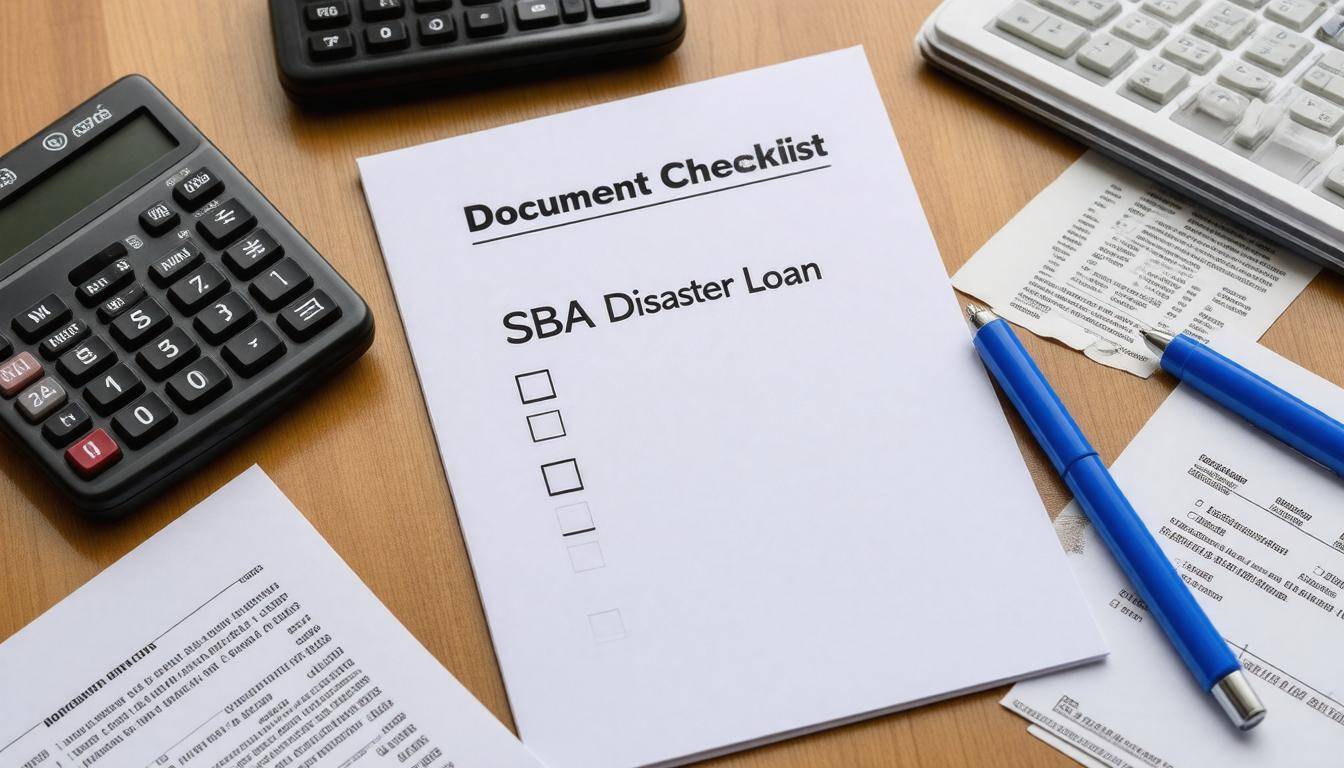
Preparing documentation in advance can streamline the application process and save you from unnecessary stress later on. It’s essential to gather everything you’ll need so that when you finally do sit down to apply for your SBA disaster loan, you’re not scrambling at the last moment. Think of this checklist as your roadmap—a guide to ensuring every necessary detail is within reach.
Let’s break this down into specific components:
-
Personal Identification: This includes crucial documents like your driver’s license or Social Security number (SSN). Having these ready verifies your identity and establishes you as an eligible applicant.
-
Recent Tax Returns: You’ll need both personal and business tax returns from the last three years. These help the SBA understand your financial history and demonstrate your ability to manage funds.
-
Profit and Loss Statements: A current profit and loss statement provides insight into how your business is performing financially, especially in light of the disaster’s impact.
-
Personal Financial Statement: This document gives a snapshot of your financial health, listing all assets and liabilities, which is vital when assessing loan eligibility.
-
Business Credit Report: If applicable, including a copy of your business credit report can show lenders how reliably you’ve managed past debts.
-
Damage Assessments/Photos: Documentation of damage caused by a disaster—like before-and-after photos or estimates from contractors—will substantiate your claims regarding the losses.
-
Business Continuity Plan: Outlining how you intend to keep running after the disaster demonstrates foresight and can be compelling evidence of your preparedness.
As you prepare these documents, remember each piece plays a critical role in presenting a complete picture of your situation to the SBA. This attention to detail is crucial when seeking financial assistance, guiding you through the next steps in this important journey.
How to Submit Your Application
Submitting an SBA disaster loan application can be done through several methods. You might choose to apply online via the SBA’s Disaster Loan Assistance portal, by mail, or in person at a local Disaster Recovery Center. Each method has its nuances, so let’s explore each option to give you a clearer picture of what to expect.
The online submission method is generally the most efficient way to apply. Not only does it allow for quicker processing times, but you can also track the status of your application easily. To do this, you’ll first need to create an account on the SBA portal. Once you’re logged in, carefully follow the step-by-step instructions provided. It’s critical to double-check that all required documents are uploaded correctly; missing documentation can lead to delays that could cause stress during an already hectic time. When uploading documents, ensure that they are clear and legible—scanned copies are often preferred over photos taken with your smartphone.
For those who prefer traditional methods, submitting your application by mail is still a valid option. Just be sure to send it via certified mail so that you have confirmation it was delivered. When mailing your application, organize all documents neatly and make good use of checklists. This will not only assist in keeping track of what you’ve included but also help speed up the review process once received by the SBA.
It’s equally important to be aware of deadlines while submitting your application.
Tips for In-Person Applications
If you’re applying in person at a local Disaster Recovery Center, here are some tips to keep in mind:
- Bring all necessary documentation: Before heading out, print everything you’ll need to present.
- Be prepared to answer questions: Having a clear understanding of your business situation and its economic impact from the disaster will help facilitate a smooth discussion with SBA representatives.
- Ask for clarification as needed: Don’t hesitate to seek guidance if you face uncertainties during the submission process.
Let’s face it—it’s easy to get overwhelmed with paperwork, but remember: taking one step at a time makes the mountain of applications feel more like a gentle hill!
Regardless of which method you use, maintain open lines of communication with the SBA. If you’ve submitted your application and don’t receive any updates within a reasonable timeframe (typically 2-3 weeks), reach out via their customer service hotline for assistance. They can provide clarity and ensure there aren’t any holdups with your loan request.
Understanding these steps is crucial as you prepare for the next phase of the process, where we outline efficient procedures tailored specifically for online submissions.
Online Application Steps
When it comes to applying for an SBA disaster loan, going online is not just a time-saver; it also brings peace of mind. The steps you’re about to follow ensure that you have everything covered from start to finish.
Step-by-Step Online Submission Guide
Let’s break down each step of the online application process so that you’re fully prepared.
1. Create an Account
Your journey begins at disasterloan.sba.gov where you will need to register for an account. Don’t worry—this part is straightforward. You will provide some basic information like your email and create a secure password. It’s wise to use a strong password with a mix of letters, numbers, and symbols to keep your information safe. Think of this step as setting the foundation for your application; getting this right makes the following steps much smoother.
2. Fill Out the Application
After creating your account, log in and locate the loan application form. This is where you’ll fill out necessary details about yourself and your business, including financial data that aids in defining your eligibility. Take your time here; accurate information is crucial. It can be helpful to gather these details beforehand—having all financial records and personal information lined up reduces stress during this part of the process.
As you work through the application fields, remember that clarity and precision are key. The more accurately you fill out these details, the easier it will be for the SBA to assess your eligibility.
3. Upload Documentation
Next comes an essential step: uploading required documents. The SBA provides a checklist often found within the application portal, guiding you on what documentation is needed, such as tax returns or proof of business loss. Make sure each file is clear and legible—poor quality images can lead to misunderstandings or delays in processing. Naming your files appropriately also helps when navigating through them later on; consider formats like “SmithCo_2023_TaxReturns.pdf” for easier reference.
4. Review and Submit
Once you’ve filled everything out and uploaded all necessary documentation, take a moment to breathe before hitting that submit button. This quiet moment is significant; thoroughly reviewing your entries can save you considerable hassle in the long run. Double-check all entered information and uploaded documents for accuracy because even minor mistakes can delay your application process significantly.
Remember that once submitted, changes become challenging, so aim for precision.
After submission, it’s time to wait for feedback while preparing for any further requirements or questions that may arise from the SBA concerning your application process.
Receiving Funds and Follow-Up
After your application has been approved and you’ve reviewed and signed the loan agreement, you’re officially on track to receive financial assistance. The SBA typically processes the initial disbursement of funds swiftly, transferring the amount directly to your designated bank account. This can happen within a few days following the approval. It’s an exciting moment, but it also comes with responsibilities.
“Upon receiving SBA funds, keep detailed records of all expenditures to ensure you comply with the loan terms,” advises Maria, a small business owner who successfully navigated the process after a hurricane. Keeping meticulous records isn’t just good practice; it’s essential for meeting the obligations that come with your loan.
Here are some key steps to follow once your funds arrive:
| Action Step | Description |
|---|---|
| Loan Agreement | Review and sign loan agreements carefully. |
| Initial Disbursement | Wait for funds to be released into your account. |
| Record Keeping | Track every expenditure to ensure compliance. |
| Communication | Stay responsive to any requests from the SBA. |
Maintaining a clear record of how you use your funds is fundamental for two reasons: first, it tracks progress on your recovery or business operations, and second, it keeps you compliant with SBA regulations. Many business owners find themselves overwhelmed during this phase, so setting up a systematic approach—perhaps through spreadsheets or financial tracking software—can help manage this part of the process efficiently.
As you settle into utilizing the funds, remember that maintaining open lines of communication with the SBA is equally important.
If they contact you for further information or clarification about your expenditures, respond promptly. In some cases, additional documentation may be required, especially if unexpected financial needs arise as you implement your recovery strategy. Fostering an efficient communication channel can prevent delays in future disbursements or adjustments depending on your evolving circumstances.
Embracing these practices not only bolsters your chances of successfully leveraging the disaster loan but also strengthens your foundation for recovery in what can often be a tumultuous period following a disaster. By methodically adhering to these steps, you’re essentially positioning yourself—and your business—toward resilience and sustainability for years to come.
Following these guidelines will enhance your ability to navigate the post-disaster landscape confidently and effectively. Your proactive approach ensures that you benefit fully from the resources available to you during this critical time.
Are there any common mistakes to avoid when applying for an SBA Disaster Loan?
One common mistake to avoid when applying for an SBA Disaster Loan is failing to provide accurate and complete information on the application. Incomplete applications can lead to delays or denials; statistics show that nearly 30% of applicants face challenges due to inaccuracies in their submissions. Additionally, many overlook the importance of keeping detailed records and documentation of damages, which are crucial for supporting your claim. Ensuring all materials are thorough and well-organized can significantly enhance your chances of approval.
What options are available if my initial SBA Disaster Loan application is denied?
If your initial SBA Disaster Loan application is denied, you have several options to consider. First, review the denial letter thoroughly to understand the reasons for rejection and address any issues in a resubmission. You may also seek reconsideration by submitting additional documentation or clarifications that strengthen your case. Additionally, exploring alternative funding sources such as local grants, other federal programs, or private loans can provide necessary financial relief. Remember that approximately 20% of loan applicants successfully secure funding through an appeal or alternative means, highlighting the importance of persistence and resourcefulness in navigating the aftermath of a disaster.
What is the usual timeline for processing an SBA Disaster Loan application?
The usual timeline for processing an SBA Disaster Loan application typically ranges from 2 to 3 weeks after submission of a complete application. However, this can vary based on factors such as the volume of applications received and specific circumstances surrounding the disaster. In many cases, applicants receive notifications about their loan approval within 21 days, while additional time may be required if further information is needed. It’s also noted that in prior disaster events, approximately 70% of applicants received funding within the first month of applying, highlighting the efficiency of the process under optimal conditions.
How does the SBA determine eligibility for disaster loans?
The SBA determines eligibility for disaster loans by assessing the applicant’s business size, creditworthiness, and financial impact from the disaster. Specifically, businesses must have fewer than 500 employees to qualify as small businesses, and they must demonstrate that they are unable to obtain credit from other sources. Additionally, the SBA evaluates both physical damage and economic injury caused by the disaster, requiring applicants to provide documentation of losses. In recent years, approximately 70% of small businesses affected by declared disasters have sought these loans, indicating a strong reliance on SBA support during crises.
What specific documents are required to apply for an SBA Disaster Loan?
To apply for an SBA Disaster Loan, you’ll need to submit specific documents including a completed SBA loan application (Form 5), a personal financial statement (Form 413), tax returns for the last three years, and a schedule of liabilities. Additionally, you may be required to provide business financial statements, such as profit and loss statements. Proper documentation is crucial; in fact, nearly 75% of applications that are delayed don’t meet initial documentation requirements, underlining the importance of thorough preparation in expediting your loan process.