
In an age where safety is a top priority in our schools, having a solid evacuation plan is not just important—it’s essential. Imagine the chaos that could ensue if students and staff didn’t know what to do during an emergency. This guide aims to provide you with a comprehensive roadmap for effective school evacuation planning, focusing on communication, accessibility, and regular practice. Schools can become havens of preparedness rather than panic with proper strategies. By understanding how to create inclusive plans that cater to everyone, including those with disabilities, we can all work together to foster a culture of safety that makes our educational environments more secure. Let’s dive deeper into the critical components of school evacuation planning and how they can make a significant difference in any emergency situation.
The Complete Guide to School Evacuation Planning includes crucial information about developing evacuation routes, establishing communication protocols, and conducting regular drills to ensure preparedness among staff and students. It also emphasizes the importance of inclusive planning that accommodates individuals with disabilities, alongside recommendations for creating effective emergency operation plans tailored for educational settings.
Importance of School Evacuation Planning
The significance of a robust school evacuation plan cannot be overstated. Imagine, in the midst of a crisis, the confusion that arises when faculty and students are unsure of what to do or where to go. Effective planning equips everyone involved with the knowledge and training necessary to respond quickly and efficiently, reducing panic and ensuring everyone’s safety. According to experts, preparation is a form of resilience; a well-structured plan not only saves lives but also creates a culture of safety within the school community.
Crucially, inclusive planning plays a pivotal role in this process. A good plan accounts for individuals with disabilities—ensuring that such students can safely evacuate alongside their peers. This means identifying accessible routes and methods for assistance well before an emergency strikes. Many communities have successfully engaged with local organizations to devise tailored strategies that ensure no one is left behind.
Research has shown that incorporating these considerations often improves overall evacuation effectiveness as it fosters collaboration among students, staff, and emergency responders. This reinforces the sense of community responsibility during emergencies.
Conducting regular drills is another cornerstone of effective school evacuation planning. These practice sessions should not merely be treated as obligatory exercises but as valuable opportunities for learning and improvement. Feedback from every drill should be collected and analyzed to refine procedures continually, helping identify potential challenges before they occur in real-life situations. As shared by several educators, there’s great value in simulating various scenarios—teaching staff how to handle unforeseen circumstances can mean the difference between success and chaos.
To illustrate, consider the following insights:
| Key Aspect | Importance |
|---|---|
| Inclusive Planning | Ensures safety for all individuals within the school |
| Regular Drills | Familiarizes students & staff with evacuation procedures |
| Clear Communication Protocols | Minimizes confusion during emergencies |
| Defined Roles & Responsibilities | Enhances accountability and efficiency |
As we can see from this table, each component plays a critical role in creating an effective evacuation strategy. Moreover, proactive engagement with local authorities strengthens these plans further—integrating school procedures into broader community evacuation protocols enhances familiarization between schools and emergency services.
With these foundational elements established, it’s crucial to explore how roles and responsibilities can be effectively assigned within the school’s emergency framework.
Assigning Roles and Responsibilities
A well-structured evacuation plan identifies specific roles for staff members to ensure swift action and smooth communication. By categorizing duties among personnel, schools can create a more organized response during an emergency. When every staff member knows their responsibilities, it fosters a sense of security and efficiency. Imagine a busy school filled with students when alarms ring out; chaos could easily ensue unless there are prepared individuals at the helm.
Let’s explore some key roles that should be considered in any school evacuation plan. Each role serves a distinct function, enhancing the overall safety strategy. The Incident Commander is pivotal, leading the entire evacuation effort. They act as the main point of contact for emergency services, ensuring that critical information flows smoothly between the school and responders outside. Effective training for this role often includes incident command training and first aid certification, empowering them to make quick decisions during stressful situations.
Next, we have Floor Wardens, who play a crucial role by assisting evacuations on specific floors or sections of the school. Their familiarity with the building layout allows them to guide students efficiently to exits while also managing crowd control. To be effective, they undergo training on emergency response protocols and must possess thorough knowledge of the building’s design.
In addition to these roles, Safety Officers are essential in monitoring compliance with safety protocols. Their task is to identify hazards and ensure that all evacuation procedures adhere to set standards. They provide real-time feedback during drills to improve future responses.
Lastly, First Aid Responders hold a significant role in providing immediate medical assistance during an evacuation. Their expertise can save lives in critical moments—every second counts when it comes to injury management. Training them in CPR and basic emergency medical procedures ensures they can handle various health crises efficiently.
Assigning designated roles not only helps streamline the evacuation process but also significantly reduces anxiety for both staff and students.
Real-world applications reveal that schools with clearly defined roles experience smoother evacuations. A study conducted in Washington State discovered that schools which had assigned roles and regularly practiced through drills saw 20% faster evacuation times compared to those without such structure. This highlights how effective planning truly translates into practice, leading to improved outcomes during emergencies.
The importance of role allocation extends beyond just assignments; it organically connects with another cornerstone of safety: establishing efficient communication systems that keep everyone informed during emergencies.
Emergency Communication Procedures
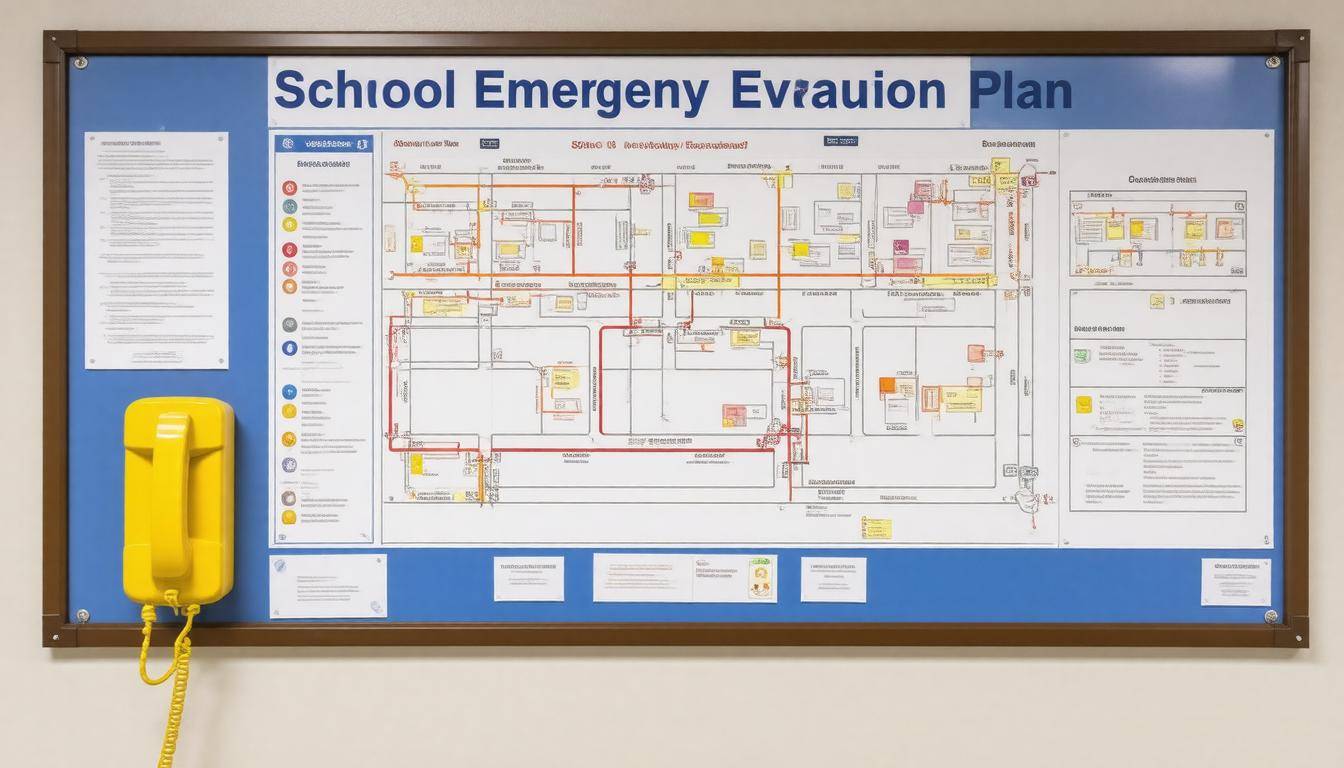
Clear and prompt communication is not just important; it’s vital during an evacuation to maintain order and alleviate unnecessary panic among students and staff. To achieve this, schools must establish a well-structured approach that encompasses multiple channels of communication, ensuring that everyone receives timely alerts and information during emergencies.
Setting Up Efficient Systems
Schools should invest in robust communication tools such as two-way radios, public announcement systems, and emergency alert software. These technologies provide direct lines of communication for staff when every second counts. In fact, systems employed by districts like Fairfax County Public Schools exemplify best practices: they utilize multi-channel communication strategies that integrate email, SMS, and automated voice calls. This comprehensive approach guarantees that messages reach everyone instantly, ensuring that faculty, students, and parents remain informed throughout the entire process.
Consider having redundant systems in place. If one means fails—like a power outage affecting email—a backup method ensures continued communications through alternative pathways.
Utilizing social media platforms can also enhance the flow of real-time updates for parents and guardians. However, it’s essential to recognize that not all parents are equally comfortable with technology or social media. Therefore, implementing a parent notification system becomes crucial. Besides leveraging social media, it might be beneficial to have a text notification system that allows parents to receive direct updates about their children’s safety status during an emergency. This reassurance is invaluable.
Integrating Multiple Channels
When designing emergency communication procedures, integrating various channels is key to reaching everyone effectively. Establishing a clear hierarchy in information dissemination will help guide those involved in an incident response efficiently. For instance, ensure that staff members are trained on how to activate each system and who to notify first during an emergency.
Key channels could include:
- Two-way Radios: Instantaneous communication among staff during the evacuation.
- Public Announcement Systems: Broadcasting urgent messages throughout the school quickly.
- Emergency Alert Software: Sending out mass notifications via email or SMS alerts to families.
- Social Media Updates: Sharing critical information through school-operated accounts to engage tech-savvy families.
By establishing these communication protocols and ensuring staff preparedness, schools can cultivate a more organized atmosphere during evacuations that enhances overall safety for students and staff alike. This seamless transfer of information ties directly into the measures taken to keep parents informed during critical situations.
Parent Notification System
A robust parent notification system serves as the lifeline connecting schools to families during emergencies, allowing for rapid and efficient communication. When an incident occurs, every second counts, and this system is designed to keep parents in the loop about their children’s safety. This proactive approach not only alleviates parental anxiety but also fosters a sense of community trust in the school’s emergency protocols.
One key component of establishing an effective parent notification system is database maintenance. It ensures that all contact information for parents and guardians is current and accessible. This might sound straightforward, but it’s crucial to routinely verify records so that messages reach their intended recipients without delay. Regular updates can help avoid scenarios where important notifications fail to deliver because of outdated phone numbers or email addresses.
A well-maintained database can drastically reduce response times during critical situations, ultimately safeguarding students’ safety.
Following this, implementing automated alerts adds another layer of efficiency. Schools can utilize modern technology to send out SMS, emails, or phone calls with pre-recorded messages. This automation allows for immediate distribution of critical updates without needing manual intervention, which proves invaluable during chaotic situations when time is of the essence. Moreover, several systems allow for customization of messages based on emergencies—be they weather-related closures or lockdowns.
For instance, a parent in a real-time crisis might be more concerned about immediate survival than long-term plans. An automated alert can deliver concise information on evacuation routes or assembly points swiftly. As reassuring as it sounds, imagine receiving a text message stating “All students are safe; please proceed to the gym for pickup,” just moments after an incident happens.
Steps to Implementation
-
Database Maintenance: Conduct regular audits of parent contact information to ensure accuracy. Using online forms or direct communication at events can encourage parents to keep their details updated.
-
Automated Alerts: Choose a system that integrates well with existing school infrastructure. Systems like “SchoolMessenger” offer multi-channel notifications that work effectively within busy educational environments.
-
Designated Contact Points: Appoint specific staff members who will handle communications during emergencies. Their training should cover how to manage communications under pressure while remaining calm and collected.
Improvements continue beyond these steps. Schools are encouraged to collect feedback from parents post-emergency communications to fine-tune the processes further. Creating an environment where parents feel involved and valued in these discussions strengthens cooperation during crises.
While ensuring effective parent communication is vital, another essential aspect is conducting regular drills and training sessions for both students and staff to practice these protocols effectively.
Regular Drills and Training
Practicing your emergency plan isn’t just a good idea—it’s absolutely essential for keeping students and staff safe. By regularly conducting drills, you create an environment where the actions needed in an emergency become second nature. Think of it like a fire drill; when practiced well, it prepares everyone to react swiftly and responsibly when it counts most. Yet, many schools fall into the trap of treating these drills as mere formalities, going through the motions without instilling the seriousness they deserve.
A common observation is that while some schools complete the exercises on paper, they fail to engage students fully during them. If students do not feel the gravity of their impending actions, how likely are they to respond appropriately in a real crisis? Genuine commitment from teachers and administrators during these sessions makes all the difference. It’s about fostering an atmosphere where safety is paramount—the kind of culture that resonates through repeat training and simulated real-life scenarios.
Checklist for Effective Drills
| Task | Frequency | Notes |
|---|---|---|
| Fire Drills | Monthly | Practice varied exit routes |
| Earthquake Drills | Biannually | Include “drop, cover, and hold on” |
| Lockdown Drills | Quarterly | Simulate real-life scenarios |
| Review and Revise Plans | Annually | Incorporate feedback from drills |
Regular assessments can be incredibly beneficial. A well-executed drill can draw on data—like findings indicating schools performing surprise drills produce much faster responses from students. The element of surprise invigorates a sense of urgency and importance in emergency protocols.
As we transition to practical considerations, it becomes crucial to ensure that all participants know their safe havens during these exercises, emphasizing the need for clear communication about locations and exits.
Designating Safe Locations and Exit Routes
To create a safe environment in your school, it’s essential to identify effective exit routes and designate safe assembly areas. The first step involves a thorough risk assessment; by understanding the specific hazards that your school might face—be it fire, earthquakes, or severe storms—you can begin to develop a more structured plan. For instance, if your school is located in a region prone to flooding, then ensuring that all designated exit routes lead to higher ground will become paramount.
Once you’ve conducted this assessment, it’s time to map those exit routes. Remember: accessibility is key. Ensure that each classroom has at least two clearly marked exits, which should be visible on posted maps throughout the building. Using universally recognized symbols on signage can help ensure that everyone knows where they need to go. In addition, consider involving local emergency services in this process. Their expertise will help highlight any potential shortcomings in your plans and provide additional insights into effective evacuations.
Designated safe assembly areas should be positioned at least 200 feet away from the school building, ideally in open spaces that shield students from potential hazards like falling debris. These areas should be equipped with clear signage guiding all occupants after an evacuation.
It’s also crucial to think about individuals with disabilities when planning these exits. Incorporating ramps and ensuring that all pathways are free of obstacles will facilitate smooth evacuations and foster an inclusive environment for everyone. Schools must routinely conduct inspection drills focusing on just how accessible these routes really are so that staff and students remain prepared.
Integrating feedback from regular drills allows schools to continuously improve upon their evacuation strategies while ensuring all participants are familiar with procedures. This relationship between planning and practice fosters a culture of preparedness, especially as we focus on specific considerations for students requiring additional support.
Preparing for Special Needs Students
Customized evacuation plans are essential for ensuring that every student, especially those with disabilities, can safely exit the school during an emergency. This preparation goes beyond simply having a plan; it involves understanding individual needs and being ready to adapt as situations change. For instance, conducting individual assessments for students with special needs is vital. These assessments help identify specific requirements, such as mobility aids, which might be necessary during an evacuation. Knowing whether a student requires a wheelchair accessible route or assistance from caregivers lays the groundwork for a successful evacuation.
It’s important to ensure that appropriate personnel — whether it’s teachers, aides, or trained volunteers — are assigned to assist these students during drills and real-life emergencies. This way, no one is left behind. Imagine the peace of mind it brings when staff members are aware of their specific roles in helping students with special needs. Having designated evacuees ensures everyone understands how they will help each student make it to safety efficiently.
A thoughtful observation came from a recent drill at Lincoln High School in New York where staff were actively engaged in assisting special needs students, making sure every child felt supported and safe.
Beyond individual assessments, it is crucial to develop special plans tailored not just to accommodate but to empower those who may need extra assistance. These plans should be flexible enough to meet the varying degrees of support required by different students. For example, some may only need verbal guidance while others might require physical support or specially designed equipment.
Routine training sessions focused on these tailored plans can reinforce staff familiarity with what is expected of them. Regular updates on policies and procedures can further enhance school-wide readiness for emergencies. It helps everyone understand the protocols and adds layers of safety to the process.
By prioritizing the needs of special needs students within your evacuation plan, you create a culture of inclusivity that extends beyond the classroom and into every aspect of school life. As we examine next the ongoing commitment to refining these strategies, it’s clear that effective communication and preparation are vital to their success.
Evaluating and Improving the Plan
An evacuation plan should be a living document, continually assessed and updated based on new findings and experiences. This proactive approach sets a foundation for safety that evolves with the community’s needs. Each drill, scare, and piece of feedback from students and staff provides invaluable insights into the effectiveness of current practices. Consistent evaluation ensures schools are ready for any emergency scenario.
Continuous Improvement Steps
The first step in this process is conducting post-drill assessments. After each evacuation drill, it’s crucial to gather feedback from all involved — teachers, students, and support staff. By asking simple yet pointed questions like “What worked well?” and “What challenges did you face?”, schools can analyze their emergency response closely. This not only helps pinpoint areas needing improvement but also fosters a culture where everyone feels empowered to contribute.
Keeping a feedback form might streamline this process and facilitate tracking changes over time. Small adjustments informed by real experiences can make a significant difference when it counts most.
Next are annual reviews of the evacuation plan. As school layouts change due to renovations or fluctuations in student enrollment, keeping the emergency plan current is essential. These yearly updates allow leadership to incorporate new safety protocols driven by ongoing training or legal requirements as mandated under New York’s Education Law §2801-a. It’s about creating a thorough blueprint that can save lives.
“When we perform our annual reviews, we often discover gaps we weren’t aware of before,” explains Principal Adams during his testimonial at Northview Elementary. “We’re able to tweak the plan continuously.”
Additionally, gathering community input is another vital aspect of improving your evacuation strategy. Collaborating with local emergency services creates an important connection between the school and the responders who may need to act in real scenarios. When fire departments or police officers participate in reviewing the school’s emergency plan, they bring expertise that enhances both safety protocols and practical drills.
They might suggest specific modifications based on previous responses to emergencies within the community. Their external perspective can often highlight issues overlooked internally, enriching the overall effectiveness of your emergency response.
Continual evaluation ensures the plan adapts to ever-changing circumstances, securing the safety of all involved. Remember that preparedness is not just reactive; it’s proactive, led by a mindset focused on continuous improvement for safety and well-being in educational environments. By fostering an atmosphere that values feedback, embraces community insights, and commits to regular updates, schools are creating a safer future for everyone involved.
In summary, maintaining an adaptable and responsive evacuation plan is essential for building a safe educational environment. Through collaboration and commitment to improvement, schools can better prepare themselves for any challenges ahead.
How can schools accommodate students with disabilities during an evacuation?
Schools can accommodate students with disabilities during an evacuation by implementing tailored evacuation plans that include designated roles for staff, accessible pathways, and specialized equipment like evacuation chairs. For instance, training staff on how to assist students with mobility impairments ensures everyone knows their responsibilities. Additionally, conducting regular drills that incorporate these accommodations can enhance preparedness; studies show that schools with inclusive practices report a 30% increase in overall safety confidence among students and parents.
What step-by-step procedures should be included in an effective school evacuation plan?
An effective school evacuation plan should include the following step-by-step procedures: establish a clear communication system, designate assembly areas, train staff and students on evacuation routes and procedures, conduct regular drills, create a checklist for supplies and essential information, and ensure accessibility for individuals with disabilities. According to the National Fire Protection Association, over 3,300 schools experience fire-related incidents annually, making it crucial to have a well-structured plan in place to minimize risks and enhance safety during emergencies.
How often should evacuation drills be conducted to ensure preparedness among students and staff?
Evacuation drills should be conducted at least twice a year to ensure preparedness among students and staff. Research indicates that schools that conduct regular drills significantly reduce response times during actual emergencies, with some studies showing a 30% improvement in evacuation efficiency. Regular practice instills confidence and familiarity, making it easier for everyone to act swiftly and safely in the event of an emergency.
What communication strategies are essential for keeping students, parents, and staff informed during an evacuation scenario?
Effective communication strategies during an evacuation scenario are crucial for ensuring the safety and awareness of students, parents, and staff. Key strategies include establishing a clear chain of command for information dissemination, utilizing multiple channels like text alerts, social media updates, and intercom announcements to reach all stakeholders promptly. Research indicates that timely communication can reduce anxiety and misinformation; for instance, studies show that 70% of parents feel more secure when they receive real-time updates during emergencies. Additionally, regular drills and information sessions can enhance familiarity with procedures, further reinforcing safety during an actual evacuation.
What role do local emergency services play in the development and execution of a school evacuation plan?
Local emergency services play a crucial role in the development and execution of a school evacuation plan by providing expertise, resources, and training. They assist schools in identifying potential hazards, conducting safety drills, and ensuring that evacuation routes are effective and safe. According to the FEMA statistics, schools that coordinate with local emergency responders can reduce response times by up to 25%, significantly enhancing the safety of students and staff during emergencies. Their involvement ensures that protocols are updated based on real-world scenarios, promoting a culture of preparedness within the school community.