
Emergencies can happen anywhere—even in a packed theater filled with eager audience members. The thought of an unexpected event might send shivers down your spine, but it’s essential to remember that keeping everyone safe starts with a solid emergency evacuation plan. Having a clear and detailed approach not only helps staff know what to do, but it also provides peace of mind for patrons enjoying the show. Crafting an efficient plan takes careful consideration and regular practice to ensure that everyone is ready to respond calmly and quickly during a crisis. Let’s dive into the critical steps and guidelines for creating an effective theater emergency evacuation plan that prioritizes safety for all.
A detailed theater emergency evacuation plan typically includes key components such as an outline of evacuation routes, designated assembly areas, roles and responsibilities of staff members, communication protocols, and procedures for assisting individuals with disabilities. It also emphasizes the importance of regular drills to ensure all personnel are familiar with the plan and can effectively respond in case of an emergency.

Crafting a Theater Emergency Evacuation Plan
The heart of any effective emergency evacuation plan lies in clarity and precision. When drafting your plan, it is essential to ensure that every possible scenario has been accounted for. This includes not just the basic emergencies like fire or severe weather but also less common threats such as active shooter situations. For each situation, clear instructions must be outlined for everyone involved, specifying their roles and responsibilities, from security personnel to technical staff and ushers.
Each section of your plan should detail how an emergency will be discovered and reported. For instance, if a fire is detected, who sounds the alarm? Once an alarm has been raised, what are the specific evacuation routes? Is there a designated safe area for assembly once evacuated? This continuity in communication is crucial.
Remember: “The single best thing you can do to protect yourself is close doors,” a critical measure during any fire emergency to prevent spreading flames.
Beyond outlining how to handle various scenarios, the plan should incorporate logistical nuances. Consider conducting regular risk assessments as part of ongoing maintenance for your emergency plan. Regularly checking for potential hazards—like aging electrical systems that could pose fire risks or designing seating arrangements that facilitate rapid evacuations—ensures that your evacuation plan remains relevant and effective.
Collaborating with local emergency services can provide invaluable insights into managing those risks; they can offer feedback on your existing plans and suggest modifications based on their experiences.
Moreover, the next step involves engaging in thorough staff training programs centered on the evacuation process. Ideally, these sessions should blend theoretical knowledge with hands-on drills that mimic real-life emergency situations. Regular rehearsals allow staff members to become familiar with their assignments while fostering confidence. Engaging experts can enrich these training programs, equipping your team with strategies for risk recognition and effective evacuation techniques.
To ensure effective communication during an emergency, don’t overlook the importance of creating a robust floor plan. Each theater should maintain updated blueprints detailing exits, assembly points, and accessible routes for individuals with disabilities. Vital information about each pathway should be clearly marked so that everyone understands where they need to go under duress.
As you continue refining these essential components, remember that regular updates are key to adapting to changes in staffing or infrastructure within your theater. Next, we will explore important considerations that enhance the overall safety protocols and effectiveness of your emergency plans.
Key Elements to Consider
Fire Hazards are perhaps the most pressing concern for any theater. Every venue must ensure that fire extinguishers are installed, easily accessible, and that all staff members are thoroughly trained in their use. Imagine a packed audience, laughter and anticipation filling the air, and then—an unexpected fire breaks out. What if the closest extinguisher was behind a locked door or no one knew how to operate it? Regular training drills can mitigate panic while empowering your team to respond effectively in emergencies. Moreover, installing smoke alarms and ensuring that paths to exits are well-marked and free from obstruction will enhance safety.
Following fire hazards, Medical Emergencies must also be addressed with utmost seriousness. Having first aid kits available in multiple, easily identifiable locations within the theater is crucial. Those kits serve as your first line of defense against potential health crises during a performance. Including an Automated External Defibrillator (AED) is vital, as this device could mean the difference between life and death during cardiac events—a sobering thought indeed. Training staff on how to use both first aid kits and AEDs prepares you for various scenarios.
Next comes Electrical Safety, a less obvious but equally essential element. Electrical malfunctions can lead to serious accidents and fires, so conducting regular inspections of electrical systems is an important precautionary measure. It’s about proactively keeping your facility safe. Consider routine maintenance checks on wiring, outlets, and lighting fixtures so potential hazards can be identified before they escalate.
In addition to physical hazards, Security Threats present significant risks that cannot be overlooked. Developing protocols for active shooter scenarios is a hard but necessary part of any safety plan today. Ensuring limited access to critical areas permits only authorized personnel, preventing unauthorized entry or mishaps. Regularly communicating these procedures with staff through training sessions prepares them to act decisively should such horrific incidents occur.
Lastly, paying attention to Audience Mobility is essential in evacuation planning. The audience experience should never be hindered by the lack of accessibility measures. Designate specific staff members trained to assist individuals with disabilities during evacuations, ensuring they understand how to use any equipment or support devices required for safe mobility. By creating a well-thought-out system for audience evacuation—including everyone—you foster a culture of inclusivity alongside security.
These elements—fire hazards, medical emergencies, electrical safety, security threats, and audience mobility—are crucial for a comprehensive emergency evacuation plan tailored specifically for theater settings. Each requires diligent attention and specific guidelines for personnel managing them. Addressing these concerns proactively not only protects patrons but also supports an environment where creative expression can flourish without compromising safety.
As we explore the foundations of effective emergency protocols, it’s equally important to scrutinize the best practices guiding the people who implement these plans.
Safety Guidelines for Theater Personnel
The importance of having clear and effective safety protocols for theater personnel cannot be overstated. These guidelines help protect staff and patrons during emergencies while fostering an environment of preparedness and confidence. By establishing robust procedures, everyone knows their role when seconds matter most.
Fire Safety Protocols
In the event of a fire, it’s crucial that staff are trained to alert the audience quickly and effectively without inducing panic. This means calmly directing them to the nearest exits while maintaining a reassuring demeanor. Staff should know that fighting a major fire is reserved for those who have received specific training; in most situations, their first priority should be guiding patrons safely out of harm’s way. Remember, it’s about preventing chaos while ensuring swift action.
Equally important are considerations concerning medical emergencies that can arise in any crowded space.
Medical Emergencies
It’s essential to have designated staff members trained in CPR and the use of an Automated External Defibrillator (AED). This training can significantly increase the chances of survival for someone experiencing a cardiac emergency right in front of you. Moreover, all staff should familiarize themselves with the locations of first aid kits throughout the venue so they can provide immediate assistance if required. A knowledgeable team can make all the difference in saving lives during an unexpected medical incident.
Beyond fire and medical emergencies, today’s theaters must also be prepared for more complex scenarios, such as active shooter situations.
Active Shooter Protocols
Developing a plan rooted in “Run, Hide, Fight” principles is imperative for staff members. This means preparing them to run to safety if possible, hide from sight if escape isn’t feasible, or fight back as a last resort if confronted by danger. Staff should receive regular training tailored to your theater’s layout so they’re familiar with all potential escape routes. Highlighting these routes not only prepares them for any threats but reinforces a culture of safety where everyone feels empowered to act decisively.
In grasping these protocols and preparing thoroughly, theater personnel lay the groundwork for well-coordinated responses during emergencies as we now shift our focus to critical aspects involving the visual navigation within the venue.
Mapping Evacuation Routes and Exits

A well-thought-out map of your theater that highlights exits and evacuation routes can be a lifesaver in an emergency. This layout shouldn’t just sit idle; it needs to be a living document, updated regularly to reflect any changes in your theater’s configuration or furnishings. Each exit must be clearly marked, and frequent checks should be conducted to ensure that pathways remain clear.
Step I – Identifying Exits
Start by identifying all potential exits within your theater space, including both standard exits and less obvious emergency exits. These might be located behind stage areas or in service corridors. Each exit must be easily accessible—furniture, decorations, and anything else that could obstruct these routes are serious hazards. Imagine a packed audience trying to navigate around a decorative prop during an evacuation. Keeping these pathways clear is not only a safety requirement but also a matter of practicality.
Keeping your exits unobstructed means you’re paving the way for a swift and safe evacuation process.
Step II – Accessible Routes
With exits identified, the next step is focusing on creating accessible routes for everyone, including individuals with mobility issues or disabilities. Ensure these routes are at least 44 inches wide, allowing enough space for wheelchairs or anyone needing assistance during an evacuation. Consider investing in illuminated markers that guide people toward the nearest exits; these markers should be visible from all seating areas.
As people move through your theater, it’s critical that their paths remain free of clutter, whether from equipment or misplaced props. Regular walkthroughs by staff can help spot potential obstacles before they become issues during an emergency.
Picture this: All is calm until whispers spread about an emergency evacuation, only to find that the path to safety is barricaded by a lonely chair—or worse, a sleeping patron!
Having established proper routes and exit points, we now shift our focus towards providing essential guidance for patrons navigating through these pathways safely.
Audience Instructions and Protocol
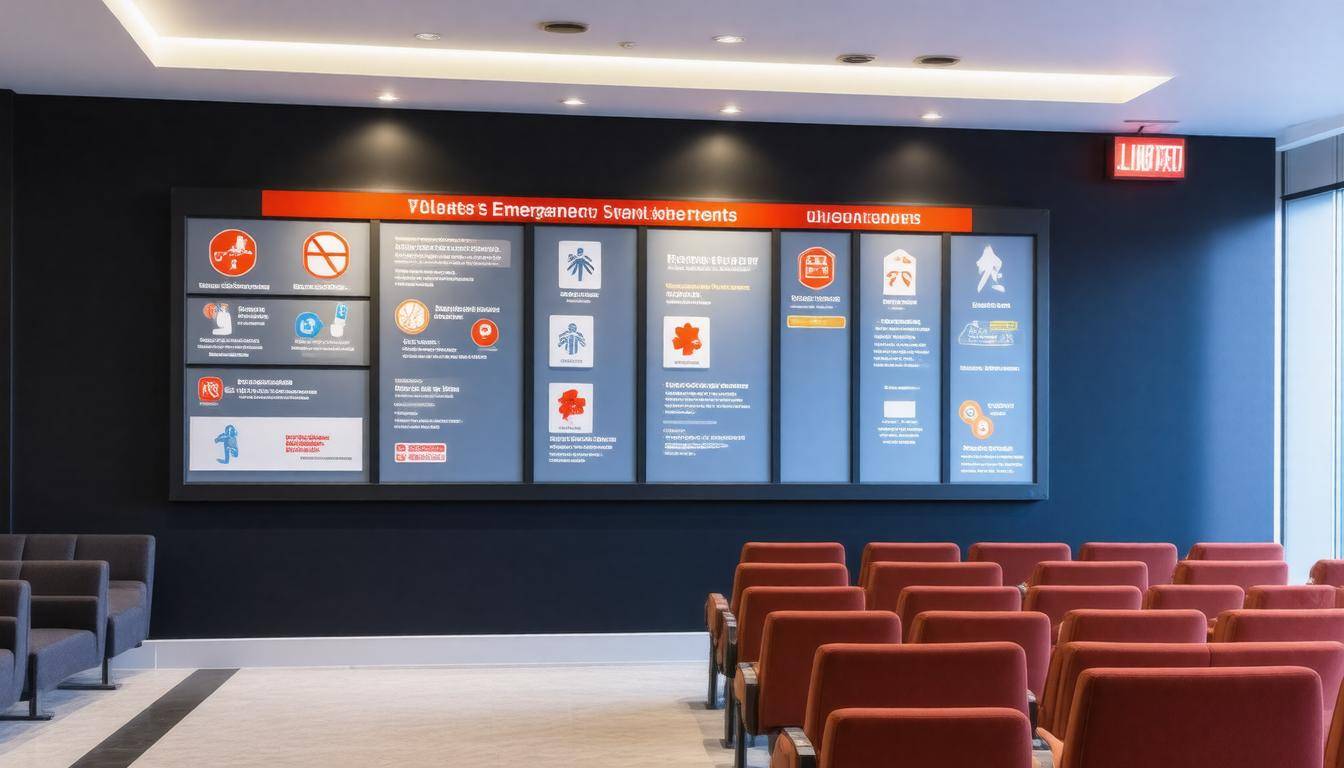
When the unexpected happens in a theater, clear instructions are paramount in guiding both the audience and staff through the evacuation process. The key to maintaining order during a potentially chaotic situation lies in making sure everyone knows what actions they need to take. This means having established protocols that prioritize clarity and calmness, allowing for an effective response that keeps everyone safe.
Announcements
Think of the last time you were in a crowded space and an announcement was made. Did you feel more reassured or confused? The tone and content of announcements can make all the difference. It’s crucial to have a well-articulated procedure for making calm but urgent announcements instructing the audience to evacuate. Ensure that pre-recorded messages are available, providing consistent guidance in case of emergencies.
These recordings should include essential information such as which exits to use, any specific instructions for your seating area, and reassurance that help is on the way. A steady voice over the loudspeakers can be very calming amidst chaos.
Furthermore, redundancy is vital; if technology fails or people struggle to hear, there should always be staff members ready to guide patrons verbally. They should be trained not just in what to say but how to convey these instructions effectively—calmly and confidently.
Printed Instructions
Printed materials play a significant role in communication as well. Including evacuation instructions directly on tickets or programs serves as a tangible reference point for patrons. Repeat these instructions at the beginning of each performance, perhaps during the curtain speech or a brief intermission announcement, emphasizing their importance. By integrating these reminders into the live experience, audiences will be more likely to remember them when it matters most.
Remember: The goal is not just to inform but also to prepare—making it second nature for attendees to know their escape routes before any crisis occurs.
Additionally, visual cues can augment written and spoken instructions significantly. Strategically placed signage throughout the venue can act as guides during an emergency, indicating both exits and any potential hazards along the way.
By incorporating comprehensive communication strategies, audiences can feel secure and equipped with the knowledge they need during critical moments. Continuing this discussion highlights how well-organized communication plays an essential role in managing emergencies effectively.
Effective Communication During Emergencies
When an emergency occurs in a theater setting, the key to managing that situation lies in clear and effective communication. To convey essential messages, it’s critical that everyone—audience members and staff alike—are on the same page about what steps to take. Imagine being in a packed theater, lights flashing, and sounds of chaos rising; the last thing you need is confusion. This can be mitigated significantly by utilizing various communication devices and strategies effectively.
Public Address Systems
One of the most crucial tools for communication during emergencies is the public address system. This should be strategically installed to ensure announcements reach every corner of the venue without distortion or feedback.
To maximize its effectiveness, it needs to be checked regularly for sound clarity. It’s not enough for it to merely work; it must be loud enough to penetrate the ambient noise that can easily drown out crucial information during an evacuation.
A well-placed public address system can save lives by giving timely, clear instructions. It’s imperative that sound tests are performed not only during installation but also periodically thereafter, especially before each performance.
Two-Way Radios
Traditional verbal communication isn’t sufficient alone; staff needs immediate access to real-time updates via two-way radios. These devices allow team members to communicate seamlessly, ensuring that if there’s any change or urgent issue backstage or in crowded areas where noise might create barriers, messages can get through without delay.
For example, if someone notices smoke while conducting routine checks behind stage, they need to relay this information instantly—two-way radios enable exactly that.
Picture this: a technician spots a fire starting backstage during a performance. They use their radio to alert security personnel who can then initiate protocol while keeping patrons calm. Without this system of clear communication in place, moments of panic could spiral out of control.
However, effective communication extends beyond personal devices and systems; good signage plays a critical role too.
Signage Importance
Having visible signs directing patrons toward emergency exits helps guide them efficiently out of the building when every second counts. Signs should be brightly lit and positioned so that even in dim lighting or smoke-filled environments, they remain discernible.
Think of these signs as lifelines during an emergency; their purpose is to eliminate hesitation by providing clear pathways to safety.
Furthermore, regular maintenance of these systems cannot be overlooked. If signage goes unkempt or malfunctioning equipment remains unfixed, it undermines your entire emergency preparedness plan. Regular inspections and updates help ensure all materials are visible and functional.
By synchronizing effective communication with solid internal messaging through signs and announcements, theaters can create an environment where everyone feels assured and informed—even under pressure deeply low on panic-oriented impulses.
As we integrate these critical elements into our preparations, it’s equally important to consider how effective systems for notifying people about evacuation routes and protocols are established throughout the venue.
Installing Signage and Door Operations
Proper signage is more than just a helpful hint during an evacuation; it’s often the lifeline that guides occupants toward safety. The goal behind well-placed signage is to direct people quickly and efficiently, minimizing panic and confusion.
To achieve this, use illuminated exit signs that stand out but also ensure they are installed at eye level as well as overhead. This dual approach allows for maximum visibility in varied situations—you want those signs to be effective whether the lights are on or if low visibility conditions like smoke arise.
Visibility is key. Signs should reflect light and be made from materials that can endure smoke-filled environments, ensuring they don’t become hidden when they’re needed most.
Signage
Think of your signage as a roadmap for those unfamiliar with the area. Place them strategically along pathways leading to exits, particularly in corridors where panic might cause people to overlook essential routes. Clear messaging can make all the difference; using commonly understood symbols alongside text reinforces recognition.
For example, combining a glowing green exit symbol with bold lettering that reads “EXIT” provides immediate clarity. You’ll also want to implement different types of signs for specific purposes—for instance, directional arrows guiding individuals toward exits or areas designated for assembly outside the building.
Remember, clarity isn’t just about prominence; it’s also about simplicity. Avoid cluttered designs; less is often more when it comes to ensuring comprehension under stress.
Door Operations
Door functionality is another critical component of emergency plans, and there’s ongoing discussion about whether push bars or pull handles are preferable for quick evacuations. Generally speaking, push bars are favored—firstly because they allow for swift operation by anyone exiting, even when they might be carrying something or need their hands free.
Consider the scenario: you might find yourself racing against time trying to unlock a pull handle while chaos reigns around you. Push bars eliminate that hesitance and empower individuals to act swiftly.
Ensuring your exits are equipped with user-friendly mechanisms cannot be overemphasized; emergency exits should facilitate movement rather than hinder it. Regularly check doors for proper functioning—there’s nothing worse than arriving at an exit only to discover it’s blocked or malfunctioning during a crisis.
Of course, implementing these practices isn’t merely a one-time setup; they require ongoing attention and testing to ensure effectiveness during real emergencies. With these foundational aspects outlined, the next step involves establishing how these procedures will function in practice.
Testing and Implementing the Plan
Regular testing is not just an option; it’s a necessity for the success of any emergency response plan. It ensures that both staff and audience members know precisely what to do when panic strikes. The first step in this process is to conduct drills, crucial for familiarizing everyone with the procedures and identifying weaknesses within your plan.
Imagine being in a packed theater filled with hat-wearing patrons who may need assistance exiting in a large crowd—everyone must understand their role clearly, or chaos could ensue.
Step I – Conduct Drills
Scheduling regular evacuation drills keeps the flow of information centralized while allowing everyone to rehearse their roles. These drills should occur not only for staff but, where feasible, for your audience as well.
Picture this: an actor onstage in a drama suddenly saying, “Fire! We must evacuate!” The words might induce panic unless the audience has practiced how to exit calmly. By simulating real-life scenarios, you create muscle memory that can overpower hesitation during actual emergencies. These drills are like rehearsals for a complex play—the more you practice, the more fluid and effective the performance will be.
But conducting the drills alone is not sufficient; learning from these simulations is equally vital.
Step II – Review and Adapt
After each drill, taking time to conduct a debrief is essential. This meeting allows everyone involved to discuss what went smoothly and what didn’t work as expected. Feedback from participants can unveil hidden issues, even those management might not have recognized. If some staff members struggled with their roles or if certain evacuation routes were obstructed or confusing, it’s crucial to document this feedback.
Updating your plan based on observations ensures it evolves over time; this adaptability is key in enhancing safety and efficiency.
While periodic updates are important, they shouldn’t just happen ad-hoc; thorough evaluations should be scheduled regularly.
Step III – Annual Revision
At least once a year, review your entire evacuation plan comprehensively. Think of it as the annual health check-up for your safety protocols. During this evaluation, adjust plans based on new risks—like recent incidents affecting public spaces—or changes made to theater layout that might affect entrances or exits. Even lessons learned from audience feedback can provide additional insights into how well your plan holds up under scrutiny.
| Task | Frequency | Responsible Party |
|---|---|---|
| Risk Assessment | Twice a Year | Management |
| Staff Training | Quarterly | HR & Safety Team |
| Evacuation Drills | Semi-Annually | Operations |
| Plan Review & Update | Annually | Safety Committee |
The above table summarizes responsibilities perfectly: It establishes a timeline for tasks that keeps everyone aligned toward keeping safety at the forefront of operations. Being methodical about these processes fosters a culture of preparedness; you’re not merely checking off boxes—you’re ensuring every aspect of your emergency response is finely tuned and ready for action when needed most.
In these critical times, addressing safety and preparedness directly impacts lives and experiences within the theater space. A well-implemented emergency evacuation plan exemplifies commitment to protecting all patrons while creating a secure environment for entertainment.