
When winter rolls around, many of us can’t help but feel a little anxious about driving in harsh conditions. Snowy roads and icy patches can make even the simplest trip seem daunting. But imagine feeling prepared and equipped to handle whatever comes your way! That’s exactly why having a Winter Driving Emergency Kit in your vehicle is so important. It’s not just about having supplies on hand; it’s about peace of mind. Having all the essentials at your fingertips allows you to face those chilly challenges with confidence. Let’s dive into what must-have items you should include in your kit to stay safe and ready this season!
A Winter Driving Emergency Kit should include several essential items such as jumper cables for battery issues, a spare tire and fix-a-flat for tire repairs, warm clothing including hats and gloves, an electric car blanket for warmth, and a first aid kit to address minor injuries. Additionally, include tools like a snow brush and scraper, along with fluids like antifreeze to ensure your vehicle operates effectively in cold conditions.
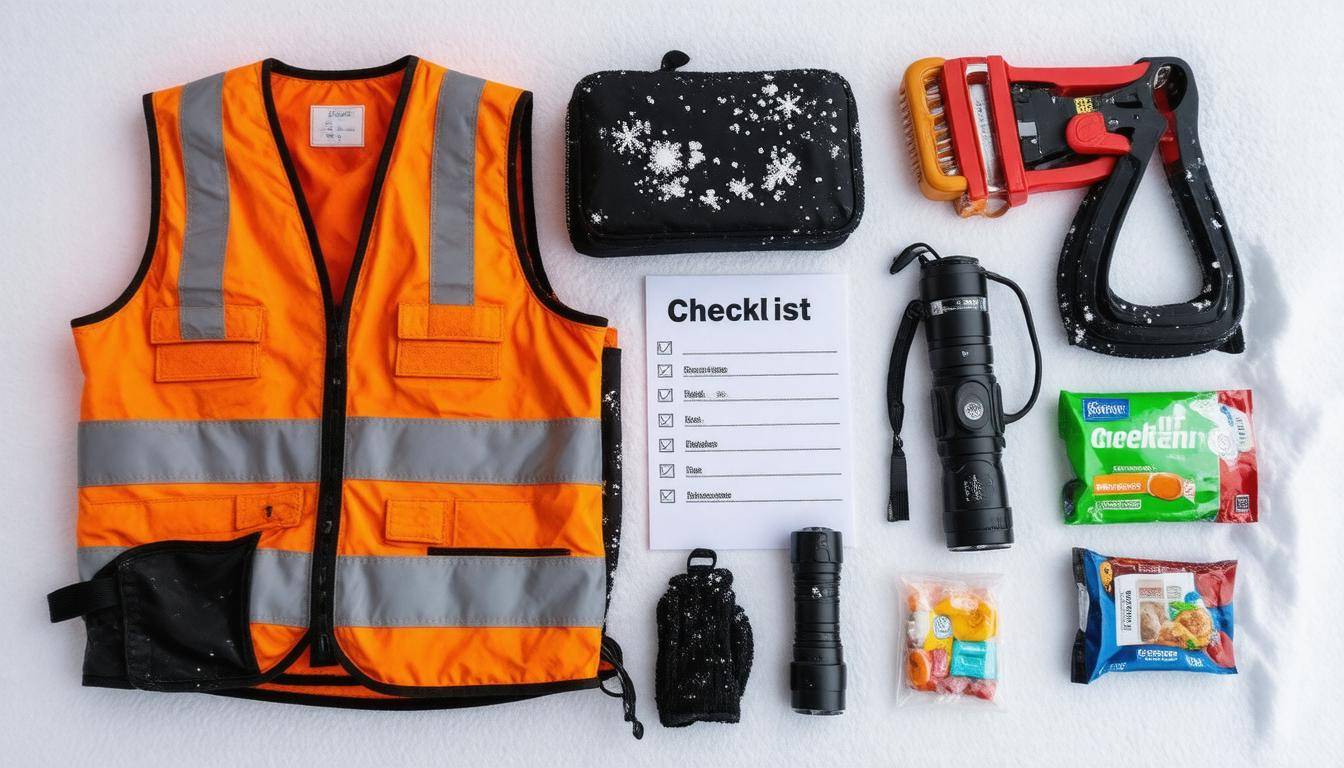
Assembling Your Winter Driving Emergency Kit
Step I – Categorize Your Items
The first step is to keep your items organized by grouping them into clearly defined categories. Imagine opening your trunk and seeing separated boxes labeled Tools, Clothing, and Emergency Supplies. By keeping everything in sturdy boxes or heavy-duty bags, you not only create order but also ensure that items remain intact during travel.
Take a moment to evaluate what you need and decide how best to categorize those essentials. For example, place your car maintenance tools—such as jumper cables and tire repair kits—in one box, while separating your warm clothing and blankets in another. This way, when you get stuck in winter weather, reaching for supplies will be quick and easy.
Step II – Prioritize Vital Items
Once you’ve categorized the items, it’s essential to prioritize what goes into your kit. Start with fundamental tools like a reliable flashlight, extra batteries, and a multi-tool.
You may also want to include items like road flares and high-visibility vests that signal your presence to other drivers should you find yourself stuck on the roadside. These small yet critical additions can significantly enhance your safety in precarious situations, particularly in low-visibility conditions or on busy roads.
Think about it: having a light source at hand can illuminate your immediate surroundings while a high-visibility vest ensures you’re seen at night.
Step III – Store in Accessible Locations
After prioritizing the items, storing them in easily accessible locations is crucial. Keeping key supplies within arm’s reach can save precious time during emergencies.
For instance, placing essential items under the passenger seat or organizing non-perishable snacks and water bottles in the glove compartment can make them swiftly available without stepping out into potentially unsafe conditions. Consider also having a foldable shovel handy; it’s an excellent tool that can fit easily in your trunk for digging out snow if your vehicle gets stuck.
Remember: every little bit of preparation counts when the unexpected hits. A well-assembled kit enables you to be proactive rather than reactive when facing winter’s challenging conditions.
With a solid emergency kit in place, now it’s time to consider additional necessities that can further enhance your driving experience and increase safety on the road.
Road Essentials Everyone Should Have
When traveling during the winter months, a few essential items can be your lifeline. Each of these items plays a distinct role in keeping you safe and prepared for whatever the road may throw at you.
Think of your winter driving kit as your personal security blanket – having it within reach can mean the difference between a frustrating delay and a major emergency.
Recommended Essentials
First on our list is jumper cables. A dead battery is often an all-too-common occurrence in frigid temperatures. Even with diligent monitoring, you might find yourself facing a slow drain while the car sits idle. Jumper cables are a must; just remember to follow safety procedures when using them, such as connecting the positive leads correctly and ensuring that no metal components touch to prevent sparks. With jumper cables, waiting for help can transform from hours into mere minutes.
Now, let’s shift gears and consider another frequent issue: flat tires.
The importance of a spare tire and jack cannot be overstated. A flat tire can happen to anyone — perhaps from hitting an unseen pothole buried under the snow or simply due to the cold weather wreaking havoc on tire pressure. Ensuring that you have both a spare tire ready for use and a jack allows you to be self-sufficient during such an inconvenience. Familiarize yourself with the process of changing a tire; it’s not only empowering but can save precious time in potentially hazardous conditions.
While changing a tire is vital, accidents can still happen, which brings us to another crucial item: first aid kits.
A well-stocked first aid kit is indispensable for addressing minor injuries that may occur on the road. Imagine traveling with family or friends when someone sustains a cut or scrape; having basic medical supplies like bandages, antiseptics, and pain relievers ensures that you’re prepared to handle these instances promptly. It’s wise to check your first aid kit regularly to ensure items are not expired, making necessary replacements as needed. Being able to tend to wounds effectively provides peace of mind while away from home.
As we move through this essential list, there are numerous other tools worth considering in addition to these primary items.
Consider also including a reliable flashlight or headlamp, ideally LED with extra batteries. Visibility in roadside emergencies at night is paramount; having light readily available can assist with repairs or signal for help if needed. It’s also beneficial to have non-perishable snacks available, such as energy bars or trail mix; these quick energy sources can keep spirits high during an unexpected wait.
In the spirit of thorough preparation, ensuring you have all necessary supplies is critical when facing unpredictable winter weather conditions. Turning our focus now to specific items that could further enhance your readiness will help guarantee safety and ease during your travels.
Emergency Supplies to Pack
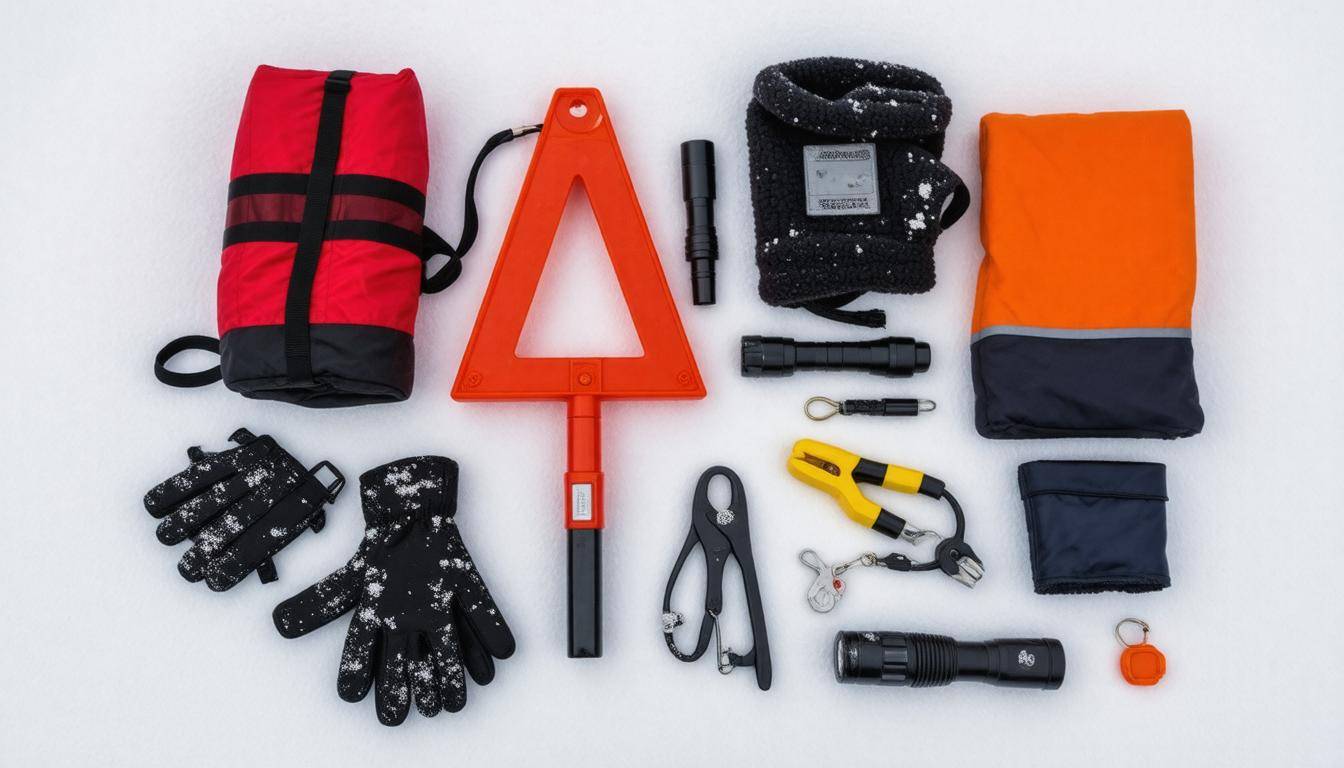
To survive an extended time in your vehicle during harsh winter conditions, having the right emergency supplies is not just wise—it’s essential. Imagine being stranded on the side of an icy road; it could take hours for help to arrive. That’s why preparing ahead is crucial, starting with packing non-perishable food items. Think of protein bars, nuts, and dried fruit as your immediate essentials; they provide a quick source of energy without requiring cooking or refrigeration. Having a stash of these foods can be the difference between feeling hungry and maintaining your strength while waiting for assistance.
Additionally, water bottles are vital, but in freezing temperatures, consider an insulated water jug. These containers keep your liquids from freezing and ensure you stay hydrated, which is critical during emergencies. You can augment your water supply by including a few gallon-sized freezer bags, specifically designed to prevent icy buildup on your mirrors and other parts of the vehicle.
Staying prepared also means staying informed. Incorporating battery-powered or hand-crank radios into your kit is a smart move to stay updated with weather alerts or any emergency information when stranded. Incomplete knowledge may lead to uninformed decisions when you need safety clarity most.
Reflecting on my own experiences during a snowstorm last year serves as an excellent reminder of how important it is to have additional supplies on-hand. I carried extra clothes packed in vacuum-sealed bags, which saved space but proved life-saving once I realized I was stuck overnight. Those layers of warmth made all the difference in combating the bitter cold.
Along with clothing and food, you should have some basic first-aid supplies readily accessible. A well-stocked first-aid kit can include adhesive bandages, antiseptic wipes, gauze pads, and even thermal blankets or emergency survival blankets that offer protection from hypothermia if needed.
Unexpected Necessities
What about things that might seem trivial but could come in handy? Like a headlamp or flashlight—these become invaluable during nighttime emergencies when visibility decreases drastically. Also consider including a multi-tool or Swiss army knife; they can serve a variety of purposes from opening packages to cutting tape when needed.
Packing thoughtful emergency supplies isn’t merely about filling your kit with random items; it’s about preparing for potential scenarios and ensuring you have what you might need when the unexpected happens. By paying attention to these details now, you’ll save yourself stress—and possibly your health—when facing those difficult winter conditions later on.
Considering these essential items is only part of ensuring you’re ready for winter driving challenges. Acquiring skills and knowledge geared toward icy roads and snowy weather will further enhance your preparedness in these conditions.
Preparing for Ice and Snow Conditions
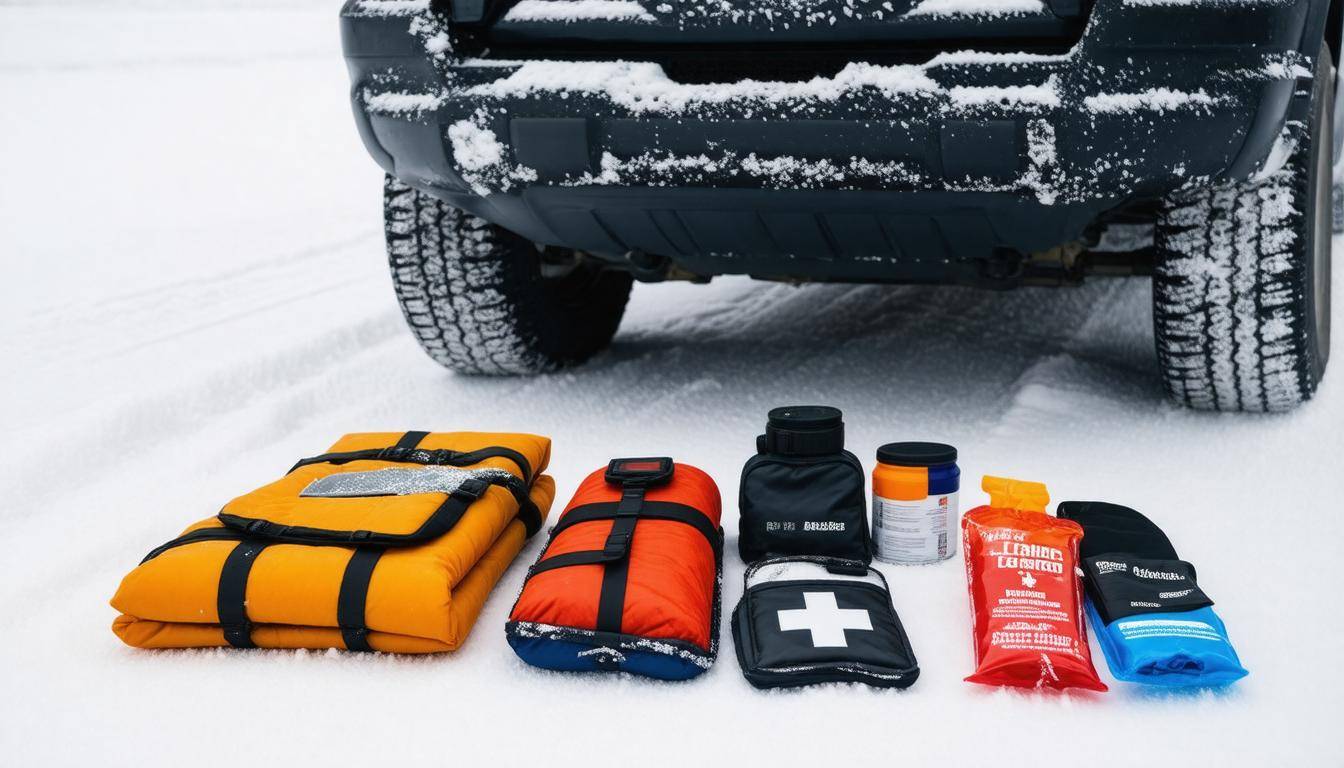
Battling the Elements
When the cold season rolls in, the challenges of driving on icy roads become starkly apparent. One effective way to prepare is by equipping your vehicle with tire chains. These are essential for enhancing traction on slippery surfaces, which can often be a lifeline during severe winter weather. However, it’s not just enough to own them; knowing how to install them safely is equally important.
Think of it like putting on a pair of shoes—if they don’t fit right, you risk slipping and falling. Take the time to practice installing your tire chains in a dry setting where you won’t feel rushed or pressured. This way, when you find yourself facing a snow-laden road, you’ll have one less thing to worry about.
Alongside tire chains, there are additional tools that can significantly improve your driving safety during harsh winter months.
Additional Tools to Consider
Maintaining visibility while driving in inclement weather should be at the forefront of every driver’s mind. One way to ensure you can clearly see the road ahead is by using an ice scraper and snow brush. Clearing your windows and mirrors is not just about comfort; it’s about safety. An obstructed view can lead to disastrous consequences.
Imagine starting your car during a blizzard without scraping away even a small area of ice from your windshield—pretty unsettling, right? Thus, having an ice scraper readily accessible within arm’s reach could make all the difference when you need to get moving quickly.
“The best preparation eliminates hazards before they arise.”
Additionally, invest in a good quality windshield de-icer spray to melt any stubborn ice that clings to your vehicle’s glass. This simple tool can save you precious time during those frigid mornings when every minute counts. A quick spray goes a long way, softening ice and making it easier to scrape off heavier layers in no time. It’s these little conveniences that keep frustration at bay when battling against the relentless grip of winter.
As the season shifts into winter wonderland mode, embracing these tools will only enhance your safety on the roads ahead.
Staying Warm During Breakdowns
Keeping warm during a breakdown is not just about comfort; it’s a vital part of survival in harsh winter weather. One effective way to achieve warmth is by using thermal blankets. These lightweight yet powerful blankets are designed to retain body heat, making them indispensable. When wrapped snugly, they can reflect up to 90% of your body heat back towards you, keeping you insulated from the chill outside. If you’re stuck for an extended period, consider layering on extra clothing underneath the blanket to maximize heat retention.
Essential Gear
In addition to thermal blankets, an electric car blanket can be incredibly handy if your vehicle is still operational. Unlike regular blankets, these plug into your vehicle’s power source, providing a consistent warmth without quickly draining your battery. This option is especially useful if you’re stranded in your vehicle for longer than anticipated; it allows you to keep warm while preserving battery life for potential rescue calls.
According to the CDC, hypothermia can set in within mere minutes to hours in frigid temperatures. This stark reality highlights the importance of keeping insulated gloves, hats, and socks readily accessible inside your kit. By layering these items, you’ll create an insulating barrier that retains critical body heat.
Moreover, it’s wise to carry disposable hand warmers or mylar emergency blankets in your emergency kit. Hand warmers are compact and offer heat lasting several hours—an easy add-on that could strategically shift your experience while waiting for assistance from a few uncomfortable hours into manageable ones.
Besides physical items, you have to mentally prepare yourself for such situations. Stress and panic can lead your body to lose heat more rapidly. Try focusing on controlling your breathing and remaining calm. Sometimes merely shifting your mindset can help stave off feelings of dread and allow you to think more clearly about finding solutions until help arrives or conditions improve.
And remember: staying warm doesn’t mean you need to huddle too closely next to that half-full thermos of coffee you packed! While it may contribute some warmth temporarily, no one wants their emergency supplies turning into smells of regret!
While balancing warmth and preparation might seem trivial now, it’s crucial during those unexpected moments on icy roads facing nature’s biting cold hands. Only when you’re adequately prepared will you feel ready enough to tackle any winter driving predicament that comes your way.
As we consider how best to navigate unforeseen challenges on the road, understanding effective strategies for emergencies becomes essential for every driver. It’s important to stay equipped with knowledge regarding what steps to take when cut off from immediate help.
Handling Stranded Situations
If you find yourself stranded on the side of the road during winter, knowing how to respond is crucial. The first step is to stay calm; panicking won’t help your situation. Take a moment to assess your surroundings and plan your next moves wisely.
Immediate Actions
One of the most important things to do is stay inside your vehicle if it’s safe. Your car serves as a shelter from harsh weather elements like wind chill and heavy snow, which can quickly lead to hypothermia. Besides providing warmth, staying inside also keeps you visible to passing vehicles, increasing your chances of getting help sooner.
Once you’ve settled into your vehicle, it’s time to take the next crucial steps.
Calling for help should be your next priority. Use your mobile phone to reach out for assistance; most roadside assistance plans require only a quick call. If you don’t have cell service, consider alternatives like setting up flares or reflective triangles, signaling your presence to other drivers and aiding in finding you more quickly.
While waiting for rescue, it’s wise to stay proactive about safety—this means using emergency signals like reflective triangles or flares to alert others of your situation. Even if it feels like no one is around, giving yourself this added visibility could make a world of difference when help arrives.
Sustaining Yourself
Now comes the ongoing challenge of ensuring your comfort and safety while waiting for assistance. Running your engine sporadically can help maintain warmth but be sure to crack a window slightly. This simple action prevents the risk of carbon monoxide buildup—a natural byproduct of running your engine inside an enclosed space. While conserving fuel is essential, your safety should always come first.
Additionally, plan ahead with items from your winter emergency kit if you’re stuck for an extended period. Non-perishable snacks can sustain energy levels and keep morale high, while extra clothing layers help prevent chills. Keeping a portable charger will ensure that even if you do run low on battery life, you remain able to contact those who can assist you.
By taking these proper steps, not only do you safeguard your well-being, but you also lay the groundwork for a more manageable experience in distressing situations. As we consider preparedness further, it’s vital to think about how regularly refreshing your equipment can enhance safety.
Updating Your Kit Regularly
A winter driving emergency kit is much like your garden—if you ignore it, it will inevitably suffer. The goal is to have everything in prime condition before it’s really needed. Regular updates are essential because items can expire, be used up, or even degrade over time. That’s why I recommend examining and refreshing your kit at least twice a year—ideally before and during the height of winter. Take a little time before temperatures drop to ensure each piece serves its purpose when the moments arise.
How Often Should You Update?
When planning your check-ins, consider marking them on your calendar. It’s the perfect reminder that encourages you to take inventory and replenish supplies, making it easier to remember than hoping you’ll just “do it later.” During this check, make sure to focus on food items; non-perishable snacks such as energy bars can become stale or lose their taste.
Even more critical is listening for signs of battery failure in your flashlight or emergency radio—test them out to confirm they’re operational when needed most.
Regular check-ups allow you to catch small issues before they escalate into major ones.
What Should You Replace?
Think of replacing and refreshing supplies as giving your kit a little TLC (tender loving care). Ensure to rotate fresh water every six months because water can become stale or contaminated if left sitting too long. If you’ve used anything from your first-aid kit, replace it promptly so that it’s ready to assist in an emergency without delay.
Inspect all related equipment like tarps and jumper cables while you’re at it. Cables may corrode; if not maintained properly, they can fail at the worst possible moment. Have a close look at the cable insulation for any nicks or breaks, which could make them ineffective when connected to your vehicle’s battery.
Ultimately, remember that a properly maintained kit doesn’t only serve as a safety net but also provides peace of mind. With the absence of worry comes readiness—from both the vehicle driver and those who may rely on your assistance during hazardous conditions.
Staying proactive with these regular updates allows you to face winter driving dangers with confidence.
What specific items should be included in a comprehensive winter driving emergency kit?
A comprehensive winter driving emergency kit should include essential items such as a blanket, warm clothing, non-perishable snacks, a flashlight with extra batteries, a first aid kit, a snow shovel, ice scraper, jumper cables, and flares or reflective triangles. The National Safety Council reports that nearly 440,000 people are injured each year in crashes related to winter weather. Being prepared can significantly increase your chances of staying safe and comfortable in case of an emergency during harsh winter conditions.
Are there any essential tools for car maintenance that I should include in my winter driving kit?
Yes, essential tools for car maintenance to include in your winter driving kit are jumper cables, a tire pressure gauge, and a portable air compressor. Jumper cables can assist with dead batteries, which increase by 20% during cold months due to battery performance decline. A tire pressure gauge ensures your tires are adequately inflated, as dropping temperatures can reduce tire pressure by about 1 psi for every 10°F decrease. Lastly, a portable air compressor allows you to quickly adjust tire pressure on the go, essential for maintaining optimal traction and control in winter conditions.
How can I customize my winter driving emergency kit based on my region’s climate conditions?
To customize your winter driving emergency kit based on your region’s climate conditions, first assess the typical weather patterns and temperatures. For instance, if you live in an area prone to heavy snowfall (over 12 inches annually), include a collapsible shovel, tire chains, and traction aids, whereas milder climates may only require basic items like ice scrapers and blankets. Additionally, consider including regional-specific items such as hand warmers for extreme cold zones or sunscreen for bright snowy days that can reflect UV rays. Customizing your kit not only enhances safety but also ensures you’re prepared for unique challenges; according to the Federal Highway Administration, winter storms can lead to more than 8,000 accidents per year in snow-prone regions.
How often should I check and update my winter driving emergency kit to ensure its effectiveness?
You should check and update your winter driving emergency kit at least twice a year, ideally before the onset of winter and again in the spring. This ensures that all items are in good condition and that perishables, like food and batteries, are fresh. According to the National Highway Traffic Safety Administration, nearly 70% of winter driving accidents occur in conditions where preparedness could have made a difference, highlighting the importance of maintaining an effective emergency kit. Regular updates can help you stay safe and ready for unexpected situations on the road.
What are the storage best practices for organizing a winter driving emergency kit in my vehicle?
To effectively organize a winter driving emergency kit in your vehicle, store items in a waterproof and durable container to protect them from moisture and cold. Prioritize accessibility by placing essential items like blankets, flashlights, and first-aid supplies in an easily reachable compartment rather than the trunk. Regularly check and replenish supplies, as studies show that nearly 70% of drivers do not prepare adequately for winter conditions, which can lead to dangerous situations during unexpected emergencies. Remember to label sections for quick identification, ensuring that you can find what you need without delay in critical moments.