
When a storm is brewing, preparation becomes your best ally. For residents living along coastlines, understanding how to build a solid storm surge kit can mean the difference between safety and chaos. You might think that gathering essential supplies is just about throwing some snacks in a bag and calling it a day, but it’s far more intricate than that. This guide will help you create an effective kit that considers everyone’s needs—whether it’s water for your family, special items for your pets, or first-aid supplies. Enhancing your readiness isn’t just smart; it’s essential to navigating through those intense weather conditions with confidence and calm. So let’s dive into what you truly need to feel safeguarded against Mother Nature’s unpredictable moods!
A Peninsula Storm Surge Kit should include at least one gallon of water per person per day for three days, a sufficient supply of non-perishable food, a comprehensive first-aid kit, flashlights with extra batteries, and a multi-tool for various emergencies. Additionally, it is advisable to have sanitation products, important documents in a waterproof container, and a battery-powered or hand-crank radio to stay informed during power outages.

Preparing Your Peninsula Storm Surge Kit
The first step in assembling your storm surge kit is understanding your family’s specific needs. Begin by evaluating the number of people in your household and consider any special requirements, such as medical supplies for chronic conditions or extra items for pets like food and water. This isn’t just about packing; it’s about ensuring that everyone in your family is adequately prepared.
For instance, if you have children or elderly family members, their needs may be different from those of other adults. By taking the time to pinpoint these essentials, you can better quantify what items need to be included, which will prevent panic at the last moment when every second counts during a storm.
Once you’ve assessed your family’s needs, it’s time to take the next logical step: creating a checklist.
Drafting a detailed checklist is crucial in making sure no item is forgotten. It’s helpful to include fundamental items like water, non-perishable food, first aid kits, flashlights, and a multi-tool or Swiss Army knife for emergency tasks. To create a robust starting point, utilize recommendations from reliable agencies such as FEMA or the Red Cross.
For example, they suggest keeping at least one gallon of water per person per day for at least three days—this means a family of four should have a minimum of 12 gallons ready. Likewise, stocking up on enough non-perishable food to last for three days can make all the difference; think canned goods, energy bars, and even dried fruits. Including hygiene essentials like moist towelettes and garbage bags can maintain personal cleanliness when access to running water might be limited.
Having created your checklist, let’s talk about budgeting—an often overlooked yet essential component of your preparedness plan.
Budgeting for a storm surge kit can seem overwhelming at first glance; however, it’s one of the most vital steps. You’ll want to prioritize high-quality, durable items that can withstand multiple storm seasons rather than cheap alternatives that may fail when you need them most. Each item should serve a purpose with longevity in mind.
For instance, investing in a reliable battery-powered or hand-crank NOAA Weather Radio can give you updates on weather changes without relying on potential power sources. To avoid financial strain right before hurricane season, consider allocating funds monthly to gradually build your stockpile of emergency supplies. That way, when the storms are approaching, you’re not scrambling for last-minute purchases that often come with inflated prices and narrower selections.
“Last hurricane season,” Jennifer reflected on her experience as a Florida resident, “I realized I hadn’t budgeted enough for emergency supplies and had to make last-minute purchases at inflated prices. This year, I’ve allocated funds monthly to prepare better.”
By carefully considering your family’s needs and maintaining an organized checklist alongside prudent budgeting practices, you’ll be positioned well ahead of any coming storms. With preparations laid out effectively, attention now turns towards safe storage solutions that will keep your essentials accessible and protected.
Selecting a Waterproof Storage
Effective storage is critical for keeping your supplies usable during a storm surge. High-quality waterproof containers will not only keep your items dry but also safeguard them against debris and other hazards that can accompany severe weather. Investing in the right storage makes a significant difference in maintaining the integrity of your supplies.
Types of Waterproof Storage
When it comes to waterproof options, several choices stand out among peninsula residents. Heavy-duty plastic containers with tight-sealing lids are arguably the most popular. They provide excellent protection from water and can be easily stacked for efficient use of space. These bins often come with gasket seals, which completely lock out moisture, making them an excellent choice for storm preparation. They are available in various sizes, ensuring you can find one that fits your specific needs.
Additionally, waterproof duffel bags offer a flexible and portable alternative. Perfect for carrying essentials if you need to evacuate, these bags are designed to withstand heavy rain and flooding. Their lightweight nature allows for easy handling during emergencies while ensuring your items remain dry.
Quality Considerations
Quality is paramount when selecting waterproof storage solutions. According to surveys conducted by the University of Miami, an impressive 78% of peninsula-based households prefer plastic bins with gasket seals due to their durability and ease of storage. These containers not only resist cracking but also feature reinforced handles that make them easy to carry, even when they’re filled with supplies.
Additionally, consider using vacuum-seal bags for smaller items like medications, snacks, or first-aid supplies. The vacuum-sealing process removes air, maximizing space and assuring that everything remains protected from moisture and cold temperatures—critical factors during severe weather events.
Practical Tips
It’s wise to choose waterproof storage containers with a minimum IP67 rating. This means they are dust-tight and can endure immersion in water up to one meter deep for thirty minutes—ideal in potential flood scenarios. Look for brands known for their robustness, like Pelican or Rubbermaid; both offer reliable products designed for emergency preparedness. Remember, quality storage can make all the difference in how well your supplies hold up after the storm has passed.
Ensuring the right waterproof storage is one of the essential steps in preparing a storm surge kit. A well-chosen container will protect your supplies from potential disaster while ensuring peace of mind during turbulent times.
As we move forward, let’s explore another critical element essential for safety in prparedness: how to effectively manage your nutrition and hydration needs in emergency situations.
Food and Water Supply
Your storm surge kit must include enough food and water to last for at least three days, but ideally up to a week. This preparation is not just about convenience; it’s about ensuring that you have the nutrition and hydration needed if you’re cut off from regular resources due to severe weather conditions. With hurricane risks escalating, especially after we saw Hurricane Milton reaching Category 5 status, having a well-stocked kit becomes even more critical.
Recommended Quantities
FEMA recommends maintaining a minimum of one gallon of water per person per day. Therefore, for a family of four, that amounts to 12 gallons for just three days! You should gather enough clean drinking water to stay hydrated during a power outage when clean sources may become scarce.
It’s advisable to prepare for emergencies by storing additional non-perishable food items. While meteorological forecasts can sometimes seem uncertain, being equipped gives a sense of control in any scenario.
Types of Food
When selecting food, prioritize non-perishable options like canned goods, energy bars, and dried fruits. Canned goods are particularly versatile—they pack essential nutrients and can serve as meals with little preparation other than opening the can. Items such as tuna or chicken in cans provide proteins that can sustain energy levels over time. However, amidst all this planning, don’t forget a manual can opener; having the means to access your food supply is often overlooked.
Foods that require minimal preparation are particularly useful if you face power outages or have limited cooking options. High-calorie snacks like granola bars or trail mix can offer fuel with light weight and hassle-free consumption.
As many families know from personal experience, diversifying your food supply not only enhances morale but also provides options based on how long the crisis lasts. The Johnson family from Tampa shared: “Our kit includes a variety of canned meats, beans, and vegetables as well as peanut butter and granola bars. It keeps us going without needing any cooking.”
Keeping in mind nutritional balance is important too—a mix of proteins, carbohydrates, and fats in your selections will help maintain energy levels. Being mindful of these aspects could make the difference during an emergency when every resource counts.
With the essentials in place to secure your nutrition and hydration, let’s now explore equipment that supports your health and safety during emergencies.
First Aid Kit and Safety Equipment
The unpredictable nature of severe weather brings with it the potential for unforeseen injuries. Therefore, having a well-stocked first aid kit isn’t just advisable—it’s essential for your safety. Imagine this: a strong gust of wind knocks over an object, causing someone to cut their hand. In such moments, quick access to first-aid items can make all the difference in providing immediate care until further help is available.
Essential First Aid Items
It’s wise to include the following items in your first aid kit:
- Bandages, gauze, and adhesive tape for covering wounds
- Antiseptic wipes and ointments to prevent infections
- Prescription medications to cater to individual health needs
- Tweezers and scissors for removing splinters or cutting dressings
- Pain relievers and fever reducers for alleviating discomfort
However, don’t just stop at the basics. Personalize your kit according to the specific needs of your household members—especially if anyone in your family has particular medical requirements. For instance, if someone relies on inhalers or specific medications, ensure they’re readily available.
Once your first aid kit is packed with essentials, consider enhancing your safety preparedness with additional gear that can provide extra security during emergencies.
Safety Gear
Adding safety equipment will round out your preparations. Start with a sturdy flashlight; it becomes invaluable during power outages, illuminating dark spaces where you might need to navigate. A whistle can also serve as an effective signaling device—you never know when you may have to alert rescuers or neighbors.
Don’t forget about a multi-tool; it combines several functions into one handy device that can assist in many situations—like opening packages or making small repairs. And given how reliant we are on technology, a portable phone charger is non-negotiable. When power lines go down, staying connected can be imperative—not only to reach loved ones but also to receive timely updates about the situation around you.
Navigating through emergency scenarios requires preparation; being equipped with these items ensures you act swiftly when faced with turmoil.
Additionally, many households opt for a battery-powered or hand-crank radio to stay updated on emergency broadcasts. It’s wise to have extra batteries on hand for these devices so that when the lights go out, you won’t be left without access to crucial information.
Preparedness serves as not just a means of survival but also as a way to ensure resilience and assurance during turbulent times, especially when facing the challenges that come from coastal storms.
Foam and Sandbags for Coastal Protection

Protecting your property from storm surges involves proactive measures, and utilizing foam and sandbags is a practical decision. These elements serve as your first line of defense against flooding, so knowing how to implement them properly is vital. Creating a robust barrier using sandbags can be crucial. The key is the configuration; arranging the sandbags in layers creates a more effective barrier. Stacking them tightly prevents water flow and can redirect it away from your house.
While sandbags are an excellent choice for immediate protection, they can be cumbersome and require some effort to deploy effectively.
Setting Up a Barrier
By stacking the sandbags, create a zigzag pattern; this strategy allows the water flow to be redirected instead of flowing straight towards your door. If you’ve opted for foam barriers, you’ll find their lightness makes them easier to handle and set up. However, they come with a higher cost. Yet, their reusability allows you to keep them on hand for future storms—this could ultimately save you money in the long run, not to mention mitigate potential flood damage.
As you prepare these barriers, consider securing them with stakes or heavy items to prevent shifting during strong winds or loosening under pressure from rising water levels. The combination of both methods can provide exceptional coverage: while foam may help reduce water’s impact around critical entry points, sandbags can fill in the gaps and bolster defenses across broader areas.
Acquisition and Storage
Once you have your strategy mapped out for deployment during a storm, it’s essential to know where to find these materials ahead of time.
Local hardware stores often stock sandbags and foam barriers during hurricane season; however, availability tends to dwindle quickly due to high demand leading up to severe weather events. Therefore, planning ahead is paramount; purchasing these items in advance protects you from running into unforeseen scarcity when cyclone warnings hit the news. Store your supplies in a garage or another dry location, ensuring they’re ready for when you need them most.
A few important storage tips:
- Keep an inventory of what you have.
- Ensure bags are closed tightly to prevent moisture accumulation.
- Check periodically for any signs of wear or damage.
Preparing early equips you with essential materials and provides peace of mind—knowing you’re taking necessary steps to protect your home from storm surge damage is invaluable. This strategic approach as part of your emergency plan builds a foundation for understanding additional essential items that will support your safety and comfort during extreme weather events.
Tarps and Shelter Items
In the chaos of a storm, heavy-duty tarps become an invaluable ally. They can shield damaged roofs or provide makeshift shelters when your home is compromised. Imagine waking up to a cracked ceiling and water dripping down – it’s not just unsettling; it can threaten your living conditions. That’s where your trusty tarp steps in, acting as a barrier against the elements.
It’s essential to ensure you’ve packed more than just the tarp itself; duct tape and long nails are critical for securing it in place. A tightly secured tarp can significantly minimize water intrusion, protecting what’s left of your home.
Using Tarps
When selecting tarps, opt for heavy-duty materials that resist tearing and wear. The right tarp not only provides coverage but also holds up against strong winds and relentless rain. If possible, consider getting reflective tarps, as they help reduce heat absorption on hot days while maintaining cooler living conditions inside your makeshift shelter. It’s not just about keeping water out; it’s about comfort under duress too.
Paired with tarps, you should arm yourself with additional shelter supplies to make any crisis more bearable. Inflate those mattresses and fold those blankets; they will ensure you’re not sleeping uncomfortably on hard surfaces exposed to the elements. Sleeping bags can also be an excellent addition, offering warmth without taking up too much space in your emergency kit.
Take it from Mike in Galveston: “After the last storm, our living room was flooded. The tarps and inflatable mattresses we had in our kit allowed us to set up a dry sleeping area in an unused corner of the house.” His experience illustrates that even amidst turmoil, smart preparation empowers you to maintain a degree of normalcy.
Additional Shelter Supplies
Beyond keeping water at bay, consider adding ponchos to your kit. These compact pieces are perfect for unexpected downpours when stepping outside is unavoidable. In addition, blankets can retain essential body heat during chilly nights after storms subside, proving useful during lengthy power outages when homes grow colder.
Gathering these items might seem simple, yet their combined impact during emergencies creates an effective buffer against life’s unexpected disruptions. Assembling your kit thoughtfully paves the way for a strategic approach to ensuring safety when unpredictable weather looms ahead.
Packing and Storing Your Kit
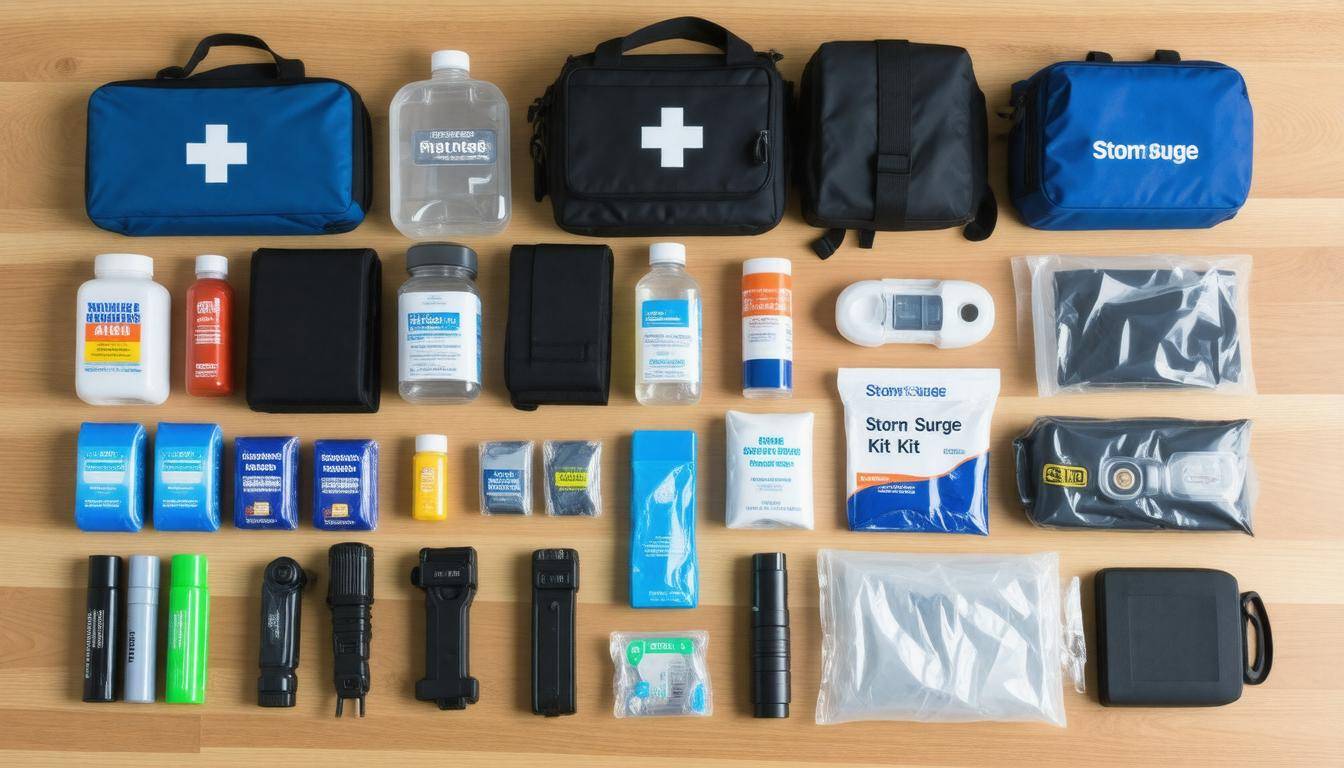
Once assembled, your storm surge kit should be not only comprehensive but easily accessible. An efficient layout can make the difference between life and death during a chaotic storm situation.
To achieve this, consider placing labeled compartments within your waterproof storage container. This simple yet effective strategy will help ensure that you can quickly find what you need in turbulent times. For instance, keep first-aid supplies in one section while storing food and water in another. By labeling these compartments clearly—think “food,” “water,” “medications”—you create an organized system that allows for easy access during an emergency.
Regularly rotating items is vital as well; canned goods have expiration dates that sneak up on you, and even bottled water can become stale over time. Aim to check your kit every six months or so to refresh supplies as needed. If you’ve ever found yourself rummaging through a long-forgotten bag looking for a flashlight during a power outage, you know how crucial this is.
Optimal Storage Space
Where you store your kit matters just as much as how you pack it. Ideally, place your kit in a cool, dry area of your home—perhaps on an elevated shelf where floodwaters are less likely to reach it. Avoid basements whenever possible due to their vulnerability in storm situations.
It’s surprising how quickly water levels can rise; Hurricane Milton demonstrated instances where waters surged up to 15 feet along Florida’s coast. Picture this: a week before the storm hits, you’re calmly checking your supplies while ensuring they’re high enough to avoid damage from potential flooding outside.
Consider using sturdy bins that can withstand moisture as well. Waterproof bags or containers made of heavy-duty plastic not only shield against water but also keep pests away—an often-overlooked detail that could save you from unsavory surprises!
With an understanding of effective packing and optimal storage strategies established, we can now turn our attention to ensuring your kit is stocked with all the necessary components for navigating through challenging storm conditions ahead.
Maintaining Your Storm Surge Kit
Regular checks and updates are necessary to ensure your kit remains effective and functional. A storm surge kit with expired supplies or damaged items can leave you unprepared when disaster strikes. By incorporating routine maintenance into your schedule, you ensure that each component is ready for action.
Routine Checks
A solid practice is to inspect your kit every six months for expired items or signs of wear. This means meticulously checking each item—verifying expiration dates on food and medicine, ensuring water bottles haven’t degraded, and confirming that tools like flashlights and multi-tools are in working order. If you notice any corrosion on battery terminals, replace those batteries before they fail you during an emergency.
Marking specific dates on your calendar for pre-hurricane season (May) and post-hurricane season (November) acts as a gentle reminder for comprehensive reviews. It’s a small but significant commitment that can make all the difference in an emergency situation.
My experience shows that having dedicated times for these checks adds accountability; it’s less likely I’ll forget when I have these dates noted down.
One effective strategy is keeping a checklist of item expiration dates taped to your storage container. This visual cue serves as a constant reminder and ensures everything stays checked efficiently.
When time is limited, and stress levels rise during an impending storm, having this system will prevent the chaos of last-minute preparations where old supplies may sneak into your kit unnoticed.
Beyond basic items, consider upgrading your storm surge kit by reviewing what’s missing or what could enhance your readiness. Every season can bring new challenges—perhaps investing in a hand-crank radio this year makes sense if you previously relied solely on batteries. Thoughtful upgrades reflect changing needs and contribute to staying self-sufficient when you most rely on your kit.
Ultimately, regular maintenance isn’t just about ticking boxes; it’s an essential mindset that keeps you prepared to face any storm head-on without hesitation or fear.
In prioritizing the upkeep of your storm surge kit, you’re not just safeguarding yourself—you’re ensuring readiness against unforeseen challenges that storms may bring.
How often should one review and update the contents of their storm surge kit?
One should review and update the contents of their storm surge kit at least once a year, or more frequently if there are changes in personal circumstances, such as a new family member or changes in health needs. According to FEMA, about 1 in 4 Americans experiences a natural disaster each year, making regular assessments vital to ensure that supplies remain effective and relevant. Additionally, checking expiration dates on items like food, medications, and batteries can prevent reliance on outdated resources during an emergency.
Are there any additional supplies recommended for families with pets or children during a storm surge event?
Yes, families with pets or children should consider additional supplies such as pet food, water for both pets and children, medications, and comfort items like toys or blankets. In storm events, it’s vital to ensure that all family members, including pets, are kept calm and safe. According to a 2021 survey, over 60% of pet owners reported having to evacuate with their pets during emergencies, highlighting the need for preparedness. Likewise, keeping activities and familiar items can provide emotional support for children during stressful situations.
What are some common mistakes people make when preparing a storm surge kit?
Some common mistakes people make when preparing a storm surge kit include underestimating the amount of food and water needed, failing to include essential tools like a flashlight or first aid supplies, and not planning for their pets’ needs. According to FEMA, families should stock at least one gallon of water per person per day for three days, yet many only have a fraction of that. Additionally, neglecting to check expiration dates on food and medications can lead to inadequate supplies during emergencies. Proper preparation can significantly enhance safety and survival during such events.
What specific items should be included in a storm surge kit to ensure safety during a natural disaster?
A well-equipped storm surge kit should include non-perishable food, water (at least one gallon per person per day for three days), a flashlight, batteries, a first aid kit, necessary medications, important documents, and a multi-tool. Additionally, consider adding a whistle for signaling help, copies of emergency plans, and sturdy gloves. According to the Federal Emergency Management Agency (FEMA), having these supplies can significantly increase your chances of staying safe and surviving during disasters like hurricanes when storm surges can reach up to 20 feet or more, emphasizing the importance of preparedness.
How can residents effectively assess their individual needs for a storm surge preparedness kit?
Residents can effectively assess their individual needs for a storm surge preparedness kit by evaluating their unique circumstances, including location, household size, and specific health requirements. For instance, those living in high-risk coastal areas should prioritize supplies like food, water (one gallon per person per day for at least three days is recommended), medical supplies, and critical documents. Additionally, assessing the needs of vulnerable family members, such as the elderly or children, can guide decision-making; approximately 25% of households could require specialized items, such as medications or baby formula. Conducting a self-assessment based on these factors ensures that each family’s preparedness kit is tailored to their situation, thereby increasing their chances of staying safe during a storm surge event.