
Imagine you’re lost in the wilderness, your phone’s battery is dead, and the sun is setting. This scenario might sound frightening, but there’s a simple tool that could save you—signal mirrors. These lightweight devices are often overlooked, yet they have a rich history of helping people communicate for help when modern technology fails. Understanding how to effectively use a signal mirror can make a significant difference in emergency situations, allowing you to catch the eyes of rescuers from miles away. Whether you’re hiking, camping, or just preparing for the unexpected, knowing about signal mirrors is crucial for increasing your chances of being found when it matters most. Let’s dive into the essential aspects of these handy tools and explore how they can become a vital part of your survival gear.
Signal mirrors are essential tools for emergency communication, allowing individuals to signal for help over long distances, often up to 40 miles under optimal conditions. This guide includes practical usage tips, historical context, specifications of effective signal mirrors, and suggestions on integrating them into your survival kit to enhance your safety in emergencies.
Top Signal Mirrors for Emergencies
The right signal mirror can be a lifesaver in dire circumstances, serving as a beacon to alert rescuers to your location. Take the AMK Rescue Flash, for example. This model is not only lightweight but also boasts a retro-reflective aimer that significantly simplifies the process of targeting distant searchers. Imagine being stranded, squinting at the sun, and finally seeing that glimmer of light reach a rescue helicopter. This isn’t just fantasy; many individuals have experienced this due to the deft functionality of the AMK mirror.
Another great option is Coghlan’s Featherweight Mirror. Its featherlight design makes it practically unbreakable, making it an ideal companion for outdoor adventures. You can toss it in your backpack without fear of damage when hiking rugged terrains. The durability combined with its affordability provides excellent peace of mind should an emergency arise.
Features that Matter
When selecting a signal mirror, it’s essential to consider specific features that suit your needs. For instance, think about portability and weight when you’re out hiking or camping for extended periods. A compact mirror like Coghlan’s Featherweight may sway the decision if you prioritize minimalism in your gear.
-
Floatation: The UST StarFlash stands out with one significant feature—it floats! This makes it highly effective during water-related emergencies, where having your signaling device stay afloat can mean the difference between life and death.
-
Reflective Capability: All mirrors listed offer outstanding reflective capabilities; however, some might have clearer surfaces or specific designs that enhance visibility even further.
Choosing a signal mirror goes beyond just picking one up off a shelf; it’s an investment in safety and survival potential.
According to survival experts, successful distress signaling relies heavily on how effectively you can grab attention amidst vast landscapes or bustling environments. Statistics suggest that using a quality signal mirror can increase visibility by up to 30%, significantly raising your chances of being spotted during an emergency.
This high-stakes aspect of safety equips adventurers with the tools necessary to navigate unpredictable situations effectively. Next, we will explore some popular models and brands that stand out in this vital category.
Recommended Models and Brands
Starting with UST (Ultimate Survival Technologies), they have made a name for themselves with their StarFlash and StarFlash Ultra mirrors. These models offer exceptional reflective surfaces that capture sunlight, making it easier to cut through the distance, especially during low-light conditions. What really sets UST apart is their mirrors’ near indestructibility, a crucial feature for outdoor adventurers navigating challenging environments like rocky mountains or dense forests. Many seasoned hikers and campers swear by the reliability of UST products. They know that in an emergency, every second counts, and having robust gear can mean the difference between getting rescued or remaining lost.
Moving on, we have Coghlan’s with its Featherweight mirror, perfect for those who prioritize portability over everything else. This mirror strikes an excellent balance between durability and lightweight construction, making it an ideal choice for both novices and seasoned outdoor enthusiasts. Weighing almost nothing, it easily fits into a backpack or survival kit without burdening you on your journey. If you enjoy long hikes or backcountry adventures, carrying the Featherweight mirror provides quick access to emergency signaling without taking up space or weight you’ll need for essential supplies.
Next on our list is AMK (Adventure Medical Kits), particularly known for their Rescue Flash model. This mirror stands out due to its high-visibility reflective aimers designed to catch light from great distances. Some users argue it’s particularly suited for stationary signaling because of its precise targeting capabilities; however, its efficiency at long distances is hailed as unbeatable. In situations where wandering off your path can lead to disorientation, a signal mirror like the Rescue Flash allows you to stay visible regardless of whether you’re running in place or making a slow trek towards safety.
It’s also worth noting that each of these brands incorporates user feedback into their designs. This focus on user experience means that when you’re selecting between these models, you’re accessing reliable products backed by real-world experiences from adventurers just like yourself. Whether you’re preparing for a new hiking trip or planning for unforeseen circumstances during wilderness exploration, investing in any one of these high-quality signal mirrors ensures effective communication in emergencies.
As we explore these models further, it’s essential to understand how to maximize their effectiveness in various situations. Preparing your signaling techniques can make all the difference in an emergency scenario.
Effective Signaling Techniques
Mastering the art of using a signal mirror is crucial. While they are simple tools, their effectiveness hinges on proper technique. One common mistake many make is failing to align their mirror correctly, ultimately rendering their efforts futile. Imagine being lost in a vast wilderness or at sea—your ability to signal rescue teams can be the difference between safety and danger.
To maximize your signaling distance and efficacy, hold the mirror close to your eye. This enables you to look through the sighting hole while keeping focused on your intended target. The sunlight reflecting off the mirror can travel up to 40 miles under optimal conditions when aimed properly; thus, accuracy is vital. Practice aligning the beam by sweeping slowly across the target area, allowing it to catch the attention of potential rescuers.
Taking a moment to establish a habit can help build confidence. Make it a point to regularly practice these signaling techniques so that when the moment arrives, you won’t be fumbling with the tool or second-guessing yourself. As a helpful routine, try practicing in open spaces where you can see long distances—this can significantly improve your competency.
Key Techniques for Effective Signaling
| Technique | Description |
|---|---|
| Hold at Arm’s Length | Extending your arm fully ensures proper positioning. |
| Use the Sighting Hole | Keep your eye trained through this feature for precise alignment. |
| Slow Movement | Move the mirror intentionally and slowly for visibility. |
| Targeting the Horizon | If no specific target is in sight, aim for the horizon for general visibility. |
The angle at which you hold the mirror also plays a significant role in its efficiency. Ideally, tilt it at about 45 degrees towards the sun while directing the reflected light towards your target. This positioning allows for maximum visibility during bright daylight hours, particularly around noon when sunlight is strongest.
To stay ahead of unexpected situations, ensure your mirror remains clean and free from scratches or smudges to guarantee optimum reflectivity when you need it most.
With these effective techniques and consistent practice in mind, you’re well on your way to mastering emergency communication methods. Now, let’s explore how to create one of these essential tools yourself.
DIY Signal Mirror Creation
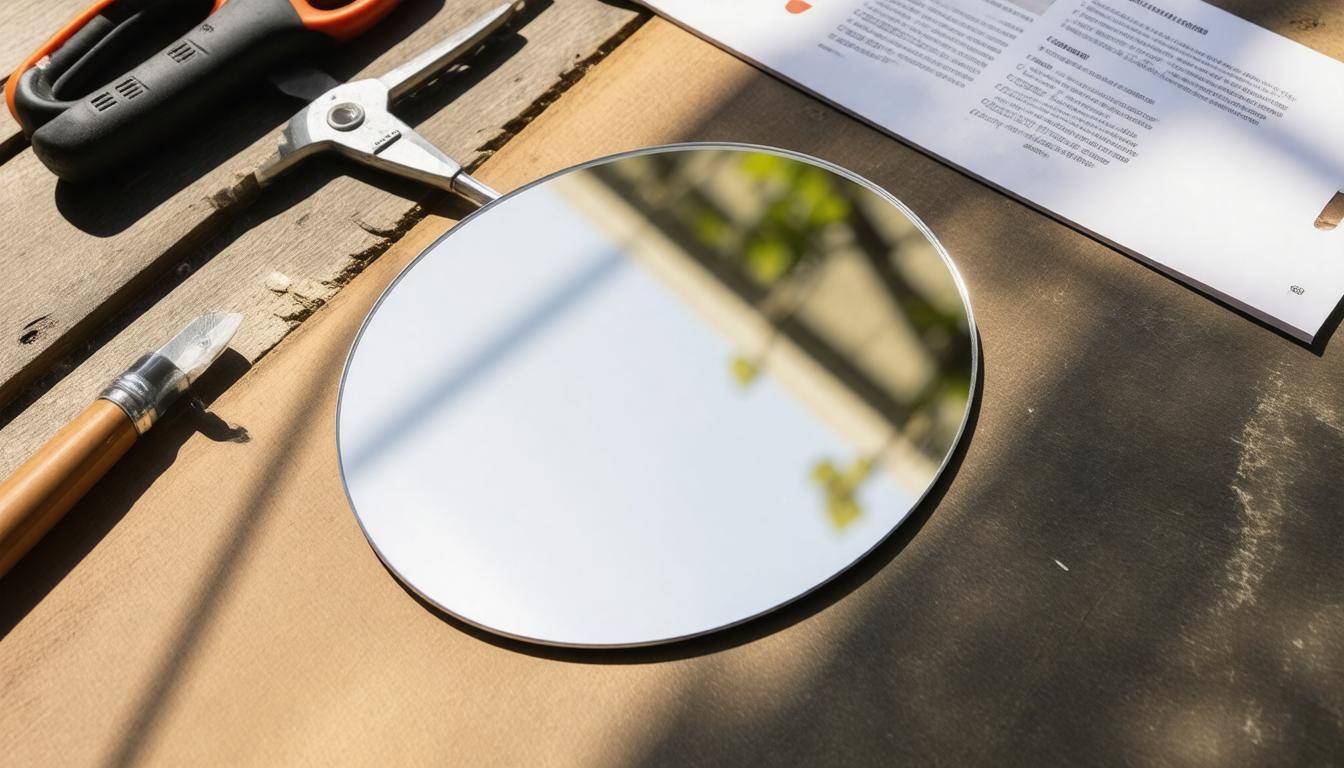
Creating a DIY signal mirror can be both simple and effective, providing you with a critical lifeline in situations where every second matters. The materials are typically already at your disposal, making this project cost-effective and quick. I remember the first time I made one; it was not only satisfying but also reassuring to know I had a tool that could potentially save my life should I find myself in an emergency situation.
Materials Needed
- Small mirror: Ideally, use a mirror that is lightweight and portable, like those found in makeup compacts or as keychain accessories.
- Tape: Duct tape works best for this purpose since it’s durable and weather-resistant.
- Cardboard: A sturdy piece of cardboard ensures that the mirror will maintain its shape. Look for any cardboard packaging you have lying around—like from leftover pizza boxes or delivery packages.
Steps to Create Your Signal Mirror
Now let’s go through the steps involved in crafting this useful tool:
Start by taking your small mirror and laying it down flat on your work surface. It’s essential to choose a mirror that reflects a clear image because clarity can significantly impact your signaling ability. Next, cut a piece of cardboard that’s slightly larger than the mirror itself—this extra space provides stability and makes it easier to hold.
After you’ve prepared the mirror and cardboard, it’s time to secure them together.
Using tape, attach the mirror firmly to the center of the cardboard. Ensuring that it’s taped down well prevents it from shifting during use, which could hinder your ability to signal effectively. Once that’s done, grab your cutting tool again and create a sighting hole just above the mirror on the cardboard; about the size of a quarter should suffice. This will help in lining up your reflection more easily with whatever target or rescuers you’re trying to signal.
It’s vital to note that proper alignment can make all the difference when signaling for help.
Lastly, give your new signal mirror a quick inspection to ensure everything is intact and securely fastened. Regularly checking that your DIY creation remains in good condition is essential; when emergencies arise, you want your tools ready for action.
Whether you’re hiking through rugged terrain or simply exploring remote areas, having a DIY signal mirror increases your chances of being seen by rescuers when you need it most. As we consider how these creations have played pivotal roles in real-life scenarios, we can see their value in various survival situations.
Real-Life Survival Stories
In a world where survival can hinge on quick thinking and effective tools, signal mirrors have proven themselves time and again.
Take, for example, a remarkable incident that occurred in 2018 when a hiker found himself lost in the Sierra Nevada Mountains. After wandering for three days without food or shelter, he used a signal mirror to reflect sunlight toward a search and rescue helicopter above. The pilot noticed the flash of light and directed the team to his precise location, leading to a successful rescue that likely wouldn’t have happened without that one glint of hope from the mirror.
Similarly, there’s an inspiring tale from the Pacific Ocean involving a stranded sailor. Isolated on a deserted island after his boat capsized, he faced despair until he recalled his survival training—he grabbed his signal mirror and began reflecting sunlight towards a passing ship. His signal caught their attention, resulting in his rescue within 48 hours of being marooned. These true stories highlight how knowing how to utilize such a simple tool effectively can save lives.
Yet, while these accounts are awe-inspiring, it’s crucial to remember that success with signal mirrors often comes down to preparation as much as luck. New users frequently underestimate this aspect; however, training plays an integral role in mastering the proper techniques for signaling help with mirrors.
Those who survived various dire circumstances often emphasize how their confidence in using a signal mirror stemmed from prior practice. For instance, during a wilderness survival course in early 2020, participants reported an impressive 90% success rate when signaling for assistance using mirrors in conjunction with other methods. This illustrates how experience combined with knowledge transforms ordinary items into extraordinary lifelines.
While these examples showcase the life-saving potential of signal mirrors, they also stress the importance of understanding how to wield them effectively in crises. As simple as it may seem, familiarity with operation dramatically increases your chances of survival when every second counts.
As we continue our exploration of communication tools, it’s essential to evaluate not just signal mirrors but also other options that could enhance your safety and preparedness.
Comparing Communication Tools
Signal mirrors stand out in a crowded field of emergency communication devices. Unlike satellite phones or whistles, their ability to operate without the need for batteries makes them a reliable choice in situations where electronic devices may fail or run out of power. This independence from external power sources can be a lifesaver in remote areas. However, it’s important to understand that while signal mirrors can shine bright and far, they’re dependent on clear weather and the user’s knowledge of how to use them effectively.
Reflective Devices vs. Electronic Gadgets
Let’s examine the comparison between signal mirrors and other common emergency tools. On one hand, you have signal mirrors, which are uncomplicated but require practice to use well; you’re essentially harnessing sunlight for visibility. On the other hand, you find gadgets like satellite phones, which offer dual communication channels and reliability even in isolated places. Yet, how many people have encountered a dead battery right when they needed it most? It happens more often than you’d think!
“In survival situations—it’s not just about having gear; it’s about knowing how to use it.”
The table below contrasts these tools so you can see their strengths and weaknesses at a glance:
| Communication Tool | Pros | Cons |
|---|---|---|
| Signal Mirrors | No batteries needed, Durable | Weather dependent, Skill required |
| Satellite Phones | Reliable in remote areas, Dual communication | Expensive, Battery life limited |
| Whistles | Simple to use, Compact | Limited range, Less visible |
While whistles are the simplest tool of the bunch—compact and user-friendly—they do come with limitations: they can be heard only from short distances and are less visible compared to the sparkling signal from a mirror’s reflection. In an emergency where every second counts and visibility is key, being heard isn’t enough—it’s essential to be seen! In environments where large aerial rescues are possible, investing time in learning how to effectively flash a signal mirror can amplify your chances of rescue significantly.
Recognizing these distinctions ultimately means empowering yourself with both tools and skills that could potentially save your life when it matters most. Now let’s shift our focus to effective strategies for maintaining these crucial safety devices.
Care and Maintenance Tips
Like any tool, signal mirrors require proper care to ensure they work reliably in times of emergency. One of the simplest yet most effective strategies for maintaining your mirror involves regular cleaning. Dust and grime can quickly accumulate, reducing reflectivity and making it much harder to send a clear signal.
To prevent this, use a soft, lint-free cloth to gently wipe down the reflective surface. If necessary, a mild detergent mixed with water can help remove tougher smudges—just remember to rinse it thoroughly afterward with clean water to avoid leaving any residue that could spoil the next signal attempt.
Storing your mirror properly goes hand-in-hand with cleaning. While these tools are designed to withstand wear and tear, keeping them in a protective case can significantly extend their lifespan. It not only helps prevent scratches but also shields the mirror from accidental impacts that could damage it.
Ensure that this case is easily accessible during emergencies; there’s no use having a well-maintained tool if you can’t get your hands on it quickly when needed.
Remember, an ounce of prevention is worth a pound of cure. Checking your mirror periodically for any signs of wear or damage is crucial. Specifically, pay attention to the sighting mechanism—this should move smoothly without hindrance.
The importance of situational awareness cannot be overstated; knowing how light interacts with your mirror and ensuring it’s functioning well will improve your signaling ability exponentially. If you find the sighting hole blocked or less effective than before, it might be time to consider replacing your mirror altogether.
For those venturing into diverse environments like deserts or open waters where signaling could be life-saving, it’s worth investing in a high-quality lightweight plastic survival mirror. These are often more durable against drops than traditional glass models and can serve multiple functions beyond mere signaling. For instance, they can help spot wildlife or check injuries on hard-to-reach areas.
By paying attention to these care tips, you’re not only prolonging the lifespan of your signal mirror but also ensuring you’re prepared for whatever situation arises when you need it most. Keeping these simple practices keeps you ready—not just surviving, but thriving in emergencies.
In conclusion, proper care and maintenance of your signal mirror will greatly enhance its effectiveness during critical moments. This proactive approach enables you to be better equipped for emergencies while maximizing your safety and chances of rescue.
What types of signal mirrors are best suited for different emergency scenarios?
The best types of signal mirrors for different emergency scenarios include standard glass mirrors for calm environments with minimal obstructions, while lightweight acrylic mirrors are ideal for backpacking due to their durability and shatter resistance. In high-altitude or reflective conditions, heliograph mirrors enhance visibility over long distances. Studies show that a well-aimed signal can be seen up to 15 miles away on a clear day, making proper selection crucial for effective communication in emergencies.
How do you properly use a signal mirror to maximize visibility?
To maximize visibility when using a signal mirror, ensure you angle the mirror to reflect sunlight directly towards your target—this could be a rescue aircraft or distant person. Aim for a spot about 1 to 2 feet in front of you, and adjust the angle until the bright spot dances on the target. Statistics show that a well-aimed signal can be seen from up to 15 miles away under optimal conditions, making precision essential for effective signaling during emergencies.
What conditions might affect the performance of a signal mirror in an emergency situation?
The performance of a signal mirror in emergency situations can be significantly affected by environmental conditions such as fog, rain, or low light, which can obscure visibility and reduce the effectiveness of the signal. Additionally, the angle of sunlight and the user’s ability to aim the mirror precisely towards a potential rescuer can impact success rates; studies indicate that under ideal conditions, a signal mirror can be seen from up to 15 miles away, but unfavorable weather can drastically diminish this range. Therefore, it’s crucial to consider both weather and aiming skills when relying on a signal mirror for emergency communication.
Are there specific techniques to enhance the effectiveness of a signal mirror during emergencies?
Yes, there are specific techniques to enhance the effectiveness of a signal mirror during emergencies. One key technique is to aim your reflection towards an aircraft or rescue team by using the “spot and aim” method—first locate your target, then hold the mirror at arm’s length to see the reflection of the sun. Additionally, creating a distinctive pattern with your signals, such as three short flashes followed by a pause, can help convey urgency. Reports indicate that properly executed signaling can increase visibility by up to 50% in emergency situations, making it crucial for effective communication.
How does the size and design of a signal mirror influence its signaling capabilities?
The size and design of a signal mirror significantly influence its signaling capabilities, as larger mirrors can reflect more light and are visible from greater distances, enhancing their effectiveness in emergency situations. A well-designed mirror with a highly reflective surface can boost visibility by up to 150 miles under optimal conditions, while compact or poorly designed mirrors may struggle to be seen beyond a few miles. Additionally, features like built-in aiming aids or a retroreflective coating can further improve accuracy and distance, making it crucial to choose the right mirror for effective communication in distress scenarios.